George Washington's Inauguration: April 30, 1789
1789 · New York City, United States
George Washington was inaugurated as the first President of the United States on the balcony of Federal Hall in New York City.
April 1, 1789
The U.S. House of Representatives held its first full meeting in New York City, marking the beginning of its legislative functions under the new U.S. Constitution.
New York City, United States | U.S. House of Representatives
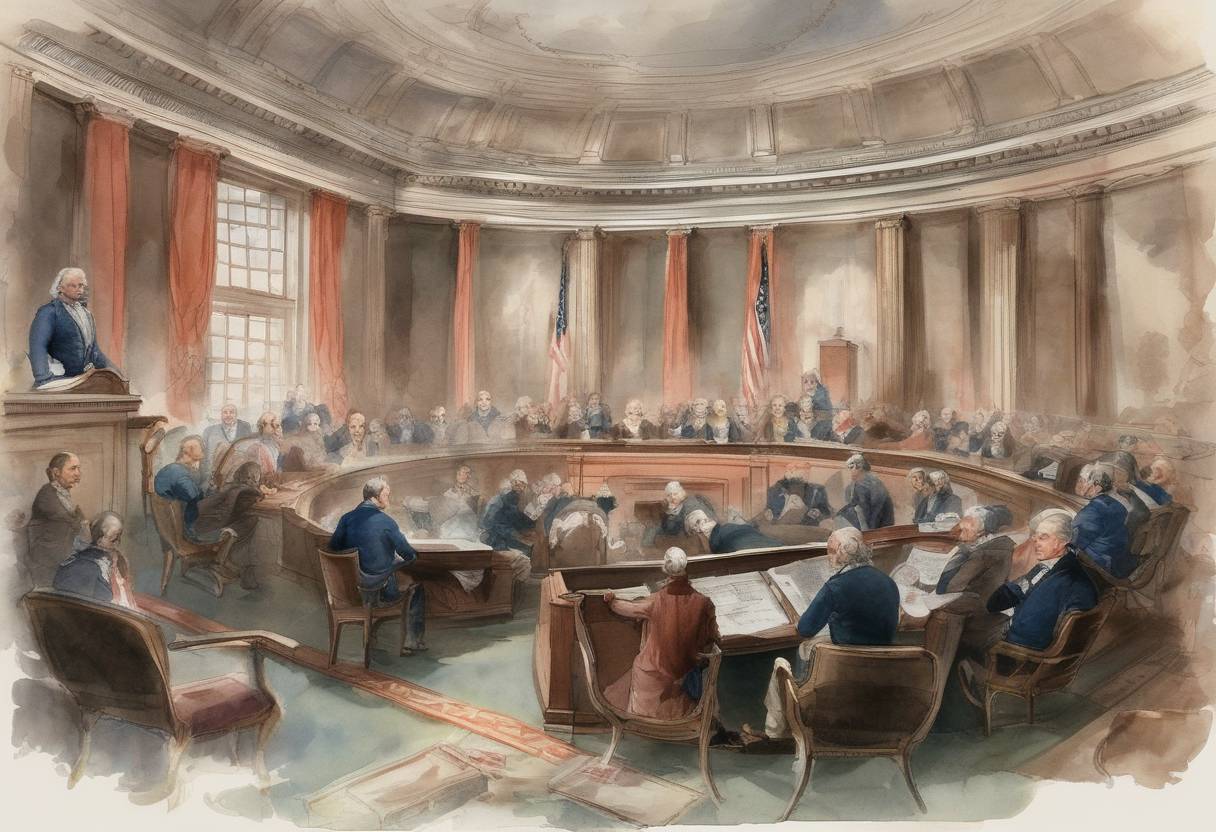
On April 1, 1789, the United States House of Representatives held its first full meeting in New York City, marking a significant milestone in the establishment of the United States government under the newly ratified Constitution. This event was pivotal in the transition from the Articles of Confederation to a more robust federal system.
The Constitutional Convention: In 1787, delegates from twelve of the thirteen states convened in Philadelphia to address the weaknesses of the Articles of Confederation. The result was the drafting of the U.S. Constitution, which proposed a new structure of government with a stronger federal system.
Ratification: The Constitution required ratification by nine states to become effective. By June 1788, the necessary number of states had ratified the document, paving the way for the establishment of the new government.
The First Federal Elections: The first elections under the Constitution were held between December 1788 and March 1789. These elections were crucial for selecting the members of the new Congress, including the House of Representatives.
Location: The meeting took place in New York City, which served as the temporary capital of the United States. The House convened at Federal Hall, located on Wall Street.
Quorum Achieved: Although the first session of the House was scheduled to begin on March 4, 1789, it was not until April 1 that a quorum was achieved. A quorum, the minimum number of members required to conduct official business, was necessary for the House to begin its legislative functions.
Initial Actions: Once a quorum was present, the House began its legislative duties. One of its first actions was to elect its Speaker, Frederick Muhlenberg of Pennsylvania, who became the first Speaker of the House.
Establishment of Legislative Functions: The meeting marked the beginning of the House’s legislative functions, allowing it to start addressing the pressing issues facing the new nation.
Foundation of U.S. Governance: This event was a foundational moment in U.S. history, as it signified the operational start of the legislative branch under the Constitution, alongside the Senate, which had achieved its quorum on April 6, 1789.
Precedent for Future Congresses: The procedures and traditions established during this first meeting set precedents for the functioning of future Congresses.
The first full meeting of the U.S. House of Representatives was a crucial step in the implementation of the United States Constitution, laying the groundwork for the legislative processes that continue to shape the nation today.
Source: history.house.gov