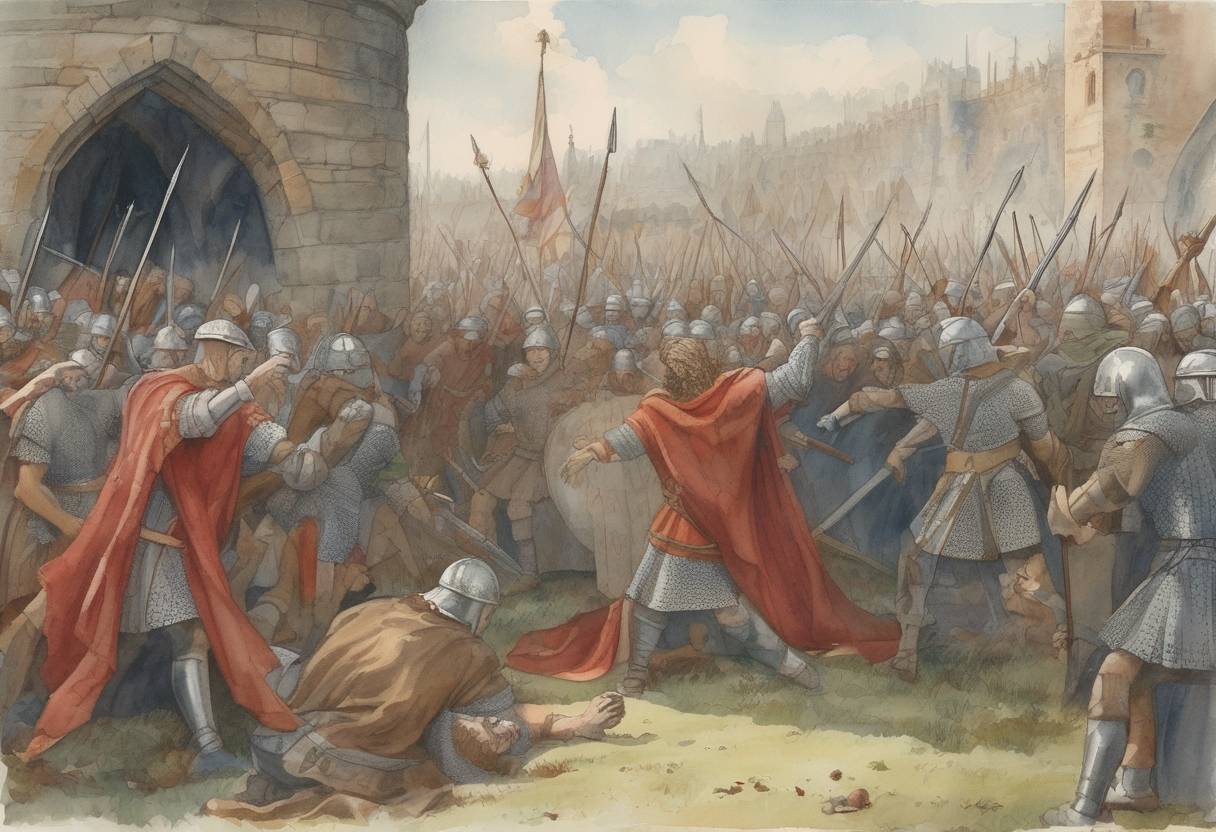
St. Brice’s Day Massacre - November 13, 1002
On November 13, 1002, King Æthelred II of England, often known as Æthelred the Unready, ordered the massacre of Danes living in England. This event is historically referred to as the St. Brice’s Day Massacre, named after the feast day of St. Brice, which falls on the same date.
Historical Context
The late 10th and early 11th centuries were marked by increasing Viking incursions into England. These Norsemen, often referred to as Danes, had been raiding and settling in England for decades. By the time Æthelred ascended to the throne in 978, the Viking threat had become a significant concern for the English monarchy.
Æthelred’s reign was characterized by his attempts to deal with these invasions, often through paying large sums of money known as Danegeld to buy peace. However, these payments did not stop the raids, and tensions between the English and the Danish settlers continued to escalate.
The Massacre
The decision to carry out the massacre was likely influenced by Æthelred’s frustration with the ongoing Viking threat and possibly by intelligence suggesting a conspiracy among the Danes living in England to overthrow him. The royal decree ordered the killing of all Danes in England, which was interpreted by some as a preemptive strike against potential insurrection.
The extent of the massacre is not precisely known, but it is believed to have been widespread, affecting Danish communities across the kingdom. The event was particularly brutal, with men, women, and children reportedly being killed.
Aftermath and Consequences
The St. Brice’s Day Massacre had significant repercussions. It did little to curb the Viking threat and, in fact, may have exacerbated it. The massacre is believed to have provoked a violent response from Sweyn Forkbeard, the King of Denmark, whose sister, Gunhilde, was reportedly among those killed. This led to intensified Viking raids and eventually to Sweyn’s invasion of England.
In 1013, Sweyn Forkbeard successfully invaded England, forcing Æthelred to flee to Normandy. Sweyn was declared King of England, although his reign was short-lived, as he died in 1014. Æthelred returned to the throne but continued to face challenges from Viking forces, including Sweyn’s son, Cnut, who would eventually become King of England in 1016.
Broader Historical Significance
The St. Brice’s Day Massacre is a stark example of the ethnic and political tensions of the period. It highlights the challenges faced by Æthelred’s administration in dealing with the Viking threat and the complexities of ruling a kingdom with a significant population of settlers from a hostile culture. The massacre also underscores the brutal measures sometimes employed by medieval rulers in attempts to maintain control and security.
The event remains a poignant reminder of the turbulent history of Anglo-Danish relations during the Viking Age and the often violent nature of medieval politics.