Yuri Gagarin's Historic Spaceflight: Vostok 1
1961 · Baikonur, Soviet Union
Soviet cosmonaut Yuri Gagarin became the first human to travel into space and orbit the Earth aboard Vostok 1.
January 4, 1958
Sputnik 1, the first artificial Earth satellite, fell to Earth from orbit after three months in space.
N/A, Soviet Union | Soviet Space Program
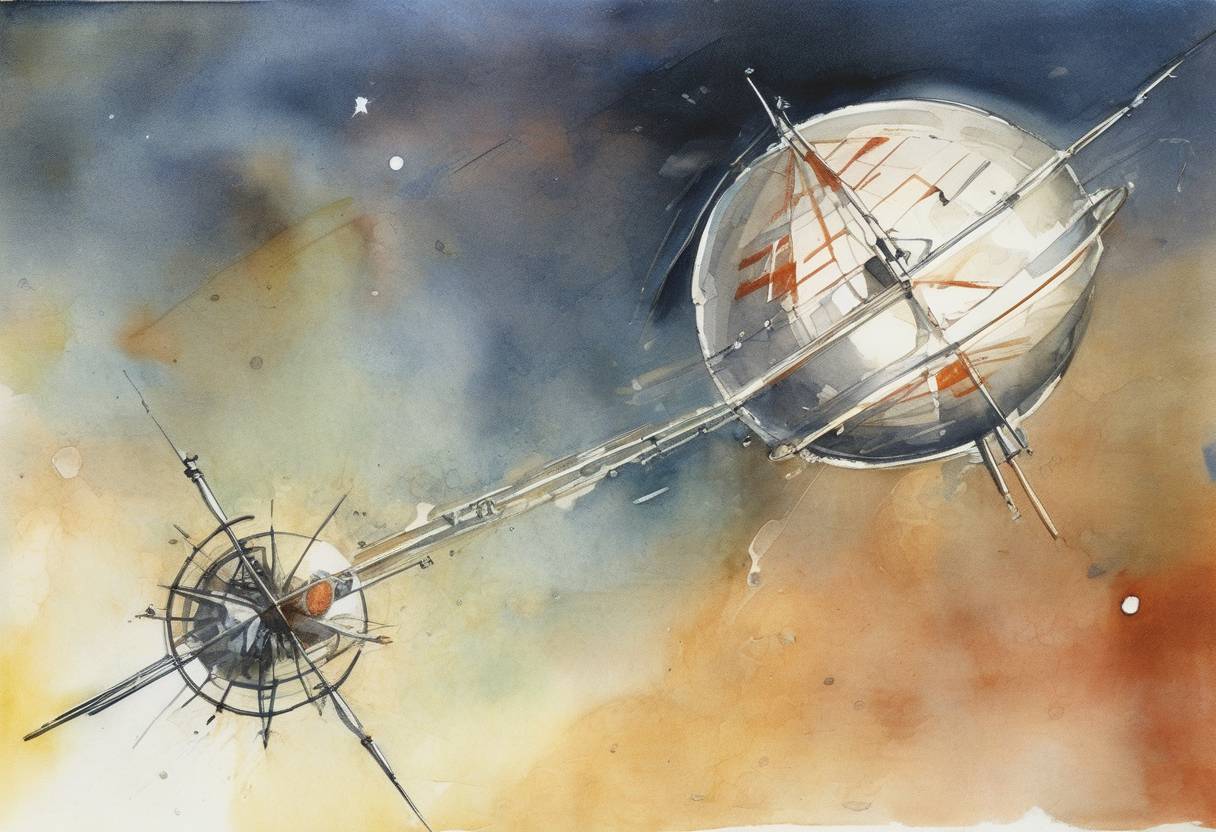
On January 4, 1958, Sputnik 1, the first artificial Earth satellite, reentered the Earth’s atmosphere and burned up after spending approximately three months in orbit. This event marked the end of a groundbreaking chapter in space exploration history, initiated by the Soviet Union.
Sputnik 1 was launched on October 4, 1957, by the Soviet Union, marking the beginning of the space age and the start of the space race between the United States and the Soviet Union. The satellite was a 58-centimeter (about 23 inches) diameter polished metal sphere, with four external radio antennas to broadcast radio pulses.
Sputnik 1’s launch had profound implications:
Technological Achievement: It demonstrated the Soviet Union’s capability to launch satellites, showcasing their advanced rocket technology.
Political Impact: The launch intensified the Cold War competition, leading to increased investments in space technology and education in the United States, eventually resulting in the creation of NASA in 1958.
Scientific Contributions: Sputnik 1 provided valuable data on the density of the upper atmosphere and the propagation of radio signals in the ionosphere.
After 92 days in orbit and traveling approximately 70 million kilometers (about 43.5 million miles), Sputnik 1’s orbit decayed, and it reentered the Earth’s atmosphere on January 4, 1958. It disintegrated upon reentry, as it was not designed to withstand the heat and friction of atmospheric reentry.
Sputnik 1 remains a symbol of human ingenuity and the dawn of space exploration, marking a pivotal moment in 20th-century history. Its legacy continues to influence space exploration and international cooperation in space endeavors.
Source: en.wikipedia.org