The Winter War: Soviet Invasion of Finland
1939 · border regions, Finland
The Winter War began as the Soviet Union invaded Finland, leading to a conflict that lasted until March 1940.
December 12, 1939
Winter War: The Battle of Tolvajärvi begins, marking the first Finnish victory over Soviet forces during the conflict.
Tolvajärvi, Finland | Finnish Army
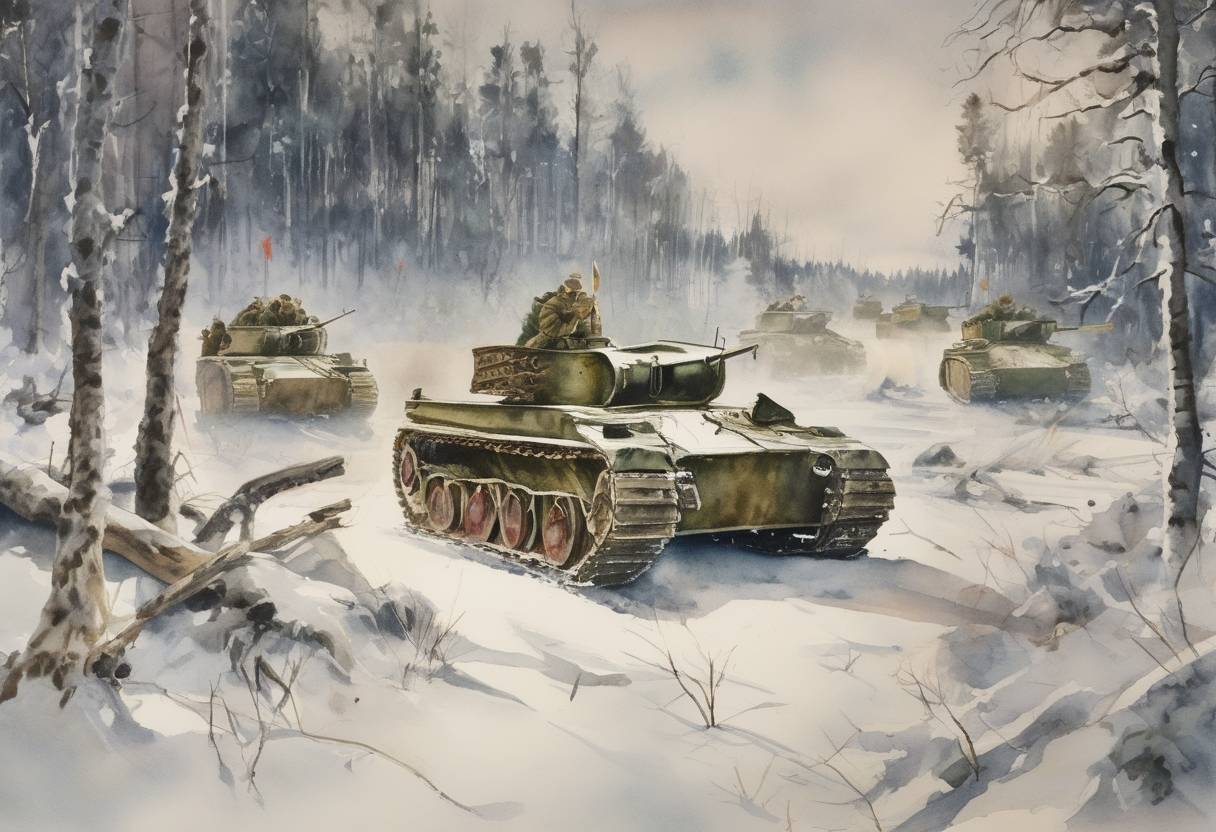
The Winter War, which began on November 30, 1939, was a conflict between the Soviet Union and Finland. The war was initiated by the Soviet Union following its demands for Finnish territory, which were rejected by Finland. The Soviet Union aimed to secure its northwestern border and gain strategic territories, but Finland’s resistance was unexpectedly fierce.
The Soviet forces had launched a series of offensives into Finnish territory, expecting a swift victory due to their numerical and material superiority. However, the Finnish forces, utilizing their intimate knowledge of the terrain and employing guerrilla tactics, managed to slow the Soviet advance.
Finnish Strategy: The Finnish forces, led by Colonel Paavo Talvela, planned a counterattack to halt the Soviet advance. The Finnish troops were well-acquainted with the local terrain, which they used to their advantage.
Soviet Forces: The Soviet 139th Rifle Division, commanded by General Beljajev, was advancing towards Tolvajärvi. The division was part of a larger Soviet effort to penetrate deeper into Finnish territory.
The Battle: On December 12, Finnish forces launched a surprise attack on the Soviet positions. The battle was characterized by intense combat in the snowy, forested landscape. The Finnish troops executed a pincer movement, effectively encircling and defeating the Soviet forces.
Finnish Victory: The Battle of Tolvajärvi marked the first significant Finnish victory in the Winter War. The Finnish forces managed to inflict heavy casualties on the Soviet troops and captured valuable equipment.
Casualties: The Soviets suffered approximately 1,000 casualties, while Finnish losses were significantly lower, estimated at around 100.
Boost in Morale: The victory at Tolvajärvi provided a significant morale boost to the Finnish forces and population. It demonstrated that the Soviet military, despite its size, could be effectively challenged.
Strategic Impact: The battle slowed the Soviet advance in the region and forced the Soviet command to reconsider their tactics and strategies.
Broader Implications: The Finnish victory at Tolvajärvi was a testament to the effectiveness of Finnish defensive tactics and the resilience of its forces. It also highlighted the challenges faced by the Soviet military in terms of logistics, leadership, and adaptation to the harsh winter conditions.
The Battle of Tolvajärvi remains a notable example of how smaller, well-prepared forces can successfully defend against a larger adversary through strategic planning and effective use of terrain.
Source: en.wikipedia.org