Bill Clinton's Re-Election on November 5, 1996
1996 · Washington, D.C., United States
Bill Clinton was re-elected as President of the United States, defeating Republican challenger Bob Dole.
November 3, 1992
Bill Clinton is elected the 42nd President of the United States, defeating incumbent George H. W. Bush.
Washington D.C., United States | Democratic Party
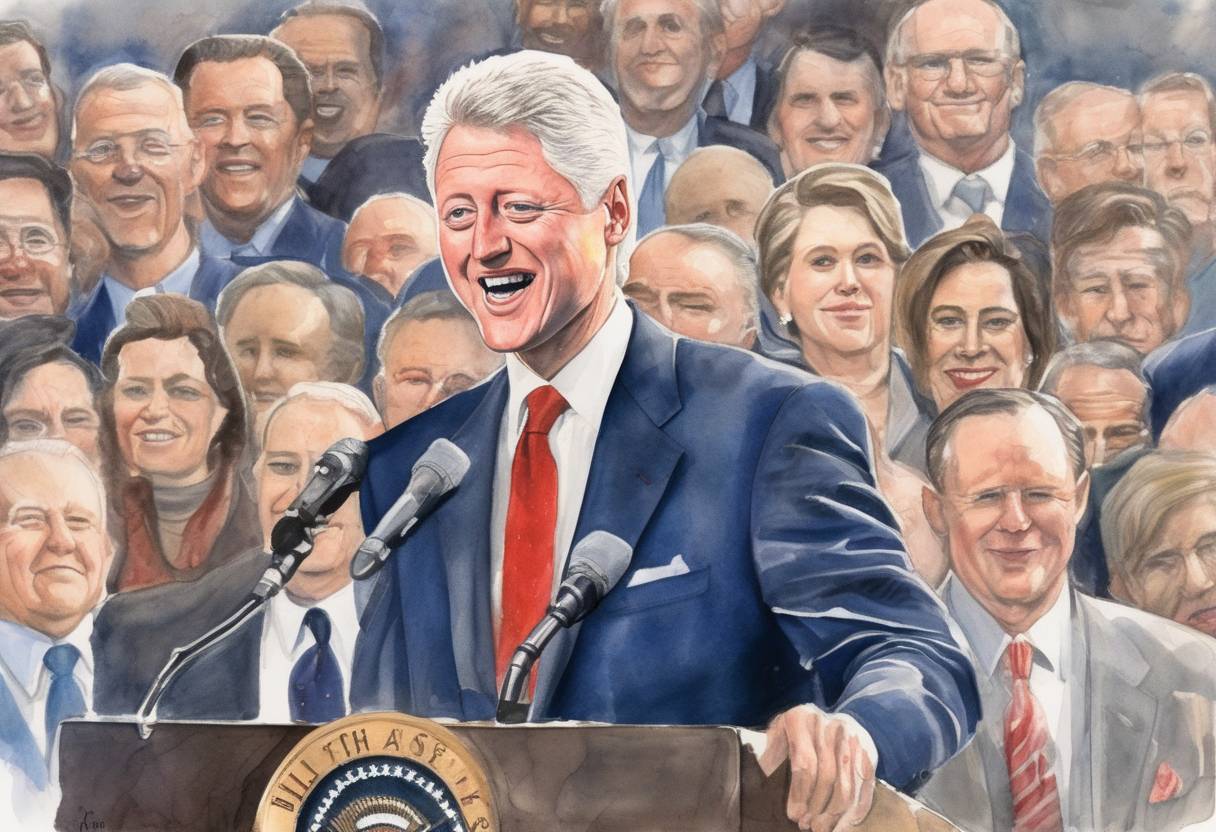
On November 3, 1992, William Jefferson Clinton was elected as the 42nd President of the United States, defeating the incumbent President George H. W. Bush. This election marked a significant political shift in the United States, as Clinton, a Democrat, ended twelve years of Republican control of the White House.
Economic Concerns: The early 1990s were marked by an economic recession, which became a central issue in the 1992 presidential campaign. Many Americans were dissatisfied with the economic policies of the Bush administration, which they felt had not adequately addressed unemployment and economic stagnation.
The Candidates:
Clinton’s Campaign Strategy: Clinton’s campaign was notable for its effective use of media and its focus on “The Economy, Stupid,” a phrase coined by campaign strategist James Carville. This message resonated with voters concerned about economic issues.
Presidential Debates: The 1992 election featured three presidential debates, which included all three major candidates. Clinton’s performance in these debates helped solidify his image as a capable and empathetic leader.
Perot’s Impact: Ross Perot’s candidacy was significant, as he garnered nearly 19% of the popular vote, one of the highest percentages for a third-party candidate in U.S. history. His presence in the race is believed to have influenced the outcome by drawing votes away from Bush.
Clinton’s Presidency: Clinton’s election ushered in a new era of Democratic leadership. His administration focused on economic reform, welfare reform, and healthcare, among other issues. Clinton’s presidency was marked by both significant achievements and controversies.
Political Landscape: The 1992 election highlighted the growing importance of economic issues in American politics and demonstrated the potential impact of third-party candidates.
Legacy: Clinton’s victory is often seen as a turning point that revitalized the Democratic Party and reshaped American political discourse in the 1990s.
The 1992 election remains a pivotal moment in U.S. history, illustrating the dynamic nature of American politics and the influence of economic conditions on electoral outcomes.
Source: en.wikipedia.org