The Sacking of Lawrence, Kansas - May 21, 1856
1856 · Lawrence, United States
Lawrence, Kansas, a center of anti-slavery settlers, is captured and sacked by pro-slavery forces during the Bleeding Kansas crisis.
October 16, 1859
John Brown leads a raid on the federal armory at Harpers Ferry, intending to start an armed slave revolt.
Harpers Ferry, United States | John Brown's raiders
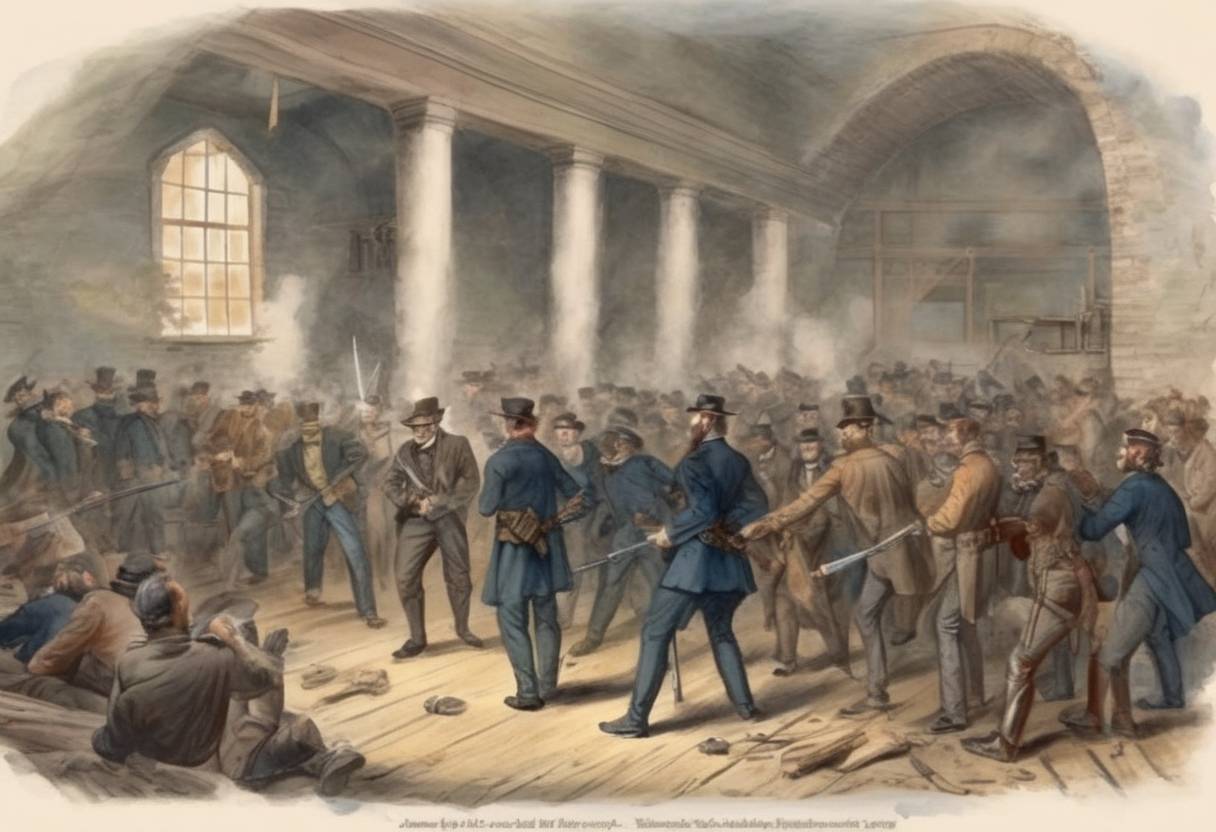
On October 16, 1859, the radical abolitionist John Brown led a daring raid on the federal armory at Harpers Ferry, Virginia (now West Virginia). This event was a pivotal moment in the lead-up to the American Civil War, highlighting the deepening divisions between the North and South over the issue of slavery.
John Brown was a fervent abolitionist who believed that armed insurrection was the only way to overthrow the institution of slavery in the United States. Prior to the raid, Brown had been involved in the violent conflicts in “Bleeding Kansas,” where pro-slavery and anti-slavery forces clashed over the status of slavery in the territory.
Brown’s plan for the raid was to seize the weapons stored at the Harpers Ferry armory and distribute them to enslaved people in the area, sparking a widespread slave uprising. He hoped this would lead to the end of slavery across the South.
The raiders successfully captured the armory and took several hostages, including local slaveholders. However, the plan quickly unraveled. Local townspeople and militia surrounded the armory, cutting off Brown’s escape routes.
Brown’s actions and the subsequent trial and execution brought the issue of slavery to the forefront of American consciousness, setting the stage for the nation’s most defining conflict.
Source: en.wikipedia.org