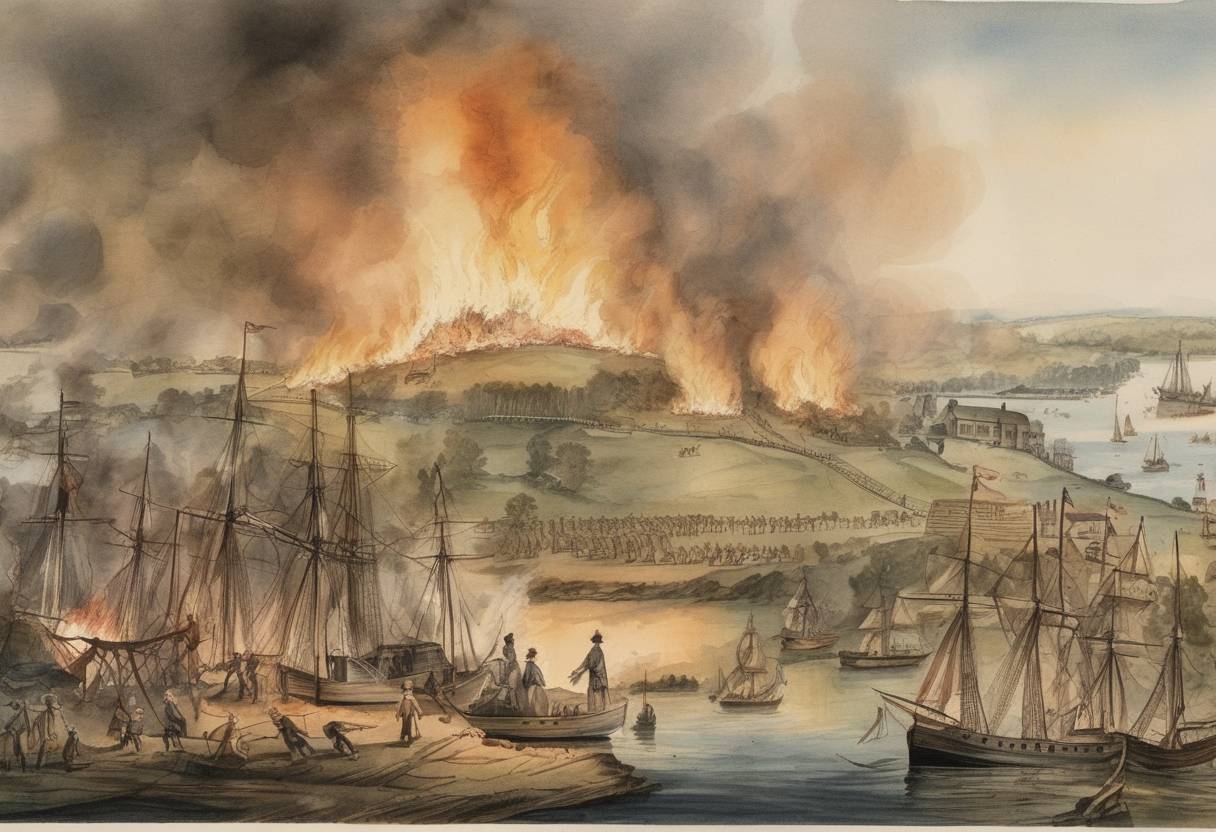
The Burning of Falmouth: October 18, 1775
The Burning of Falmouth was a significant event during the early stages of the American Revolutionary War, highlighting the escalating tensions between the American colonies and British forces. On October 18, 1775, the town of Falmouth, Massachusetts (present-day Portland, Maine), was attacked and set ablaze by British naval forces under the command of Captain Henry Mowat.
Context and Prelude
- Background: By 1775, the American Revolutionary War had begun in earnest with the battles of Lexington and Concord in April. The colonies were increasingly resisting British rule, leading to heightened military actions.
- British Strategy: The British aimed to suppress the rebellion by demonstrating their naval power and discouraging support for the Continental Congress. Coastal towns were particularly vulnerable to naval attacks.
- Captain Henry Mowat: Mowat had previously been involved in skirmishes along the New England coast and was tasked with punishing towns that supported the rebellion.
The Attack
- Arrival of the Fleet: On October 16, 1775, Captain Mowat arrived off the coast of Falmouth with a small fleet, including the HMS Canceaux, the HMS Cat, and other support vessels.
- Ultimatum: Mowat issued an ultimatum to the town, demanding that they cease hostilities against British forces and surrender their arms. The townspeople refused, believing they could negotiate or withstand the threat.
- Destruction: On the morning of October 18, Mowat commenced a bombardment that lasted for several hours. The British forces set fire to the town, destroying homes, businesses, and public buildings. Approximately three-quarters of the town was reduced to ashes.
Aftermath and Consequences
- Impact on Falmouth: The destruction left many residents homeless and destitute as winter approached. The attack was a stark reminder of the war’s reach and the vulnerability of coastal communities.
- Colonial Reaction: The burning of Falmouth galvanized colonial resistance. It was used as propaganda to rally support for the revolutionary cause, illustrating the perceived brutality of British military tactics.
- Strategic Shift: The attack contributed to a shift in colonial strategy, emphasizing the need for a naval defense and the establishment of the Continental Navy, which was authorized by the Continental Congress later in 1775.
Broader Historical Significance
The Burning of Falmouth is remembered as a pivotal moment that underscored the harsh realities of the Revolutionary War. It exemplified the British strategy of using naval power to intimidate and punish rebellious colonies, while simultaneously strengthening the resolve of the American colonists to fight for their independence. The event also highlighted the importance of naval capabilities, influencing the development of American naval forces in the years to come.