Nat Turner's Capture on October 30, 1831
1831 · Southampton County, United States
In Southampton County, Virginia, Nat Turner, leader of a slave rebellion, is captured and arrested.
November 11, 1831
Nat Turner, leader of a slave rebellion in Virginia, was tried, convicted, and hanged, marking a pivotal moment in the history of American slavery and resistance.
Jerusalem, United States | State of Virginia
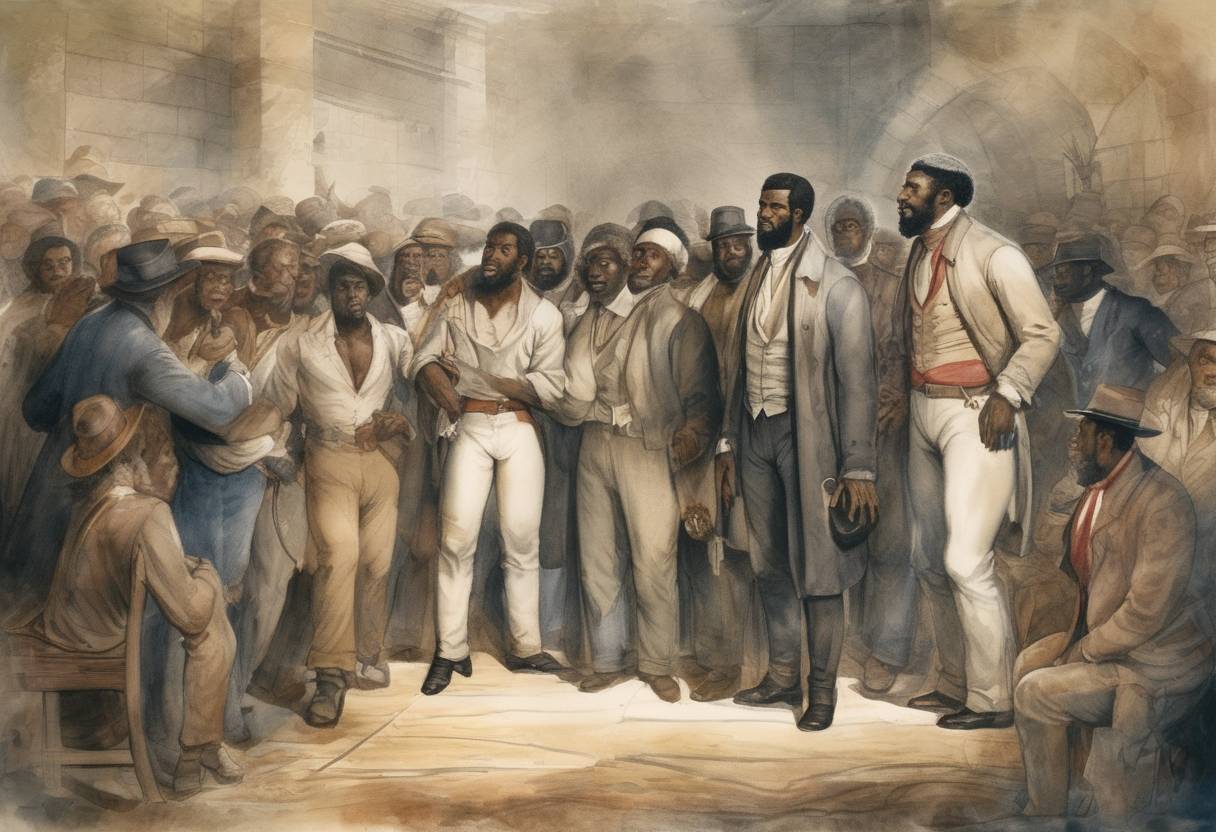
Nat Turner was an enslaved African American preacher who led a significant slave rebellion in Southampton County, Virginia, in August 1831. Born on October 2, 1800, Turner was deeply religious and believed he was chosen by God to lead his people out of bondage. His rebellion is one of the most notable acts of resistance against the institution of slavery in the United States.
The rebellion began on August 21, 1831, when Turner and a group of followers launched a violent uprising. Over the course of two days, they moved from plantation to plantation, freeing enslaved people and killing approximately 55 to 65 white people. The insurrection was eventually suppressed by the local militia, and Turner went into hiding.
Turner evaded capture for nearly two months but was eventually apprehended on October 30, 1831. His trial took place on November 5, 1831, in the Southampton County Court. Turner was charged with “conspiring to rebel and making insurrection.” The trial was brief, lasting only a few hours, and he was found guilty. Turner reportedly showed no remorse during the proceedings, maintaining his belief in the righteousness of his cause.
On November 11, 1831, Nat Turner was executed by hanging. His execution marked the end of the rebellion but not the end of its impact. Turner’s body was reportedly dissected and his remains were treated with indignity, reflecting the fear and anger his rebellion had incited among the white population.
The rebellion had profound consequences. In its immediate aftermath, there was widespread panic among slaveholders throughout the South. Virginia and other Southern states enacted stricter laws governing the behavior of enslaved and free African Americans, including prohibitions on education, assembly, and movement.
The rebellion also intensified the national debate over slavery. While it led to harsher conditions for enslaved people in the South, it also fueled the abolitionist movement in the North, as it highlighted the brutal realities of slavery and the lengths to which enslaved people would go to fight for their freedom.
Nat Turner’s rebellion remains a pivotal moment in American history, symbolizing both the desperation and determination of enslaved people to resist their oppression and the deep divisions within the United States over the institution of slavery.
Source: en.wikipedia.org