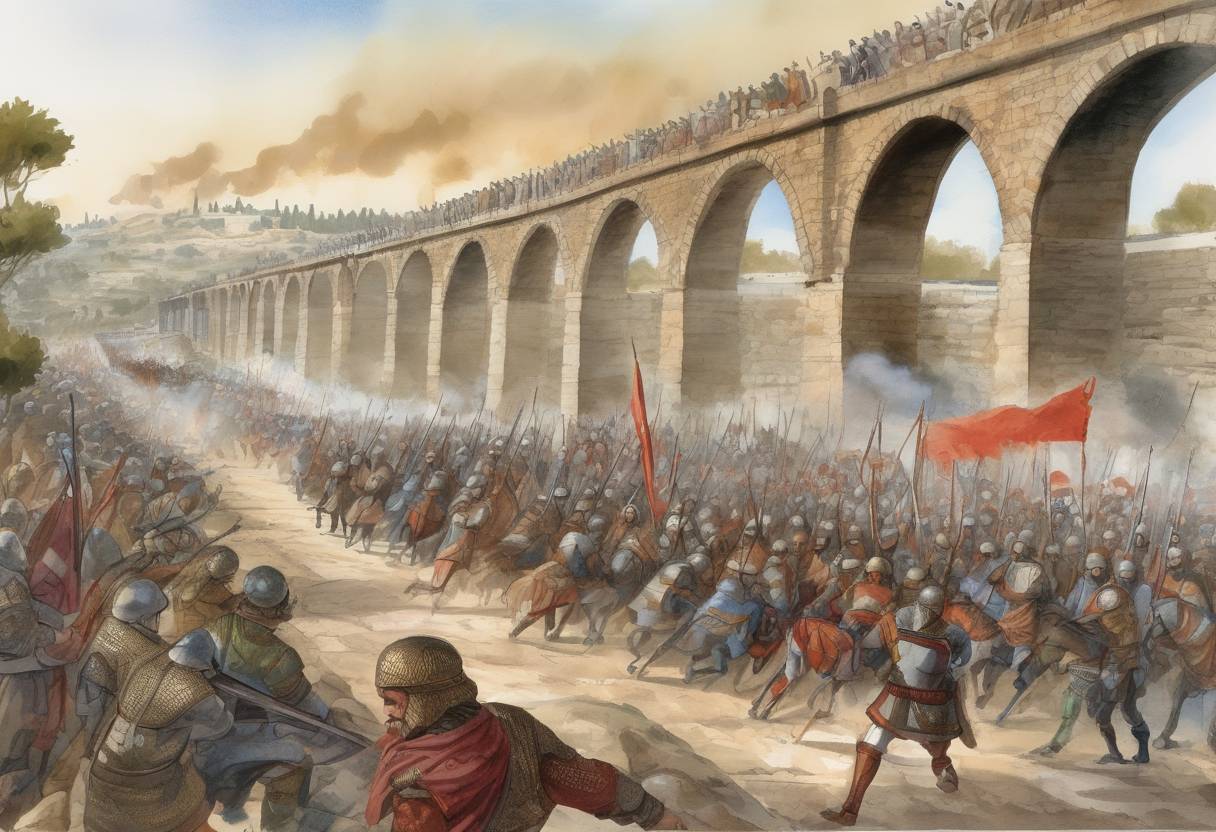
The Battle of the Iron Bridge: October 30, 637
The Battle of the Iron Bridge was a pivotal confrontation that occurred on October 30, 637, near Antioch, a significant city in the Byzantine Empire. This battle was part of the broader Muslim conquests that unfolded during the early Islamic expansion under the Rashidun Caliphate.
Context and Background
Rashidun Caliphate Expansion: By the early 7th century, the Rashidun Caliphate, under the leadership of Caliph Umar ibn al-Khattab, was rapidly expanding its territories. The Muslim forces had already achieved significant victories in the Levant, including the decisive Battle of Yarmouk in 636, which severely weakened Byzantine control in the region.
Strategic Importance of Antioch: Antioch was one of the most important cities in the Byzantine Empire, both strategically and economically. It served as a key military and administrative center, making it a prime target for the Rashidun forces aiming to consolidate their control over Syria.
The Battle
Forces Involved: The Rashidun army was commanded by Abu Ubaidah ibn al-Jarrah, a prominent companion of the Prophet Muhammad and a skilled military leader. The Byzantine forces, though weakened, were determined to defend Antioch, recognizing its critical importance.
Location: The battle took place near a bridge over the Orontes River, known as the Iron Bridge, located just outside Antioch. This location was strategically chosen as it served as a natural defensive barrier for the city.
Outcome: The Rashidun forces successfully defeated the Byzantine army. The victory at the Iron Bridge effectively opened the path to Antioch, allowing the Muslim forces to capture the city with minimal resistance shortly thereafter.
Aftermath and Significance
Capture of Antioch: Following the battle, Antioch fell to the Rashidun Caliphate. The city’s capture marked a significant milestone in the Muslim conquest of the Levant, further diminishing Byzantine influence in the region.
Impact on the Byzantine Empire: The loss of Antioch was a severe blow to the Byzantine Empire, both strategically and psychologically. It marked the continuation of the empire’s territorial losses in the face of the expanding Islamic state.
Broader Historical Significance: The Battle of the Iron Bridge and the subsequent fall of Antioch were crucial in the Rashidun Caliphate’s efforts to establish control over Syria. This victory contributed to the broader Islamic expansion that reshaped the political and cultural landscape of the Middle East.
In summary, the Battle of the Iron Bridge was a decisive engagement that facilitated the Muslim conquest of Antioch, further consolidating the Rashidun Caliphate’s dominance in the region and marking a significant shift in the balance of power between the Byzantine Empire and the emerging Islamic state.