The Symbolic Birth of the Internet: RFC 1 on April 7, 1969
1969 · Los Angeles, United States
The Internet's symbolic birth date: the publication of RFC 1.
October 29, 1969
The first-ever computer-to-computer link was established on ARPANET, the precursor to the internet, between UCLA and Stanford Research Institute.
Los Angeles, United States | ARPANET
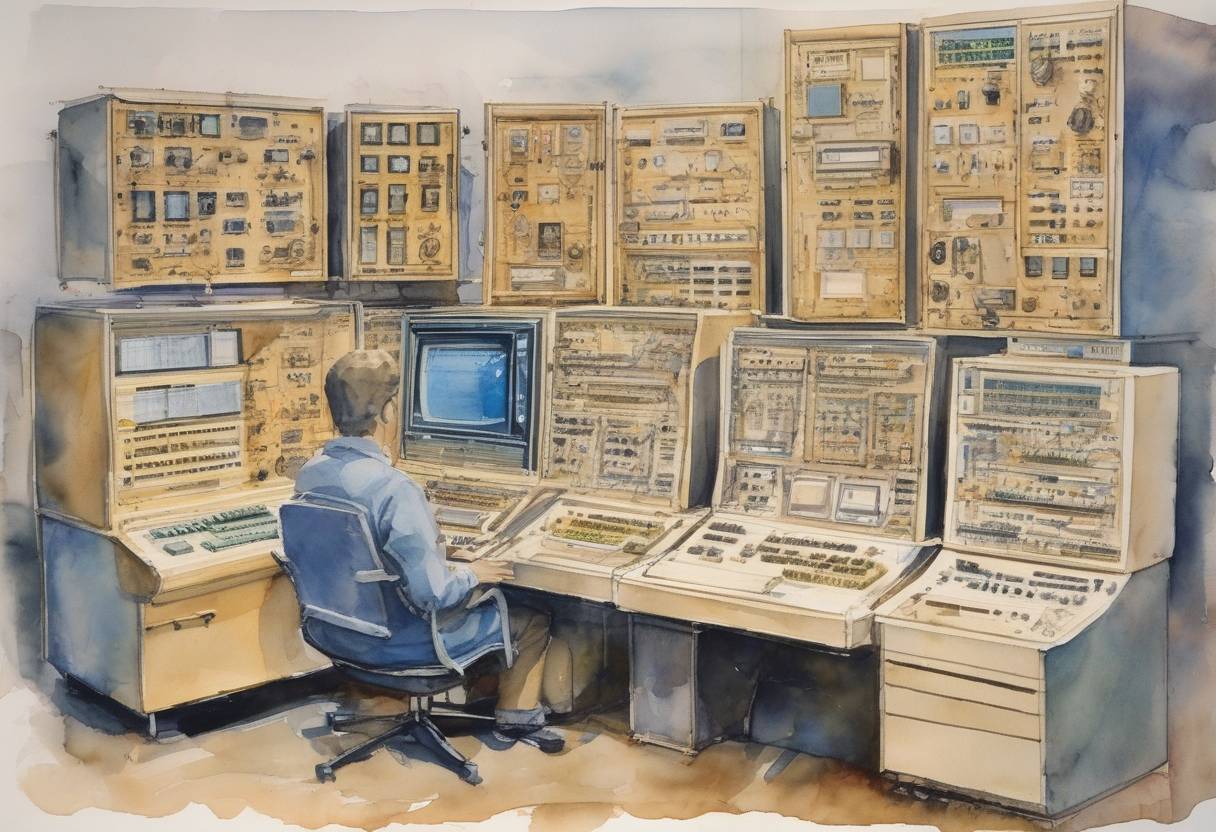
On October 29, 1969, a groundbreaking event in the history of technology and communication took place: the first-ever computer-to-computer link was established on ARPANET, the precursor to the modern internet. This historic connection was made between the University of California, Los Angeles (UCLA) and the Stanford Research Institute (SRI).
ARPANET, short for the Advanced Research Projects Agency Network, was developed by the United States Department of Defense’s Advanced Research Projects Agency (ARPA). The project aimed to create a network that would enable multiple computers to communicate over long distances, a revolutionary concept at the time. The primary goal was to facilitate resource sharing among research institutions and to ensure communication could continue even if parts of the network were damaged.
Development of Packet Switching: The concept of packet switching, which breaks data into smaller packets for transmission, was crucial for ARPANET’s design. This method was more efficient and reliable than traditional circuit-switching techniques.
Selection of Initial Nodes: Four initial nodes were chosen for ARPANET: UCLA, Stanford Research Institute, the University of California, Santa Barbara, and the University of Utah. These sites were selected for their advanced computing capabilities and research focus.
Installation of Interface Message Processors (IMPs): The Interface Message Processor, a type of early router, was installed at each node to manage data transmission. The first IMP was delivered to UCLA in September 1969.
On October 29, 1969, at 10:30 PM, a team led by Professor Leonard Kleinrock at UCLA attempted to send a message to the Stanford Research Institute. The intended message was the word “LOGIN.” However, the system crashed after the first two letters, and only “LO” was successfully transmitted. Despite this initial hiccup, the event marked the first successful communication between two computers over a network.
Expansion of ARPANET: Following the successful connection, ARPANET rapidly expanded. By December 1969, all four initial nodes were connected. The network continued to grow, eventually evolving into the global internet we know today.
Foundation for the Internet: ARPANET’s development laid the groundwork for many of the protocols and technologies that underpin the modern internet, including TCP/IP, which was introduced in the 1980s.
Impact on Communication and Society: The establishment of ARPANET marked the beginning of a new era in communication, leading to the development of email, the World Wide Web, and countless other innovations that have transformed how people interact, share information, and conduct business.
The first computer-to-computer link on ARPANET was a pivotal moment in technological history, demonstrating the potential of networked communication and setting the stage for the digital age.
Source: www.britannica.com