Argentina Invades the Falkland Islands: Beginning of the Falklands War
1982 · Stanley, Falkland Islands
Argentina invades the Falkland Islands, beginning the Falklands War with the United Kingdom.
March 19, 1982
Falklands War: Argentinian forces landed on South Georgia Island, beginning the conflict with the United Kingdom over the Falkland Islands.
South Georgia Island, United Kingdom | Argentinian military
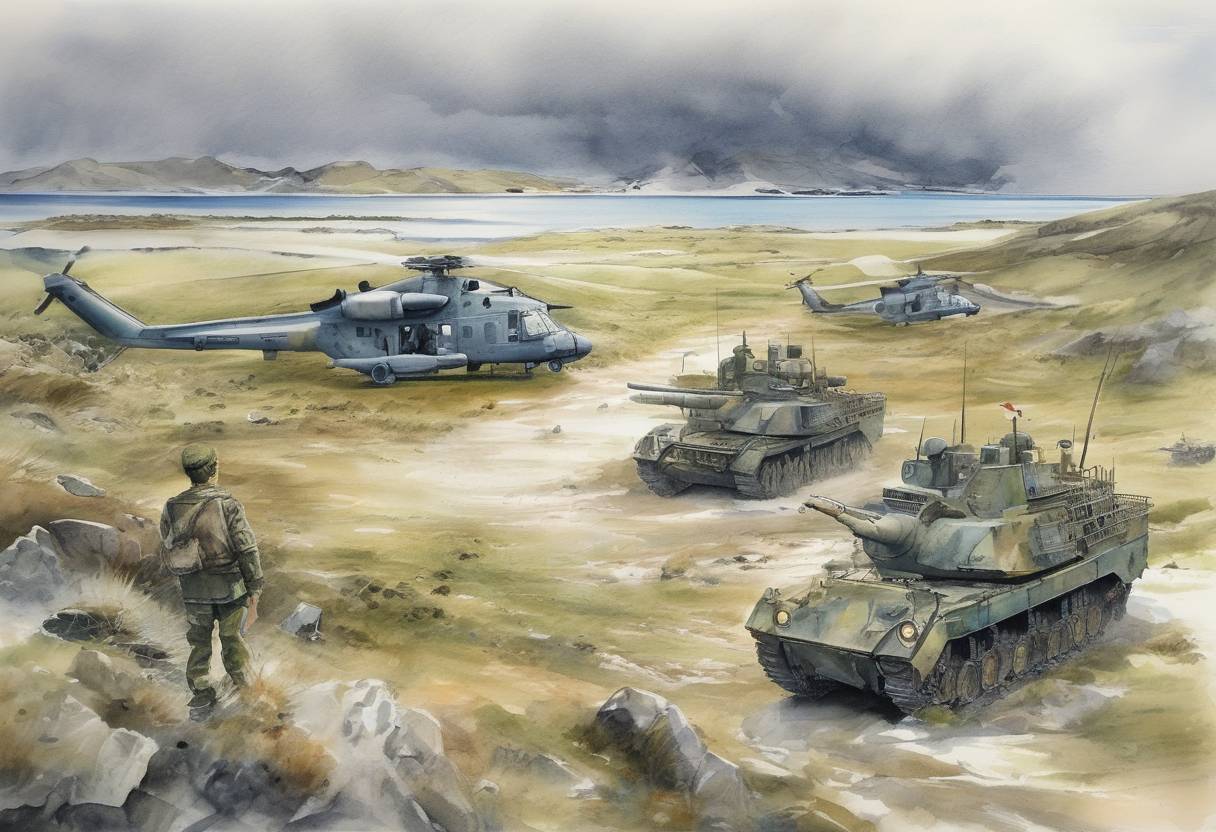
The Falklands War was a ten-week conflict between Argentina and the United Kingdom over two British Overseas Territories in the South Atlantic: the Falkland Islands and South Georgia and the South Sandwich Islands. The roots of the conflict trace back to longstanding sovereignty disputes between the two nations, with Argentina claiming the islands as part of its territory, while the UK maintained its claim based on continuous administration since 1833.
On March 19, 1982, the conflict began to escalate when a group of Argentine scrap metal workers, accompanied by Argentine marines, landed on South Georgia Island, a remote and inhospitable island located about 1,390 kilometers (864 miles) east of the Falkland Islands. The group raised the Argentine flag, an act that was perceived as a direct challenge to British sovereignty.
Diplomatic Tensions: Prior to the landing, diplomatic tensions between Argentina and the United Kingdom had been increasing. Argentina’s military junta, led by General Leopoldo Galtieri, was facing domestic unrest and saw the reclamation of the islands as a means to bolster national pride and distract from internal issues.
Preparations: The Argentine government had been making covert preparations for a potential military operation to assert its claim over the islands. The landing on South Georgia was part of these broader plans.
The Workers’ Arrival: The Argentine workers arrived aboard the transport ship ARA Bahía Buen Suceso under the pretense of salvaging scrap metal from an abandoned whaling station. However, the presence of Argentine marines and the raising of the national flag indicated a more strategic intent.
British Response: The British government, led by Prime Minister Margaret Thatcher, viewed the landing as an act of aggression. The UK demanded the immediate withdrawal of Argentine forces and began to prepare a military response.
Escalation to War: The landing on South Georgia was a precursor to the full-scale invasion of the Falkland Islands by Argentine forces on April 2, 1982. This invasion marked the official start of the Falklands War.
British Military Response: In response to the invasion, the UK dispatched a naval task force to the South Atlantic to reclaim the islands. The conflict lasted until June 14, 1982, when Argentine forces surrendered.
Outcome: The war resulted in a British victory, with the UK reasserting control over the Falkland Islands and South Georgia. The conflict had significant political ramifications in both countries, leading to the fall of the Argentine junta and bolstering Thatcher’s government in the UK.
The Falklands War highlighted issues of colonial legacy, national sovereignty, and the strategic importance of remote territories. It also underscored the complexities of international diplomacy and military engagement in the late 20th century. The conflict remains a sensitive topic in Argentine-British relations, with Argentina continuing to assert its claim over the islands.
Source: en.wikipedia.org