Defrocking of Former Cardinal Theodore McCarrick
2019 · Vatican City, Vatican City
The Vatican announced that it had defrocked former Cardinal Theodore McCarrick after finding him guilty of sexual abuse.
November 18, 1626
St. Peter's Basilica in Vatican City was consecrated by Pope Urban VIII.
Vatican City, Vatican City | Catholic Church
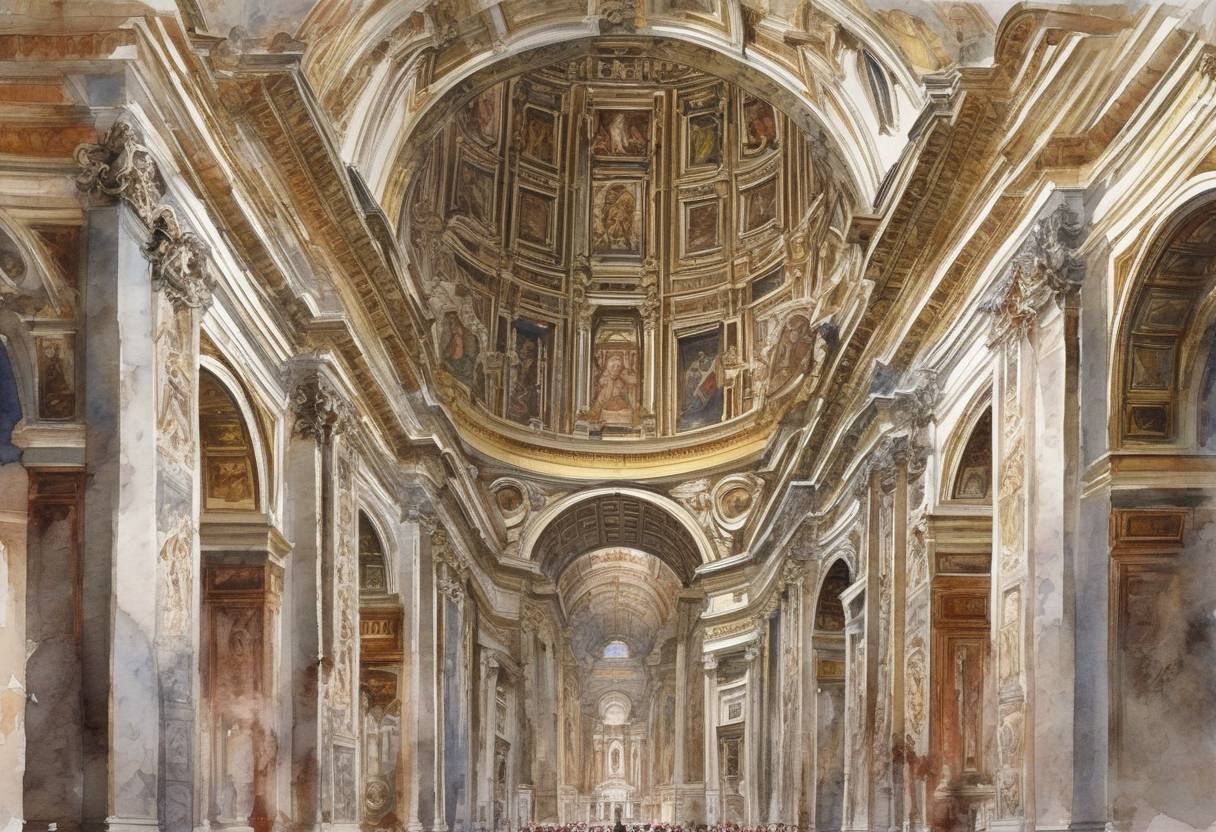
On November 18, 1626, St. Peter’s Basilica in Vatican City was consecrated by Pope Urban VIII. This event marked the culmination of one of the most significant architectural and religious projects in the history of the Catholic Church.
Old St. Peter’s Basilica: The original basilica, commissioned by Emperor Constantine the Great, was constructed in the 4th century AD. Over time, it fell into disrepair, prompting the need for a new structure.
Renaissance Vision: The decision to rebuild St. Peter’s was initiated by Pope Julius II in the early 16th century. The project attracted some of the greatest artists and architects of the Renaissance, including Donato Bramante, Michelangelo, Carlo Maderno, and Gian Lorenzo Bernini.
Bramante’s Design: The initial design was conceived by Donato Bramante, who envisioned a Greek cross plan. Construction began in 1506.
Michelangelo’s Contribution: After Bramante’s death, Michelangelo took over the project in 1547. He redesigned the basilica into a more simplified and robust form, famously completing the iconic dome.
Maderno’s Façade: Carlo Maderno extended the nave and added the grand façade, completing it in 1612, which gave the basilica its current Latin cross shape.
Bernini’s Piazza: Gian Lorenzo Bernini later designed the grand St. Peter’s Square, enhancing the basilica’s approach and visual impact.
Pope Urban VIII: The consecration was performed by Pope Urban VIII, who had been a significant patron of the arts and architecture during his papacy.
Significance: The consecration of St. Peter’s Basilica was not only a religious milestone but also a symbol of the Catholic Church’s power and influence during the Counter-Reformation.
Architectural Influence: St. Peter’s Basilica became a model for church architecture worldwide, influencing countless structures with its grandeur and design.
Cultural Impact: The basilica remains a central site for Catholic worship and pilgrimage, hosting numerous significant religious events, including papal ceremonies and canonizations.
Tourist Attraction: Today, it is one of the most visited sites in the world, drawing millions of tourists and pilgrims annually.
St. Peter’s Basilica stands as a testament to the artistic and architectural achievements of the Renaissance and the enduring legacy of the Catholic Church. Its consecration in 1626 marked the beginning of its role as a central hub for Catholicism and a masterpiece of human creativity.
Source: en.wikipedia.org