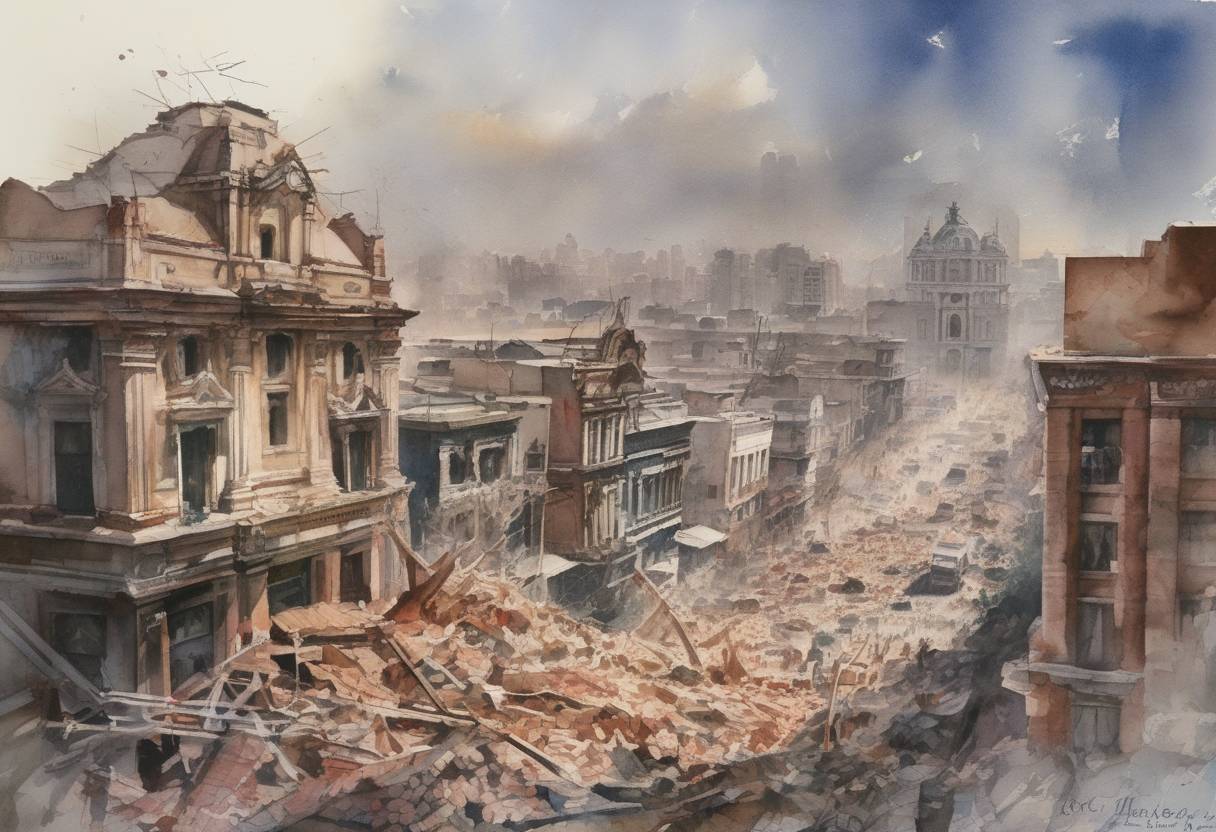
The 1985 Mexico City Earthquake
On September 19, 1985, a catastrophic earthquake struck Mexico City, resulting in widespread destruction and significant loss of life. This seismic event is remembered as one of the deadliest earthquakes in the history of the Americas.
Key Details
- Date and Time: The earthquake occurred on September 19, 1985, at 7:17 a.m. local time.
- Magnitude: The earthquake registered a magnitude of 8.1 on the Richter scale.
- Epicenter: The epicenter was located off the Pacific coast of Mexico, near the state of Michoacán, approximately 350 kilometers (about 220 miles) from Mexico City.
- Depth: The earthquake had a relatively shallow depth of about 15 kilometers (9.3 miles), which contributed to its destructive power.
Impact on Mexico City
- Destruction: Despite the epicenter being hundreds of kilometers away, Mexico City suffered extensive damage due to its location on an ancient lakebed, which amplified the seismic waves. Numerous buildings, including hospitals, schools, and residential structures, collapsed.
- Casualties: The earthquake resulted in the deaths of an estimated 10,000 people, although some estimates suggest the toll could be higher. Tens of thousands were injured, and many more were left homeless.
- Infrastructure Damage: Critical infrastructure, including roads, bridges, and public utilities, was severely damaged, complicating rescue and recovery efforts.
Response and Aftermath
- Rescue Efforts: In the immediate aftermath, rescue operations were launched, with volunteers and emergency services working tirelessly to save those trapped under the rubble. The Mexican government, along with international aid, played a crucial role in the relief efforts.
- Reconstruction: The disaster prompted significant changes in building codes and urban planning in Mexico City to better withstand future earthquakes. It also led to the establishment of more robust emergency response systems.
- Social and Political Impact: The earthquake exposed deficiencies in the government’s preparedness and response, leading to increased civic activism and changes in political dynamics in Mexico.
Historical Significance
The 1985 Mexico City earthquake is a pivotal event in Mexican history, highlighting the vulnerability of urban areas to natural disasters and the importance of disaster preparedness and resilient infrastructure. It also served as a catalyst for social and political change, influencing the country’s development in subsequent decades.