Captain James Cook Sights New Zealand - October 8, 1769
1769 · New Zealand Coast (sighted from ship), New Zealand
Captain James Cook, aboard the HMS Endeavour, became the first European to sight New Zealand during his first voyage of exploration.
December 13, 1642
Abel Tasman becomes the first European to sight New Zealand.
New Zealand, New Zealand | Dutch East India Company
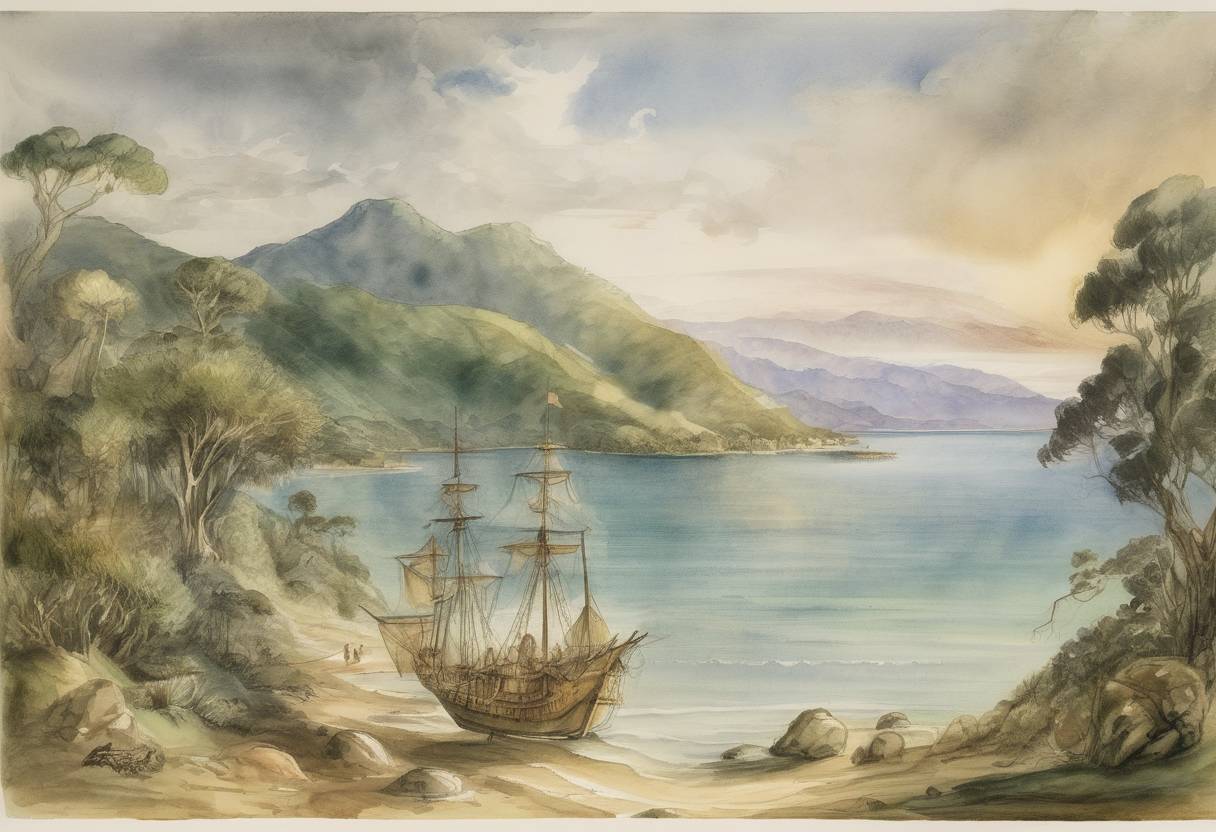
On December 13, 1642, the Dutch explorer Abel Tasman became the first European to sight New Zealand. This significant event marked a pivotal moment in the history of European exploration in the Pacific and the eventual European engagement with the indigenous Maori people.
Abel Tasman was an experienced navigator and explorer working for the Dutch East India Company (VOC). The VOC was keen on expanding its trade routes and influence in the Pacific region. In 1642, Tasman was commissioned to explore the southern hemisphere, specifically to find a new southern continent, which was believed to exist by European geographers of the time.
Tasman set sail from Batavia (present-day Jakarta, Indonesia) in August 1642 with two ships, the Heemskerck and the Zeehaen. His mission was to explore the waters south of the Indian Ocean and to chart any new lands he encountered. After discovering Tasmania (which he named Van Diemen’s Land after the Governor-General of the Dutch East Indies), Tasman continued eastward.
On December 13, 1642, Tasman and his crew sighted the northwest coast of the South Island of New Zealand. Tasman initially named the land “Staten Landt,” believing it might be connected to a landmass near the southern tip of South America. This name was later changed to New Zealand by Dutch cartographers, after the Dutch province of Zeeland.
Tasman’s initial contact with the indigenous Maori people was not peaceful. On December 18, 1642, as Tasman’s ships anchored in what is now known as Golden Bay, a group of Maori in canoes approached. Misunderstandings and cultural differences led to a confrontation, resulting in the deaths of four of Tasman’s crew members. Tasman named the area “Murderers’ Bay” and decided to leave without setting foot on the land.
Although Tasman did not land in New Zealand, his voyage provided the first European maps of the region, laying the groundwork for future exploration. It would be over a century before another European, British explorer Captain James Cook, would arrive and make more extensive contact with the Maori.
Tasman’s discovery was significant as it expanded European knowledge of the Pacific and contributed to the eventual colonization and settlement of New Zealand. His voyages demonstrated the vastness of the Pacific Ocean and the existence of substantial landmasses in the southern hemisphere, challenging existing European geographical theories.
Abel Tasman’s sighting of New Zealand on December 13, 1642, was a landmark event in the age of exploration. It marked the beginning of European awareness of New Zealand and set the stage for future interactions between Europeans and the indigenous Maori people.
Source: www.britannica.com