Battle of Andernach: Otto I's Victory Over Rebellion
939 · Andernach, East Francia
Battle of Andernach: Otto I, King of East Francia, defeats a rebellion by his former allies.
August 7, 0936
Otto I is crowned King of East Francia (Germany) at Aachen Cathedral, marking the beginning of his reign.
Aachen, East Francia | East Francia
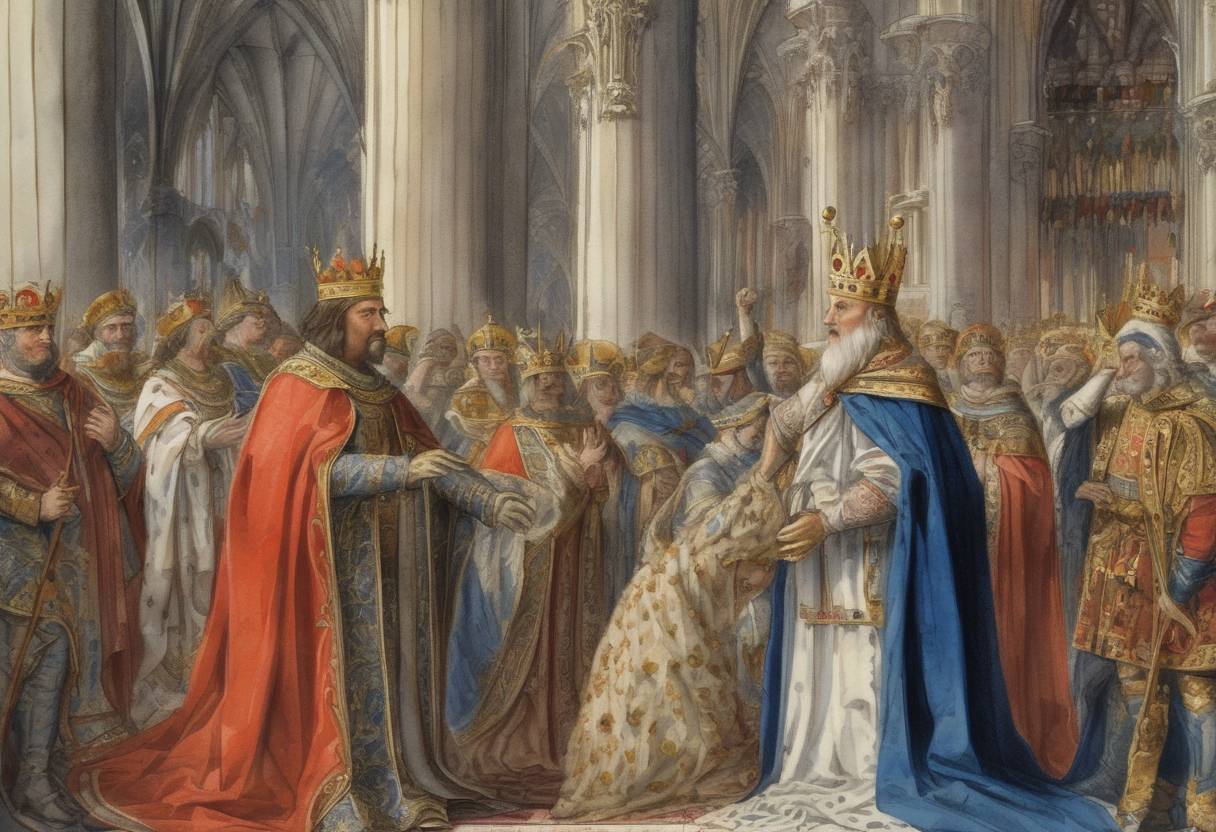
On August 7, 936, Otto I, also known as Otto the Great, was crowned King of East Francia at Aachen Cathedral. This event marked the beginning of a pivotal reign that would shape the future of the Holy Roman Empire and medieval Europe.
Dynastic Background: Otto I was the son of Henry the Fowler, the Duke of Saxony, who became King of East Francia in 919. Henry’s reign was marked by efforts to consolidate power and stabilize the kingdom, which was fragmented after the decline of Carolingian authority.
Succession: Upon Henry’s death in 936, Otto was his designated successor. His coronation was significant as it represented the continuation of the Saxon dynasty’s influence over East Francia, a region that would later evolve into the Holy Roman Empire.
Location: The ceremony took place at Aachen Cathedral, a site of immense symbolic importance. Aachen was the favored residence of Charlemagne, and its cathedral was a traditional coronation site, underscoring Otto’s connection to the legacy of the Carolingian Empire.
Rituals and Symbolism: The coronation was a grand affair, attended by nobles and clergy from across the realm. Otto was anointed and crowned by the archbishop, a ritual that emphasized the divine approval of his rule and the unity of church and state.
Consolidation of Power: Otto’s reign was characterized by efforts to strengthen royal authority over the duchies of East Francia. He skillfully managed relationships with the nobility, often through strategic marriages and alliances.
Military Campaigns: Otto was a formidable military leader. He defended his realm against external threats, notably the Magyars, whom he decisively defeated at the Battle of Lechfeld in 955. This victory secured his reputation as a protector of Christendom.
Imperial Ambitions: Otto’s reign laid the groundwork for the revival of the Holy Roman Empire. In 962, he was crowned Emperor by Pope John XII, a title that linked his rule to the legacy of the ancient Roman Empire and expanded his influence over Italy.
Dynastic Continuity: Otto’s successful reign ensured the continuation of the Ottonian dynasty, which would rule the Holy Roman Empire for several generations.
Cultural and Political Impact: Otto’s reign is often seen as a period of cultural revival and political consolidation in medieval Europe. His efforts to integrate the church into the governance of the empire had lasting effects on the relationship between secular and ecclesiastical powers.
Historical Significance: Otto I is remembered as one of the most significant medieval rulers, whose policies and military successes helped shape the political landscape of Europe for centuries.
In summary, Otto I’s coronation on August 7, 936, was a defining moment in European history, marking the beginning of a reign that would have profound implications for the development of the Holy Roman Empire and the medieval European order.
Source: en.wikipedia.org