The Egyptian Revolution of 2011: February 3rd Events
2011 · Cairo, Egypt
The Egyptian Revolution of 2011 continues as protesters gather in Tahrir Square, demanding the resignation of President Hosni Mubarak.
February 3, 2014
The trial of former Egyptian President Mohamed Morsi begins, where he faces charges related to inciting the killing of protesters during his time in office.
Cairo, Egypt | Egyptian government
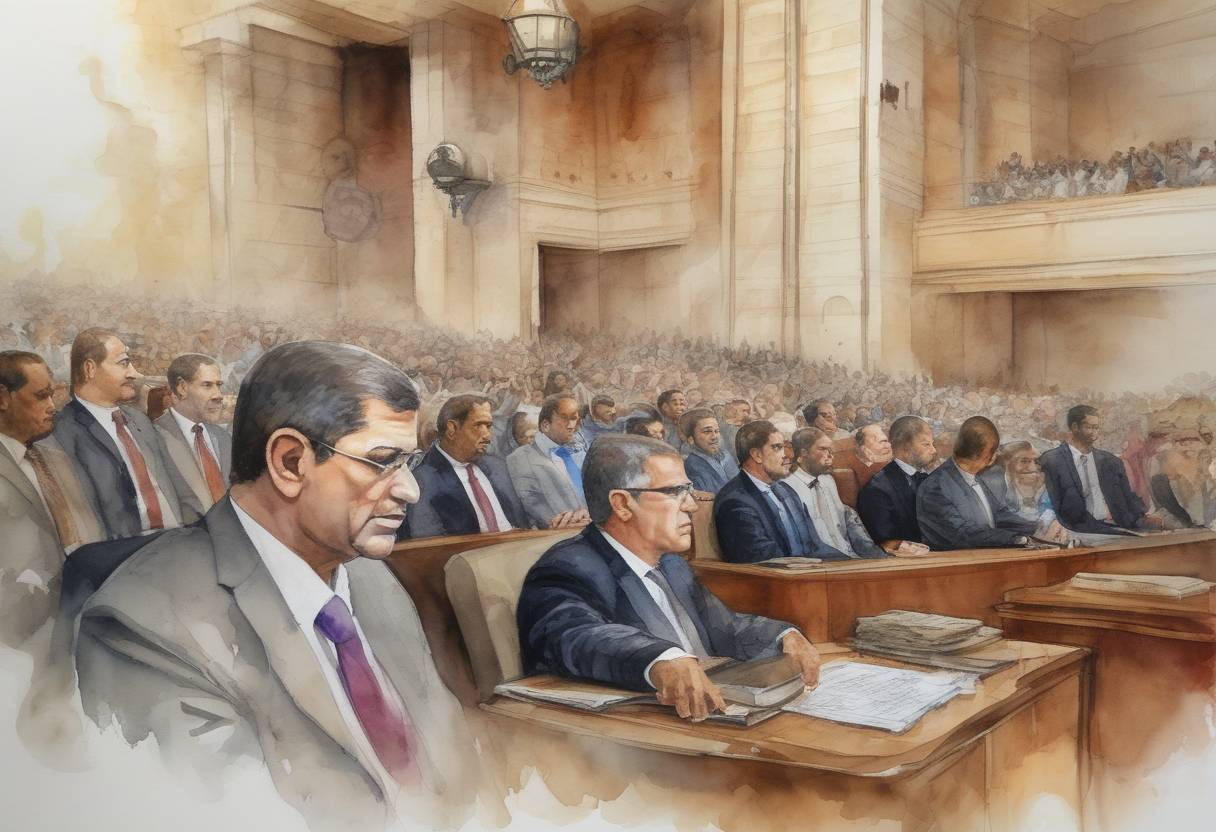
On February 3, 2014, the trial of former Egyptian President Mohamed Morsi commenced in Cairo. This marked a significant moment in Egypt’s turbulent political landscape following the Arab Spring and the subsequent ousting of Morsi from power.
Mohamed Morsi, a leading figure in the Muslim Brotherhood, became Egypt’s first democratically elected president in June 2012, following the revolution that ended Hosni Mubarak’s 30-year rule. However, his presidency was marred by political unrest, economic challenges, and accusations of consolidating power in the hands of the Brotherhood.
In July 2013, after mass protests against his rule, Morsi was deposed by the military, led by then-General Abdel Fattah el-Sisi. His removal from office led to widespread demonstrations and a crackdown on the Muslim Brotherhood, which was later designated a terrorist organization by the Egyptian government.
Morsi faced multiple charges, but the trial that began on February 3, 2014, specifically addressed accusations of inciting the killing of protesters outside the presidential palace in December 2012. During these protests, several people were killed, and many were injured in clashes between Morsi’s supporters and opponents.
The trial was part of a broader legal campaign against Morsi and other Brotherhood leaders, reflecting the deep political divisions in Egypt. Morsi and his co-defendants denied the charges, claiming they were politically motivated.
The trial was characterized by high security and intense media scrutiny. Morsi, who refused to recognize the court’s legitimacy, often disrupted proceedings by asserting that he was still the legitimate president of Egypt.
The trial was one of several legal battles Morsi faced. In April 2015, he was sentenced to 20 years in prison for his role in the December 2012 clashes. He also faced charges in other cases, including espionage and a prison break during the 2011 revolution.
Morsi’s trials and the broader crackdown on the Muslim Brotherhood were part of a larger effort by the Egyptian government to stabilize the country and suppress dissent. However, these actions drew criticism from international human rights organizations and raised concerns about the state of democracy and human rights in Egypt.
The trial of Mohamed Morsi highlighted the ongoing struggle for power and legitimacy in post-revolution Egypt. It underscored the challenges of transitioning to a stable democracy after decades of authoritarian rule and the complexities of balancing security with political freedoms.
Morsi’s trial and subsequent imprisonment were pivotal in shaping Egypt’s political trajectory, influencing both domestic policies and international relations. The events surrounding his presidency and trial continue to be a point of reference in discussions about governance, justice, and human rights in the region.
Source: www.bbc.com