Liberation of Dachau Concentration Camp
1945 · Dachau, Germany
Dachau concentration camp is liberated by United States troops.
March 20, 1933
The Dachau concentration camp, the first of the Nazi concentration camps, was completed and opened in Germany.
Dachau, Germany | Nazi Germany
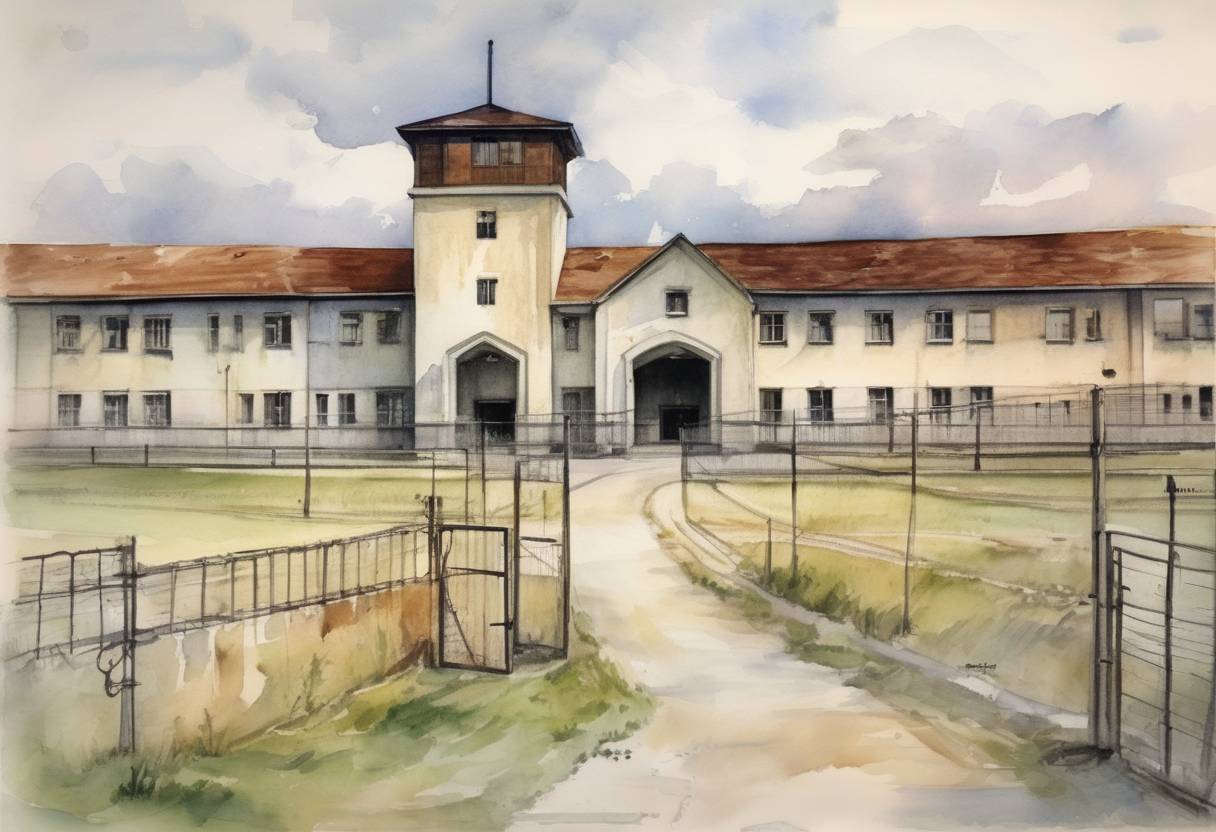
On March 20, 1933, the Dachau concentration camp was officially opened in Germany. It was the first of the Nazi concentration camps established by the National Socialist (Nazi) regime, marking a significant and ominous development in the history of Nazi Germany.
Rise of the Nazi Party: Adolf Hitler was appointed Chancellor of Germany on January 30, 1933. The Nazi Party quickly moved to consolidate power, targeting political opponents, particularly Communists and Social Democrats, as well as other groups deemed undesirable.
Need for Detention Facilities: The Reichstag Fire on February 27, 1933, was used by the Nazis to justify a crackdown on political dissent. This led to the arrest of thousands of political opponents, necessitating the creation of a centralized detention facility.
Location: Dachau was located near Munich in Bavaria, Germany. The site was chosen due to its proximity to Nazi strongholds and its existing infrastructure, which included an abandoned munitions factory.
Purpose: Initially, Dachau was intended to hold political prisoners. However, it soon became a model for other concentration camps and expanded to detain a wide range of groups, including Jews, Romani people, homosexuals, Jehovah’s Witnesses, and others.
Administration: Heinrich Himmler, then the Police President of Munich, announced the camp’s opening. The camp was initially run by the Bavarian State Police but later came under the control of the SS (Schutzstaffel), with Theodor Eicke as its first commandant.
Living Conditions: Prisoners at Dachau were subjected to brutal conditions, including overcrowding, forced labor, inadequate food, and harsh discipline. The camp became notorious for its inhumane treatment and the suffering of its inmates.
Role in the Nazi System: Dachau served as a training ground for SS guards and a prototype for the concentration camp system. It was instrumental in the development of the methods and practices that would be used in other camps across Nazi-occupied Europe.
Liberation: Dachau was liberated by American forces on April 29, 1945. By that time, it had held over 200,000 prisoners, with tens of thousands dying due to the appalling conditions and executions.
Post-War Trials: The Dachau Trials were held to prosecute war criminals associated with the camp. Many SS personnel and camp officials were tried and convicted for their roles in the atrocities committed there.
Memorialization: Today, Dachau serves as a memorial and museum, preserving the memory of those who suffered and died there. It stands as a stark reminder of the horrors of the Holocaust and the dangers of totalitarian regimes.
The opening of Dachau on March 20, 1933, marked the beginning of a dark chapter in history, symbolizing the systematic persecution and genocide perpetrated by the Nazi regime. Its legacy continues to educate and remind future generations of the importance of human rights and the need to prevent such atrocities from occurring again.
Source: en.wikipedia.org