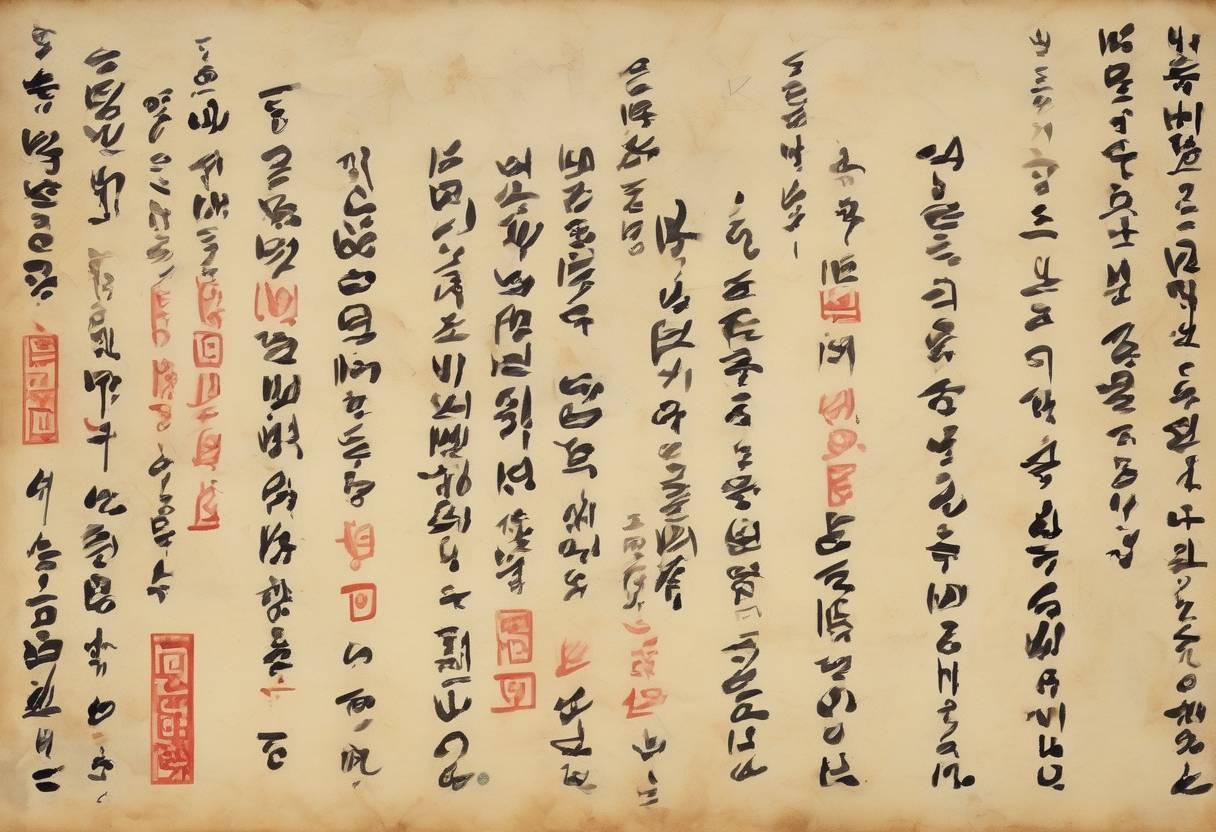
The Creation of the Korean Hangul Alphabet
On October 9, 1446, a significant cultural milestone was achieved in Korea with the promulgation of the Hangul alphabet by King Sejong the Great and his scholars. This event marked a transformative moment in Korean history, as it provided the Korean people with a unique and accessible writing system.
Historical Context
Before the creation of Hangul, Koreans primarily used Classical Chinese characters (Hanja) for written communication. This system was complex and difficult for the common people to learn, as it required extensive study and was largely accessible only to the elite class. Recognizing the limitations this imposed on literacy and communication, King Sejong sought to develop a writing system that could be easily learned and used by all Koreans.
The Creation of Hangul
King Sejong the Great, who reigned from 1418 to 1450, was a visionary ruler dedicated to the welfare of his people. He established the Hall of Worthies (Jiphyeonjeon), a royal research institute, where scholars worked on various projects, including the development of a new writing system.
The result of their efforts was Hangul, originally known as “Hunminjeongeum,” which means “The Correct Sounds for the Instruction of the People.” The system was designed to be simple and logical, with 14 consonants and 10 vowels that could be combined to form syllables. Each character was crafted to reflect the shape of the mouth and tongue when producing the corresponding sound, making it intuitive and easy to learn.
Significance and Impact
The introduction of Hangul had profound implications for Korean society:
Increased Literacy: Hangul democratized literacy, allowing people from all social classes to read and write. This facilitated greater communication and the spread of knowledge across the population.
Cultural Identity: Hangul became a symbol of Korean identity and pride, distinguishing Korean culture from Chinese influence and fostering a sense of national unity.
Literary Flourishing: With a writing system accessible to the masses, Korean literature and scholarship flourished, leading to a rich tradition of written works in the Korean language.
Aftermath and Legacy
Despite its initial introduction, Hangul faced resistance from the elite, who were accustomed to the prestige of Classical Chinese. However, over time, Hangul gained widespread acceptance and became the standard script for the Korean language.
Today, Hangul is celebrated annually in South Korea on October 9 as “Hangul Day,” honoring its creation and the lasting impact it has had on Korean culture and society. The alphabet is recognized for its scientific design and efficiency, often cited as one of the most logical writing systems in the world.
In conclusion, the creation of Hangul by King Sejong the Great and his scholars was a pivotal development in Korean history, fostering literacy, cultural identity, and national unity. Its legacy continues to be celebrated and appreciated both within Korea and around the globe.