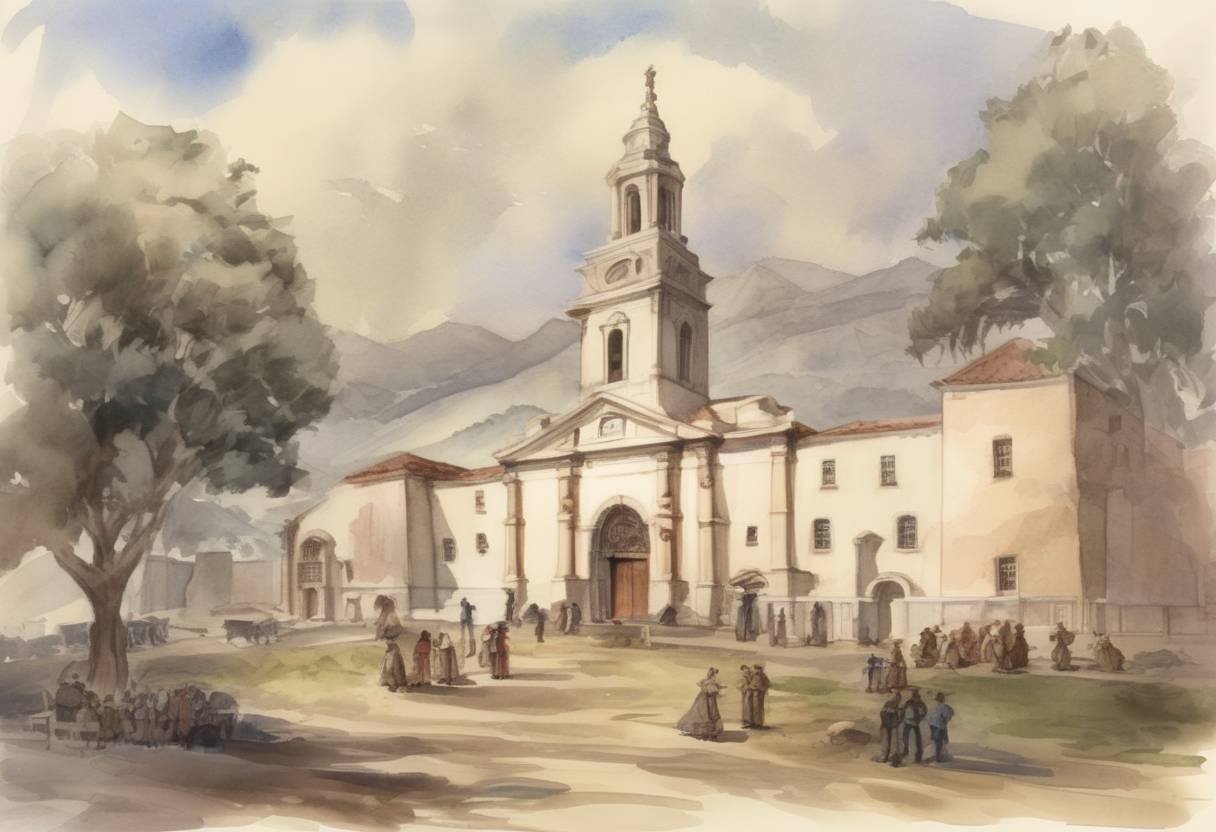
Establishment of Mission San Francisco de Asís
On October 9, 1776, a group of Spanish missionaries founded the Mission San Francisco de Asís, commonly known as Mission Dolores, in what is now San Francisco, California. This event was part of a broader Spanish effort to expand their influence in the New World through the establishment of missions, which served both religious and colonial purposes.
Historical Context
- Spanish Colonization: In the late 18th century, Spain sought to consolidate its territories in North America, particularly in what is now California. The mission system was a key component of this strategy, aiming to convert Indigenous peoples to Christianity and integrate them into Spanish colonial society.
- Mission System: The missions were part of a chain stretching from present-day Mexico into California, intended to secure Spain’s claim to the region against other European powers, notably Russia and Britain.
Founding of Mission San Francisco de Asís
- Location: The mission was established near a small lake and creek, which the Spanish named “Laguna de los Dolores,” hence the mission’s nickname, Mission Dolores.
- Founders: The mission was founded by Lieutenant José Joaquin Moraga and Father Francisco Palóu, who were part of the expedition led by Juan Bautista de Anza. Father Palóu was a disciple of Father Junípero Serra, the founder of the California mission system.
- Purpose: The mission aimed to convert the local Ohlone people to Christianity and to teach them European agricultural practices and crafts.
Significance and Legacy
- Cultural Impact: The establishment of the mission marked the beginning of significant cultural and demographic changes for the Indigenous populations, often resulting in the disruption of their traditional ways of life.
- Architectural Heritage: The original adobe structure of Mission San Francisco de Asís was completed in 1791 and remains the oldest surviving building in San Francisco. It is a significant historical and cultural landmark.
- Urban Development: The mission played a crucial role in the early development of San Francisco, which grew around the mission site. The city retained the name of the mission, reflecting its origins.
Aftermath
- Secularization: In the 1830s, the Mexican government secularized the missions, redistributing their lands. This led to the decline of the mission system.
- Modern Era: Today, Mission San Francisco de Asís is a popular tourist destination and a reminder of the complex history of California’s colonization.
The establishment of Mission San Francisco de Asís is a pivotal event in the history of California, illustrating the intersection of European colonial ambitions and Indigenous cultures. Its legacy continues to influence the cultural and historical landscape of San Francisco.