Opening of the Manchester Ship Canal
1894 · Manchester, United Kingdom
The Manchester Ship Canal was officially opened by Queen Victoria after eight years of construction, linking Manchester to the Irish Sea.
August 16, 1819
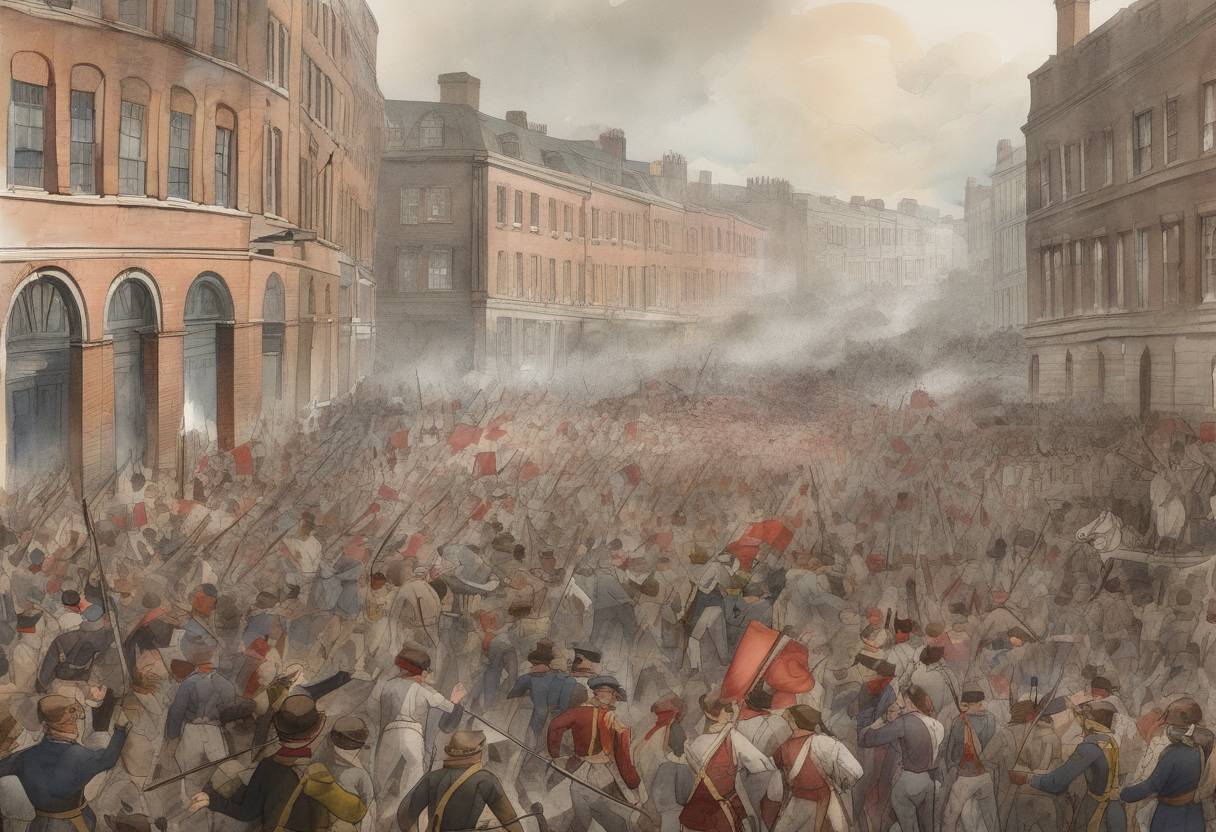
The Peterloo Massacre took place in Manchester, England, where cavalry charged into a crowd of 60,000–80,000 who had gathered to demand the reform of parliamentary representation.
Manchester, United Kingdom | British Government
In the early 19th century, Britain was undergoing significant social and economic changes. The Industrial Revolution had transformed the economy, but it also led to widespread unemployment and poor working conditions. Additionally, the Corn Laws, which imposed tariffs on imported grain, exacerbated food shortages and increased the cost of living for the working class.
The political system was also a source of discontent. Parliamentary representation was highly unequal, with many industrial towns like Manchester lacking their own MPs, while “rotten boroughs” with tiny populations had disproportionate influence. This led to growing demands for reform, particularly from the working class and radical groups advocating for universal suffrage and fairer representation.
On August 16, 1819, a large crowd of 60,000 to 80,000 people gathered at St Peter’s Field in Manchester to peacefully demand parliamentary reform. The meeting was organized by the Manchester Patriotic Union, a group advocating for political reform, and featured prominent speakers, including the well-known orator Henry Hunt.
As the peaceful assembly progressed, local magistrates, fearing the potential for unrest, called on the military to disperse the crowd. The Manchester and Salford Yeomanry, a local cavalry unit, along with regular troops, were dispatched to the scene.
The cavalry charged into the dense crowd, wielding sabres. The ensuing chaos resulted in the deaths of 15 people and injuries to hundreds more. The event was quickly dubbed the “Peterloo Massacre,” a grim reference to the Battle of Waterloo, which had occurred four years earlier.
The Peterloo Massacre had profound consequences:
Public Outcry: The violent suppression of a peaceful protest shocked the nation and led to widespread public outcry. It highlighted the urgent need for political reform and the protection of civil liberties.
Government Response: In response to the unrest, the government passed the Six Acts, a series of repressive measures aimed at curbing radical activities and restricting public gatherings.
Reform Movement: Despite the immediate crackdown, the massacre galvanized the reform movement. It became a symbol of the struggle for democratic rights and inspired future generations to continue the fight for electoral reform.
Legacy: The Peterloo Massacre is remembered as a pivotal moment in British history, underscoring the importance of peaceful protest and the ongoing struggle for political representation and social justice.
The event remains a significant chapter in the history of British democracy, illustrating the tensions between authority and the rights of citizens to assemble and express their demands for change.
Source: en.wikipedia.org