The Discovery of Charles Lindbergh Jr.'s Body - May 12, 1932
1932 · Hopewell, United States
The body of Charles Lindbergh Jr., the kidnapped son of Charles Lindbergh, is found in Hopewell, New Jersey.
May 23, 1934
Bonnie Parker and Clyde Barrow, infamous American criminals, were ambushed and killed by law enforcement officers in Bienville Parish, Louisiana.
Bienville Parish, United States | Texas and Louisiana law enforcement
On May 23, 1934, the infamous American criminal duo Bonnie Parker and Clyde Barrow were ambushed and killed by law enforcement officers in Bienville Parish, Louisiana. This event marked the dramatic end of a notorious crime spree that had captured the American public’s imagination during the Great Depression.
Bonnie Parker and Clyde Barrow were part of the Barrow Gang, a group of outlaws who engaged in numerous criminal activities, including bank robberies, burglaries, and murders, across several states in the early 1930s. Their criminal exploits were sensationalized by the media, which often romanticized their image as rebellious antiheroes defying authority during a time of economic hardship.
Bonnie Parker: Born on October 1, 1910, in Rowena, Texas, Bonnie was a bright student with aspirations of becoming a poet or actress. Her life took a turn when she met Clyde Barrow in 1930.
Clyde Barrow: Born on March 24, 1909, in Ellis County, Texas, Clyde grew up in a poor family and turned to crime at a young age. He was known for his charisma and driving skills, which were crucial to the gang’s numerous escapes from law enforcement.
The ambush that led to their deaths was orchestrated by a posse of six law enforcement officers led by former Texas Ranger Frank Hamer. Hamer had been tracking the couple for months, using tips from informants and studying their patterns to predict their movements.
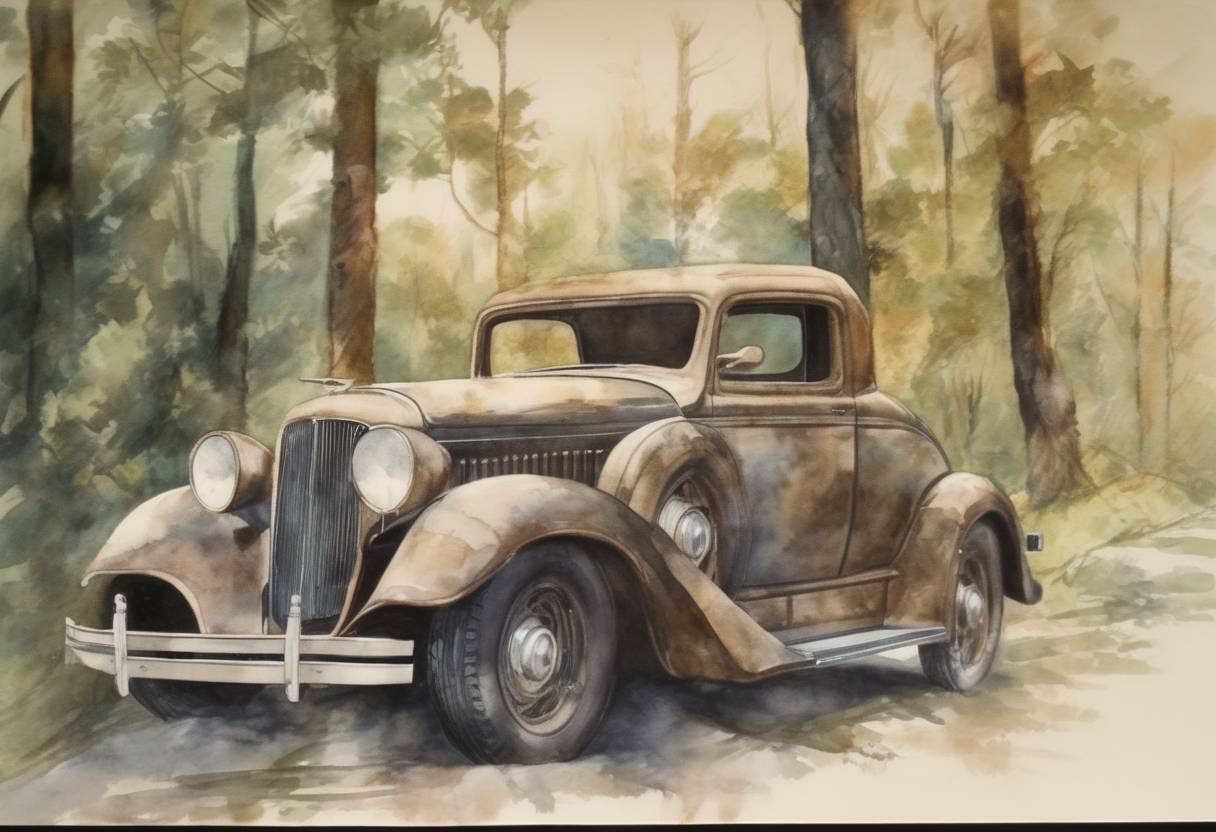
On the morning of May 23, 1934, the posse set up an ambush along a rural road near Gibsland, Louisiana. They knew Bonnie and Clyde would be traveling this route based on information from Henry Methvin, a gang member who had turned informant. As the couple approached in their stolen Ford V8, the officers opened fire, unleashing a hail of bullets that killed both Bonnie and Clyde instantly.
The deaths of Bonnie and Clyde marked the end of their crime spree and brought a sense of relief to law enforcement and the public, who had been terrorized by their activities. The ambush also highlighted the increasing coordination and determination of law enforcement agencies to combat organized crime during this era.
The legacy of Bonnie and Clyde endures in American culture, with their story being retold in books, films, and songs. They remain emblematic of the outlaw image, reflecting both the desperation and defiance of the Great Depression era.
The ambush of Bonnie Parker and Clyde Barrow on May 23, 1934, was a pivotal moment in American criminal history. It underscored the challenges faced by law enforcement in dealing with organized crime and left an indelible mark on popular culture, illustrating the complex interplay between crime, media, and public perception during the 1930s.
Source: en.wikipedia.org