The Opening of the Golden Gate Bridge to Pedestrian Traffic
1937 · San Francisco, United States
The Golden Gate Bridge in San Francisco, California, is opened to pedestrian traffic.
May 28, 1937
The Golden Gate Bridge in San Francisco, California, is opened to vehicular traffic. It was the longest and tallest suspension bridge in the world at the time.
San Francisco, United States | Golden Gate Bridge, Highway and Transportation District
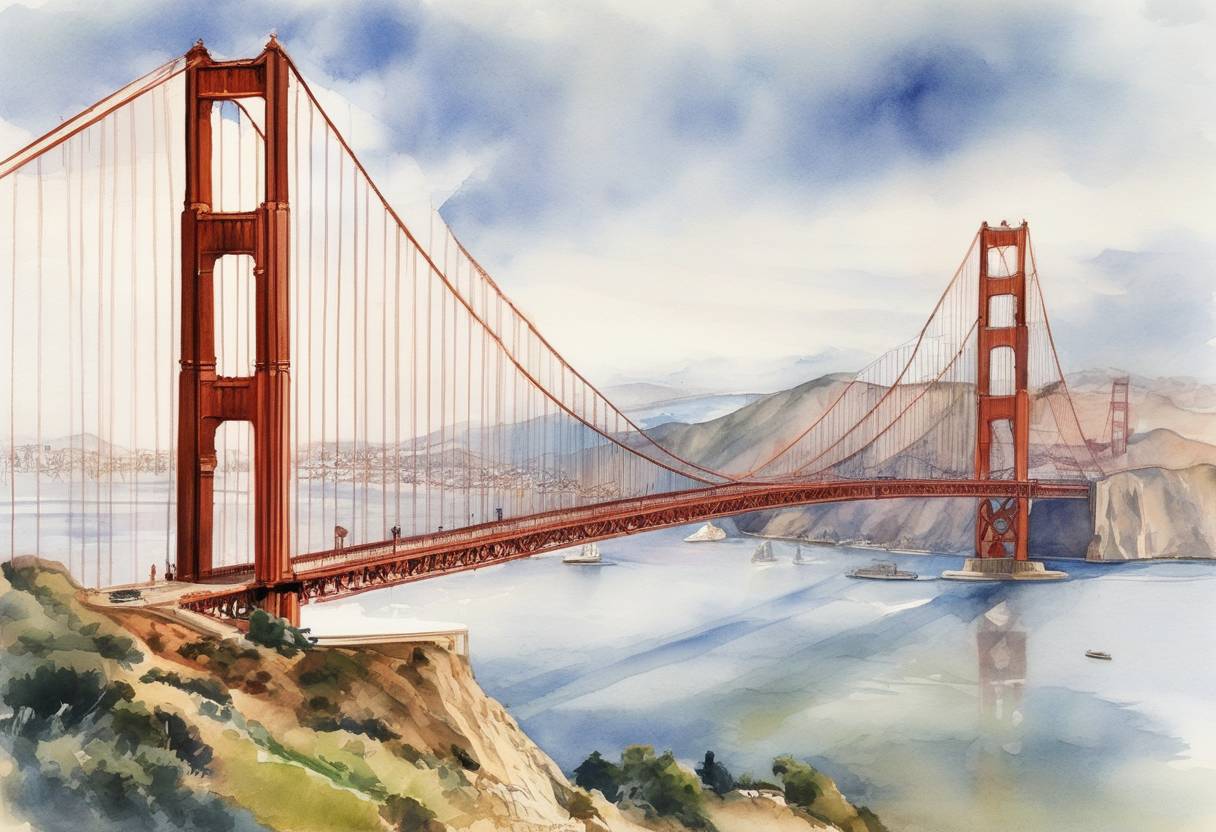
On May 28, 1937, the Golden Gate Bridge in San Francisco, California, was opened to vehicular traffic, marking a significant milestone in engineering and transportation history. At the time of its completion, it was the longest and tallest suspension bridge in the world, a title that underscored its monumental achievement in design and construction.
Planning and Design: The idea for a bridge spanning the Golden Gate Strait, the entrance to San Francisco Bay from the Pacific Ocean, was conceived in the early 20th century. The project faced numerous challenges, including strong opposition from ferry operators, skepticism about its feasibility due to the strait’s strong tides and winds, and the Great Depression’s economic constraints.
Chief Engineer: Joseph Strauss, an engineer with a background in bridge design, was the chief engineer of the project. He worked alongside a team of experts, including Irving Morrow, who contributed to the Art Deco design elements, and Leon Moisseiff, who helped with the suspension design.
Construction: Construction began on January 5, 1933. The project faced significant challenges, including the need for innovative techniques to anchor the bridge in the deep waters of the strait and to withstand the region’s seismic activity. Despite these challenges, the construction was completed ahead of schedule and under budget.
Pedestrian Day: The bridge was first opened to pedestrians on May 27, 1937, allowing thousands of people to walk across and experience the marvel of engineering firsthand.
Vehicular Traffic: The following day, May 28, 1937, the bridge was opened to vehicular traffic. The opening ceremony was attended by thousands, including local dignitaries and the public, celebrating the bridge as a symbol of progress and innovation.
Length and Height: The Golden Gate Bridge spans approximately 1.7 miles (2.7 kilometers) and has a main span of 4,200 feet (1,280 meters), making it the longest suspension bridge in the world at the time. The towers rise 746 feet (227 meters) above the water, making it the tallest as well.
Color: The bridge’s distinctive “International Orange” color was chosen for visibility in San Francisco’s frequent fog and for its aesthetic appeal.
Engineering Feat: The bridge’s completion was a testament to human ingenuity and engineering prowess, overcoming natural and economic challenges.
Economic Impact: It facilitated economic growth by improving transportation links between San Francisco and Marin County, boosting trade and tourism.
Cultural Icon: Over the years, the Golden Gate Bridge has become an iconic symbol of San Francisco and the United States, celebrated in art, film, and literature.
Maintenance and Upgrades: Over the decades, the bridge has undergone numerous maintenance and retrofitting projects to ensure its safety and longevity, particularly in response to seismic risks.
Tourist Attraction: Today, the Golden Gate Bridge is one of the most photographed landmarks in the world, attracting millions of visitors each year.
The opening of the Golden Gate Bridge on May 28, 1937, remains a landmark event in the history of civil engineering and a proud moment for San Francisco and the United States.
Source: en.wikipedia.org