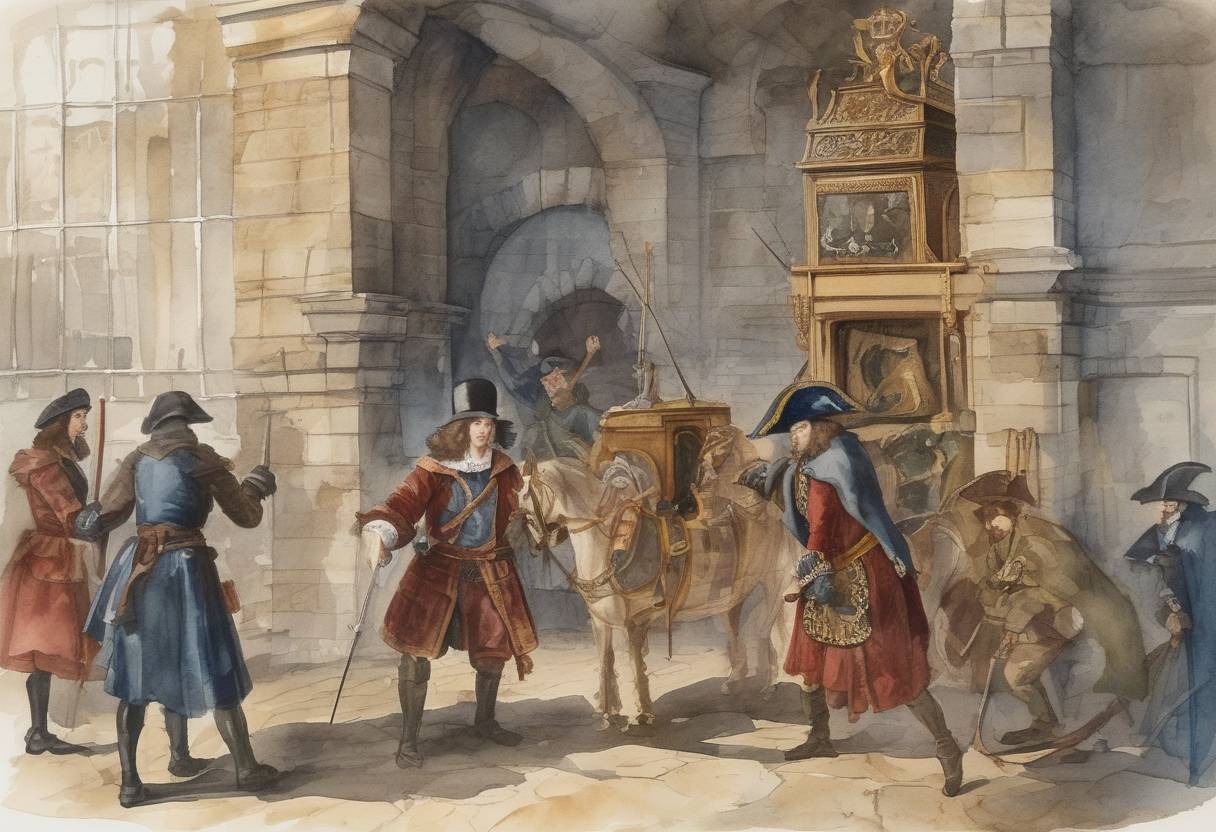
Thomas Blood’s Attempt to Steal the Crown Jewels - May 9, 1671
On May 9, 1671, Thomas Blood, an audacious Irish adventurer, made a daring attempt to steal the Crown Jewels from the Tower of London. This event stands out as one of the most infamous heists in British history, showcasing Blood’s boldness and the vulnerabilities of the Tower’s security at the time.
Background
Thomas Blood was born in County Meath, Ireland, in 1618. He was a soldier and adventurer who had previously been involved in various plots and conspiracies against the English government. Blood’s life was marked by his shifting allegiances during the English Civil War and his participation in the failed Royalist uprising in 1663, known as the “Plot of the Sealed Knot.”
By 1671, Blood had established himself as a notorious figure, known for his audacity and cunning. His motivations for attempting to steal the Crown Jewels were likely a combination of financial gain and his rebellious spirit against the English monarchy.
The Heist
Blood’s plan to steal the Crown Jewels was meticulously crafted. Disguised as a parson, Blood ingratiated himself with Talbot Edwards, the elderly Keeper of the Jewels, by visiting the Tower several times under the pretense of viewing the jewels. Blood even went so far as to arrange a fake marriage between his supposed “nephew” and Edwards’ daughter, further gaining the keeper’s trust.
On the morning of May 9, 1671, Blood, accompanied by three accomplices, visited the Tower under the guise of a family visit. Once inside, they overpowered Edwards, gagged him, and attempted to make off with the Crown Jewels. Blood flattened the crown with a mallet to hide it under his cloak, while his accomplices stuffed other items, such as the orb and scepter, into their clothing.
Capture and Aftermath
The heist was foiled when Edwards managed to free himself and raise the alarm. Blood and his accomplices were captured before they could escape the Tower grounds. Remarkably, Blood was taken to King Charles II, where he charmed the monarch with his audacity and wit. In a surprising turn of events, Blood was not only pardoned but also granted land in Ireland.
The reasons behind King Charles II’s leniency remain a subject of speculation. Some historians suggest that the king admired Blood’s boldness, while others believe there may have been political motivations or undisclosed connections between Blood and the court.
Historical Significance
The attempted theft of the Crown Jewels by Thomas Blood highlighted the vulnerabilities in the security of the Tower of London at the time. It also underscored the complex political landscape of the period, where allegiances were often fluid, and audacious acts could sometimes be rewarded rather than punished.
Blood’s story has since become a legendary tale of intrigue and adventure, illustrating the daring exploits of one of history’s most colorful characters.