The End of British Protectorate in Egypt: February 28, 1922
1922 · Cairo, Egypt
The British Empire accepts the de facto independence of Egypt by formally ending its protectorate status, although British military occupation continues.
February 22, 1958
Egypt and Syria merged to form the United Arab Republic, a short-lived political union.
Cairo, Egypt | United Arab Republic
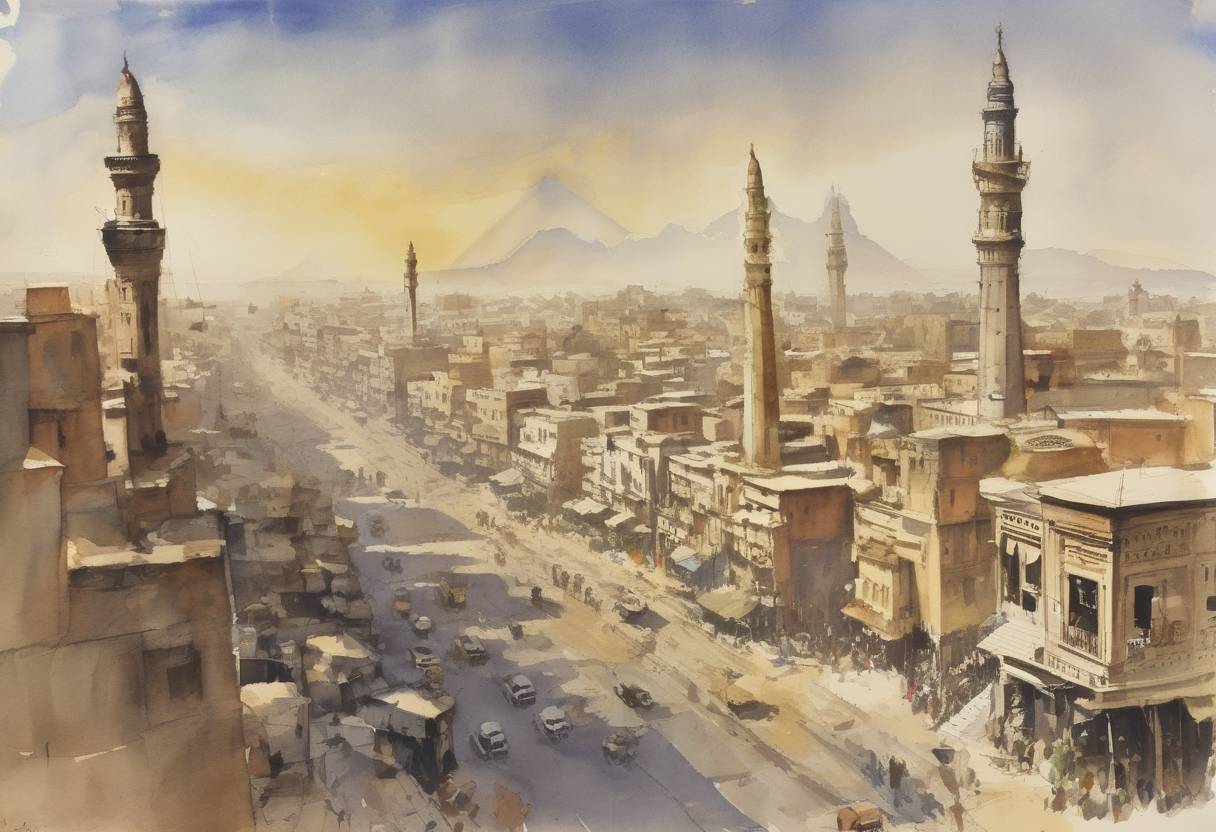
On February 22, 1958, Egypt and Syria merged to form the United Arab Republic (UAR), a significant political union in the Middle East during the mid-20th century. This union was a response to the growing tide of Arab nationalism and the desire for greater unity among Arab states.
Arab Nationalism: The mid-20th century saw a surge in Arab nationalism, driven by a desire for independence from colonial powers and the aspiration for unity among Arab nations. This movement was particularly strong in Egypt and Syria.
Leadership of Gamal Abdel Nasser: Egyptian President Gamal Abdel Nasser was a prominent figure in the Arab world, advocating for pan-Arab unity. His leadership and charisma made him a central figure in the push for the UAR.
Geopolitical Climate: The Cold War era saw the Middle East as a strategic region, with both the United States and the Soviet Union vying for influence. The UAR was partly an attempt to counter Western influence and assert Arab independence.
Syrian Instability: Syria experienced political instability with frequent changes in government. Many Syrian leaders saw a union with Egypt as a way to stabilize the country and strengthen its position in the region.
Negotiations: Talks between Egyptian and Syrian leaders began in early 1958, with both sides agreeing on the need for a unified Arab state. The negotiations culminated in the formal declaration of the UAR on February 22, 1958.
Single State: The UAR was established as a single state with Nasser as its president. The union was intended to be the first step towards a larger federation of Arab states.
Centralized Power: The political structure was highly centralized, with Cairo as the capital. This centralization was a point of contention, particularly for Syrians who felt marginalized.
Cultural and Political Differences: The union faced numerous challenges, including cultural and political differences between Egyptians and Syrians. The centralized governance model led to dissatisfaction in Syria.
Economic Disparities: Economic policies favored Egypt, leading to economic imbalances and further discontent in Syria.
Dissolution: The UAR was short-lived, lasting only until September 28, 1961, when a military coup in Syria led to its withdrawal from the union. The dissolution was largely due to the aforementioned challenges and the failure to effectively integrate the two nations.
Impact on Arab Nationalism: The UAR was a bold experiment in Arab unity, reflecting the aspirations and challenges of the Arab nationalist movement. Its failure highlighted the complexities of uniting diverse Arab states under a single political entity.
Legacy: Despite its short existence, the UAR left a lasting impact on the region’s political landscape and remains a symbol of the pan-Arab movement.
The formation and dissolution of the United Arab Republic serve as a poignant chapter in the history of the Middle East, illustrating both the potential and the difficulties of achieving unity among Arab nations.
Source: en.wikipedia.org