Margaret Thatcher Resigns as Prime Minister
1990 · London, United Kingdom
Margaret Thatcher resigns as Prime Minister of the United Kingdom, succeeded by John Major.
June 11, 1987
Margaret Thatcher became the first British Prime Minister in 160 years to win a third consecutive term, following the general election victory of the Conservative Party.
London, United Kingdom | Conservative Party
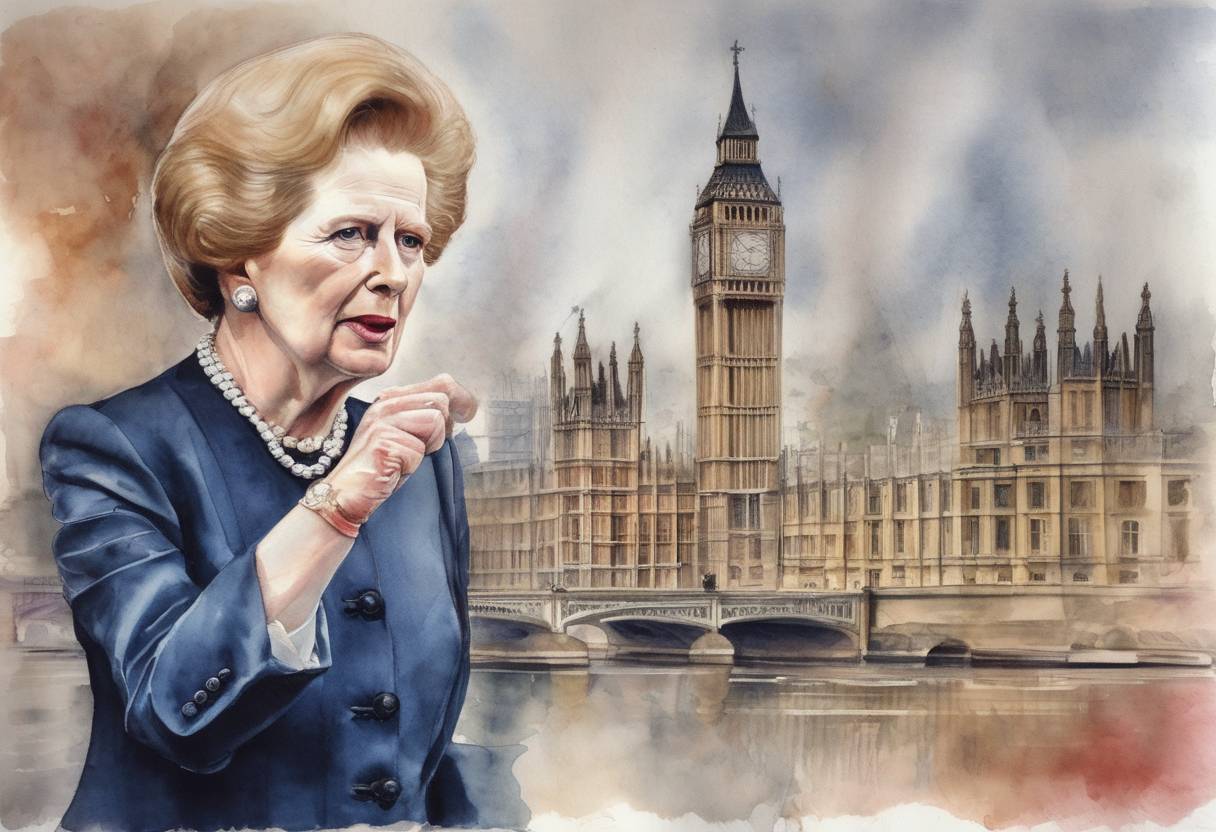
On June 11, 1987, Margaret Thatcher made history by becoming the first British Prime Minister in 160 years to win a third consecutive term. This victory followed the general election in which her Conservative Party secured a decisive win, further solidifying Thatcher’s influence and the continuation of her policies.
Margaret Thatcher: Known as the “Iron Lady,” Thatcher became the leader of the Conservative Party in 1975 and the first female Prime Minister of the United Kingdom in 1979. Her leadership was marked by a strong commitment to free-market policies, privatization, and a reduction in the power of trade unions.
Previous Terms: Thatcher’s first term (1979-1983) focused on economic reforms to combat inflation and unemployment. Her second term (1983-1987) was characterized by further economic liberalization and a strong stance on foreign policy, notably during the Falklands War.
Political Climate: Leading up to the 1987 election, the UK was experiencing economic growth and a decline in unemployment, which bolstered Thatcher’s popularity. However, her policies were also polarizing, with significant opposition from labor unions and parts of the public.
Campaign: The Conservative Party’s campaign emphasized economic stability and continued growth, contrasting with the Labour Party’s platform, which proposed increased public spending and nationalization.
Results: The Conservatives won 376 seats, a majority of 102 in the House of Commons, while the Labour Party, led by Neil Kinnock, secured 229 seats. The election also saw the rise of the Social Democratic Party-Liberal Alliance, which gained a significant share of the vote but only 22 seats.
Historical Achievement: Thatcher’s third consecutive victory was a significant political achievement, marking her as one of the most dominant figures in 20th-century British politics. The last Prime Minister to achieve a similar feat was the Duke of Wellington in the early 19th century.
Policy Continuation: The election result allowed Thatcher to continue her agenda of economic reform, including further privatization and deregulation. Her government also focused on education reform and the controversial introduction of the Community Charge, known as the “poll tax.”
Legacy: Thatcher’s third term was marked by increasing internal party dissent and public protests, particularly against the poll tax. Her leadership style and policies left a lasting impact on the UK, shaping the Conservative Party and influencing global economic policies.
Margaret Thatcher’s third term underscored her enduring political influence and the transformative nature of her leadership, which continued to shape British society and politics long after her tenure ended.
Source: en.wikipedia.org