The First Grand Prix Motor Race: Le Mans, France - June 26, 1906
1906 · Le Mans, France
The first Grand Prix motor race was held in Le Mans, France.
June 11, 1895
Paris hosted the first automobile race from Paris to Bordeaux and back, marking a significant event in the history of motor racing.
Paris, France | Automobile Club de France
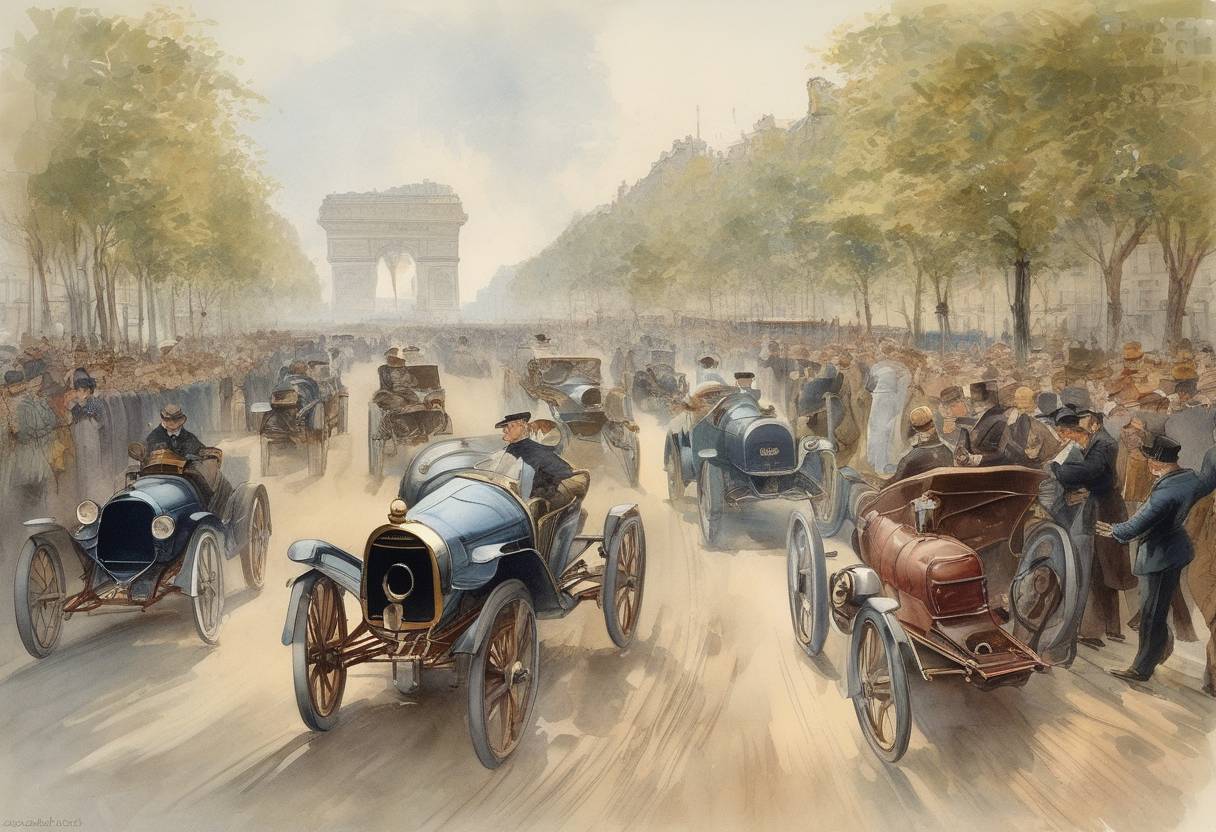
On June 11, 1895, Paris hosted the first automobile race from Paris to Bordeaux and back, marking a pivotal moment in the history of motor racing. This event was not only a test of speed but also a significant demonstration of the potential of the automobile as a viable mode of transportation.
By the late 19th century, the automobile was emerging as a revolutionary invention. The race was organized by the Parisian newspaper Le Petit Journal, which aimed to promote the automobile and its capabilities. The event was officially called the “Paris-Bordeaux-Paris” race and was open to various types of vehicles, including those powered by steam, electricity, and the internal combustion engine.
The Paris-Bordeaux-Paris race was a landmark event in the history of motor racing and the automotive industry. It demonstrated the reliability and potential of gasoline-powered vehicles, which would soon dominate the market. The race also spurred public interest in automobiles and led to further developments in automotive technology and racing.
The event highlighted the importance of endurance and reliability over sheer speed, setting a precedent for future races. It also underscored the role of innovation and engineering in the burgeoning automotive industry, paving the way for the development of more advanced and efficient vehicles.
In conclusion, the Paris-Bordeaux-Paris race of 1895 was a significant milestone that showcased the transformative power of the automobile, influencing both the future of transportation and the sport of motor racing.
Source: en.wikipedia.org