Conviction of Sirhan Sirhan for the Assassination of Robert F. Kennedy
1969 · Los Angeles, United States
Sirhan Sirhan was convicted of assassinating United States Senator Robert F. Kennedy.
June 6, 1968
Senator Robert F. Kennedy died from gunshot wounds inflicted the previous day, after being shot by Sirhan Sirhan in Los Angeles.
Los Angeles, United States | United States Senate
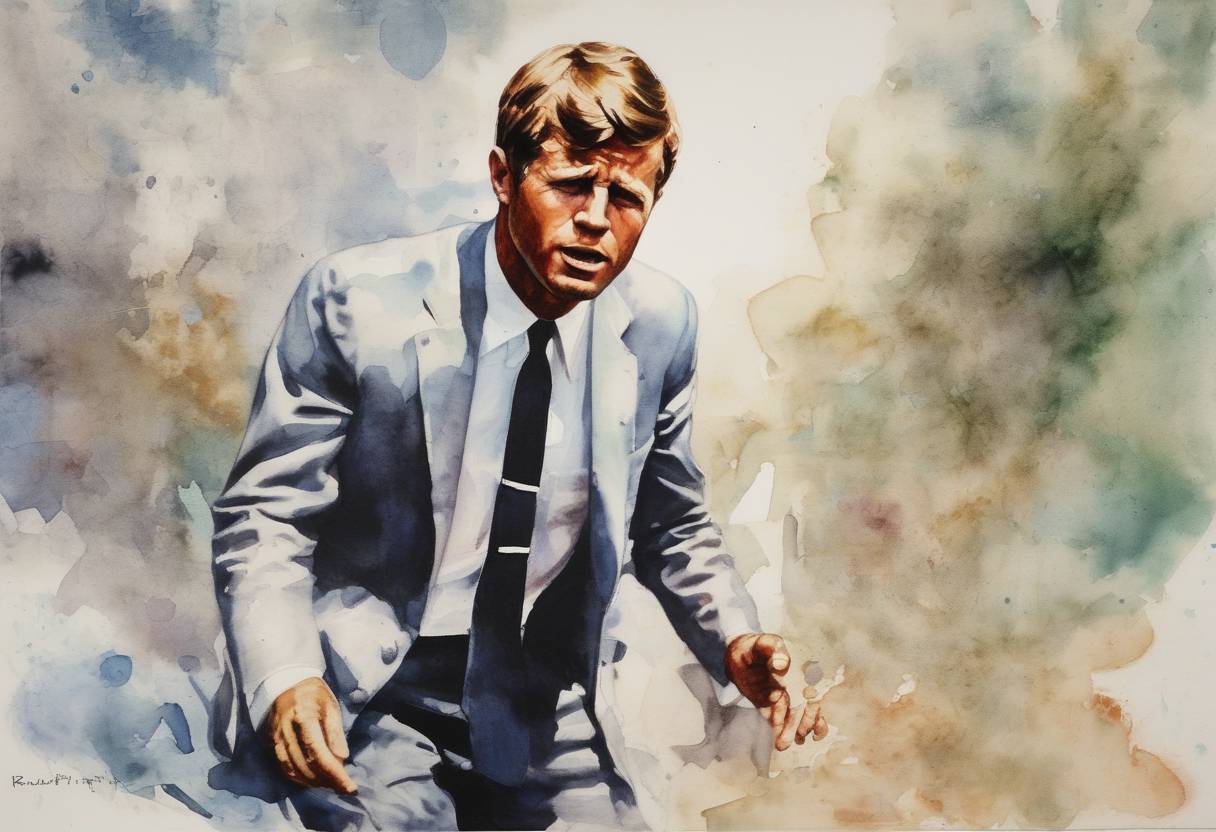
On June 6, 1968, Senator Robert F. Kennedy succumbed to gunshot wounds inflicted the previous day, marking a tragic moment in American history. The assassination occurred during a period of significant social and political upheaval in the United States.
Robert F. Kennedy, often referred to as “Bobby,” was a prominent political figure and a member of the influential Kennedy family. He served as the U.S. Attorney General from 1961 to 1964 under his brother, President John F. Kennedy, and later under President Lyndon B. Johnson. In 1965, he was elected as a U.S. Senator from New York.
In 1968, Kennedy emerged as a leading candidate for the Democratic presidential nomination. His campaign was marked by a strong focus on civil rights, social justice, and opposition to the Vietnam War, resonating with many Americans during a time of widespread civil unrest.
On June 5, 1968, after delivering a victory speech at the Ambassador Hotel in Los Angeles, California, following his win in the California primary, Kennedy was shot by Sirhan Sirhan, a 24-year-old Palestinian. The shooting occurred in the hotel kitchen pantry as Kennedy was leaving the event.
Sirhan, who was apprehended at the scene, later stated that he was angered by Kennedy’s pro-Israel stance. The assassination took place just over five years after the assassination of Kennedy’s brother, President John F. Kennedy, in 1963.
Robert F. Kennedy was pronounced dead in the early hours of June 6, 1968. His death sent shockwaves across the nation and the world, adding to the tumultuous atmosphere of the 1960s, a decade marked by political assassinations, including those of President John F. Kennedy and civil rights leader Martin Luther King Jr.
Kennedy’s assassination had a profound impact on American politics and society. It led to increased security measures for political figures and contributed to the growing disillusionment with political institutions among the American public. His death also altered the course of the 1968 presidential election, ultimately leading to the nomination of Hubert Humphrey as the Democratic candidate.
Robert F. Kennedy is remembered for his advocacy for social justice, his efforts to combat poverty, and his commitment to civil rights. His vision for a more equitable society continues to inspire many. The Robert F. Kennedy Center for Justice and Human Rights, established in his honor, works to advance his legacy through advocacy and education.
The assassination of Robert F. Kennedy remains a poignant reminder of the volatility and violence of the 1960s, as well as the enduring impact of his life and work on American society.
Source: en.wikipedia.org