The End of the Bangladesh Liberation War: December 16, 1971
1971 · Dhaka, Bangladesh
Bangladesh Liberation War ends with the surrender of the Pakistan Eastern Command in Dhaka, leading to the creation of Bangladesh.
March 26, 1971
Bangladesh declares its independence from Pakistan, marking the start of the Bangladesh Liberation War.
Dhaka, Bangladesh | Bangladesh government
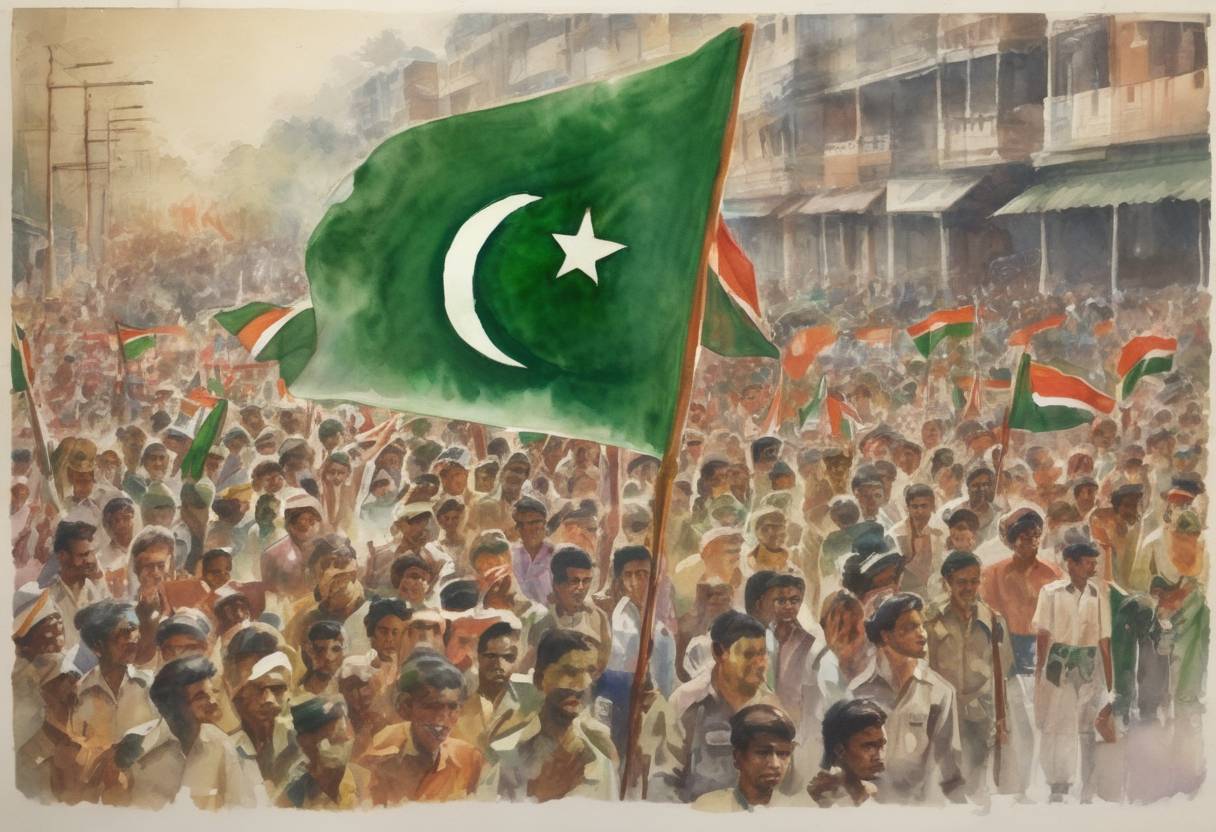
The declaration of independence by Bangladesh on March 26, 1971, marked the beginning of the Bangladesh Liberation War. This pivotal moment was the culmination of longstanding political, economic, and cultural tensions between East Pakistan (now Bangladesh) and West Pakistan (now Pakistan).
Language Movement: The roots of discontent can be traced back to the Language Movement of the early 1950s, where the imposition of Urdu as the sole national language by the Pakistani government was met with strong resistance in East Pakistan, where Bengali was the majority language.
Economic Disparities: East Pakistan was economically marginalized despite being the more populous wing. The region contributed significantly to Pakistan’s economy, particularly through jute exports, yet received a disproportionately small share of national revenue and development funds.
Political Exclusion: The political landscape was dominated by West Pakistan. The 1970 general elections, however, saw the Awami League, led by Sheikh Mujibur Rahman, win a majority of seats, primarily from East Pakistan. Despite this, the central government, led by President Yahya Khan, was reluctant to transfer power.
Operation Searchlight: On March 25, 1971, the Pakistani military launched a brutal crackdown on Dhaka and other parts of East Pakistan, targeting political leaders, students, and civilians. This operation aimed to suppress the growing independence movement and led to widespread atrocities.
In response to the military crackdown, Sheikh Mujibur Rahman declared Bangladesh’s independence on March 26, 1971. The declaration was made amidst escalating violence and was broadcast via radio, galvanizing the Bengali population to resist Pakistani forces.
The declaration set off a nine-month-long war for independence, characterized by guerrilla warfare and widespread atrocities, including the systematic targeting of Bengali intellectuals and the mass displacement of civilians. The conflict drew international attention, with millions of refugees fleeing to neighboring India.
The declaration of independence on March 26, 1971, was a defining moment in South Asian history, marking the birth of Bangladesh as a sovereign nation. The struggle for independence highlighted issues of self-determination, cultural identity, and the quest for political and economic justice.
Source: en.wikipedia.org