The Execution of the Romanov Family: July 17, 1918
1918 · Yekaterinburg, Russia
The Romanov family, the last imperial dynasty of Russia, was executed by Bolsheviks in Yekaterinburg, marking a significant turning point in the Russian Revolution.
March 15, 1917
Tsar Nicholas II of Russia abdicated the throne, marking the end of the Romanov dynasty.
Pskov, Russia | Russian Empire
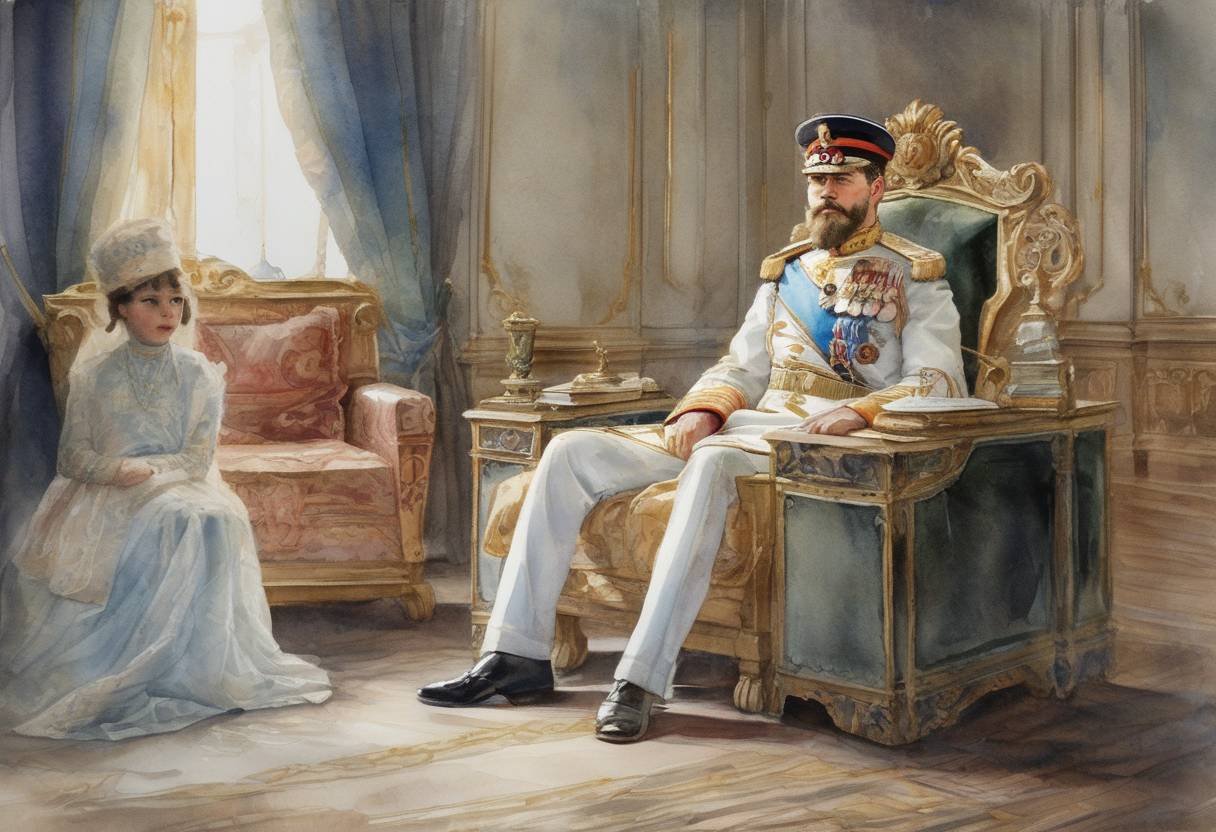
On March 15, 1917, Tsar Nicholas II of Russia abdicated the throne, a pivotal moment that marked the end of over three centuries of Romanov rule and set the stage for the Russian Revolution.
The early 20th century was a period of significant turmoil and change in Russia. Several factors contributed to the weakening of the Romanov dynasty:
Economic Strain and Social Unrest: Russia was facing severe economic difficulties, exacerbated by its involvement in World War I. The war effort drained resources and led to widespread food shortages, inflation, and a deteriorating quality of life for the Russian populace.
Military Failures: The Russian military suffered devastating defeats in World War I, leading to a loss of morale and confidence in the leadership of Tsar Nicholas II, who had taken personal command of the army in 1915.
Political Discontent: There was growing dissatisfaction with the autocratic rule of the Tsar. The Duma, Russia’s legislative body, was largely ineffective, and political repression stifled reformist movements.
February Revolution: In early 1917, mass protests and strikes erupted in Petrograd (now St. Petersburg), driven by the dire economic situation and demand for political reform. The unrest quickly escalated into the February Revolution, with soldiers mutinying and joining the demonstrators.
Faced with the collapse of his regime, Tsar Nicholas II was forced to abdicate on March 15, 1917. Initially, he considered abdicating in favor of his son, Alexei, but due to the boy’s hemophilia, Nicholas decided to abdicate in favor of his brother, Grand Duke Michael Alexandrovich. However, Michael declined the throne, effectively ending the Romanov dynasty’s rule.
Provisional Government: Following the abdication, a Provisional Government was established, attempting to stabilize the country and continue the war effort. However, it struggled with internal divisions and lacked popular support.
Bolshevik Revolution: The abdication and subsequent instability paved the way for the Bolshevik Revolution in October 1917, led by Vladimir Lenin, which resulted in the establishment of a communist government.
Execution of the Romanovs: The Romanov family was placed under house arrest and eventually executed by Bolshevik forces in July 1918, marking a brutal end to the imperial family.
Legacy: The abdication of Nicholas II is seen as a critical turning point in Russian history, leading to the rise of the Soviet Union and significantly altering the geopolitical landscape of the 20th century.
The abdication of Tsar Nicholas II was not just the end of a dynasty but a catalyst for profound change in Russia, influencing global politics for decades to come.
Source: en.wikipedia.org