Launch of USS George Washington (SSBN-598)
1959 · Groton, United States
The USS George Washington, the first submarine to be built from keel up as a guided missile firing submarine, is launched.
January 21, 1954
The USS Nautilus, the world's first operational nuclear-powered submarine, was launched in Groton, Connecticut.
Groton, United States | United States Navy
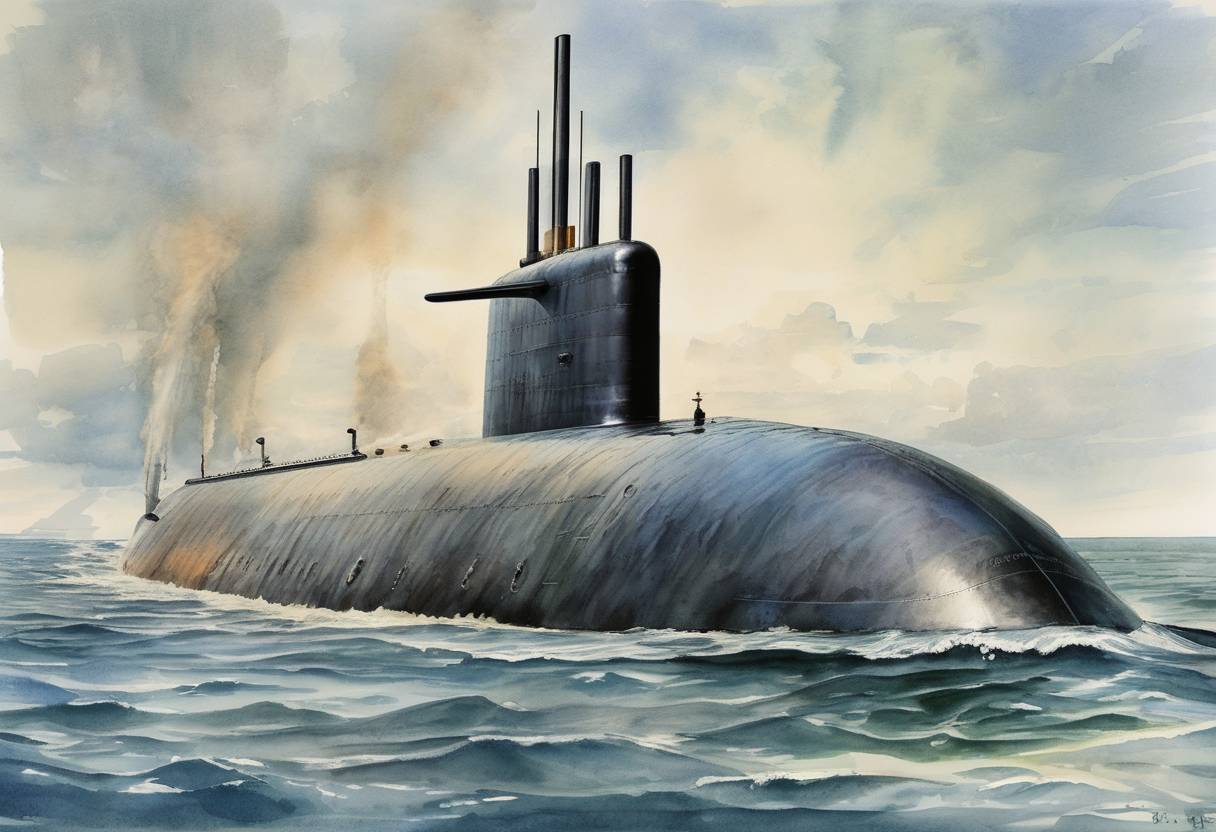
On January 21, 1954, the USS Nautilus (SSN-571), the world’s first operational nuclear-powered submarine, was launched in Groton, Connecticut. This event marked a significant milestone in naval engineering and military history, heralding a new era of submarine capabilities.
The development of the USS Nautilus was part of a broader effort during the Cold War to enhance the United States’ naval capabilities. The concept of a nuclear-powered submarine was driven by the need for a vessel that could operate for extended periods without surfacing, thereby increasing its stealth and operational range. The project was spearheaded by Admiral Hyman G. Rickover, often referred to as the “Father of the Nuclear Navy,” who played a crucial role in the development and implementation of nuclear propulsion systems.
The launch ceremony on January 21, 1954, was attended by numerous dignitaries, including First Lady Mamie Eisenhower, who christened the vessel. The Nautilus was officially commissioned into the United States Navy on September 30, 1954.
The USS Nautilus served in the U.S. Navy until 1980, after which it was decommissioned and designated a National Historic Landmark. Today, it is preserved as a museum ship at the Submarine Force Library and Museum in Groton, Connecticut, where it continues to educate the public about its groundbreaking contributions to naval history.
The launch of the USS Nautilus was not just a technological achievement but also a pivotal moment in military history, showcasing the potential of nuclear energy and its transformative impact on naval operations.
Source: en.wikipedia.org