Appointment of Father John Carroll as the First Catholic Bishop in the United States
1789 · Baltimore, United States
Pope Pius VI appoints Father John Carroll as the first Catholic bishop in the United States.
February 28, 1784
John Wesley charters the first Methodist Church in the United States, marking a key development in the spread of Methodism.
Baltimore, United States | Methodist Church
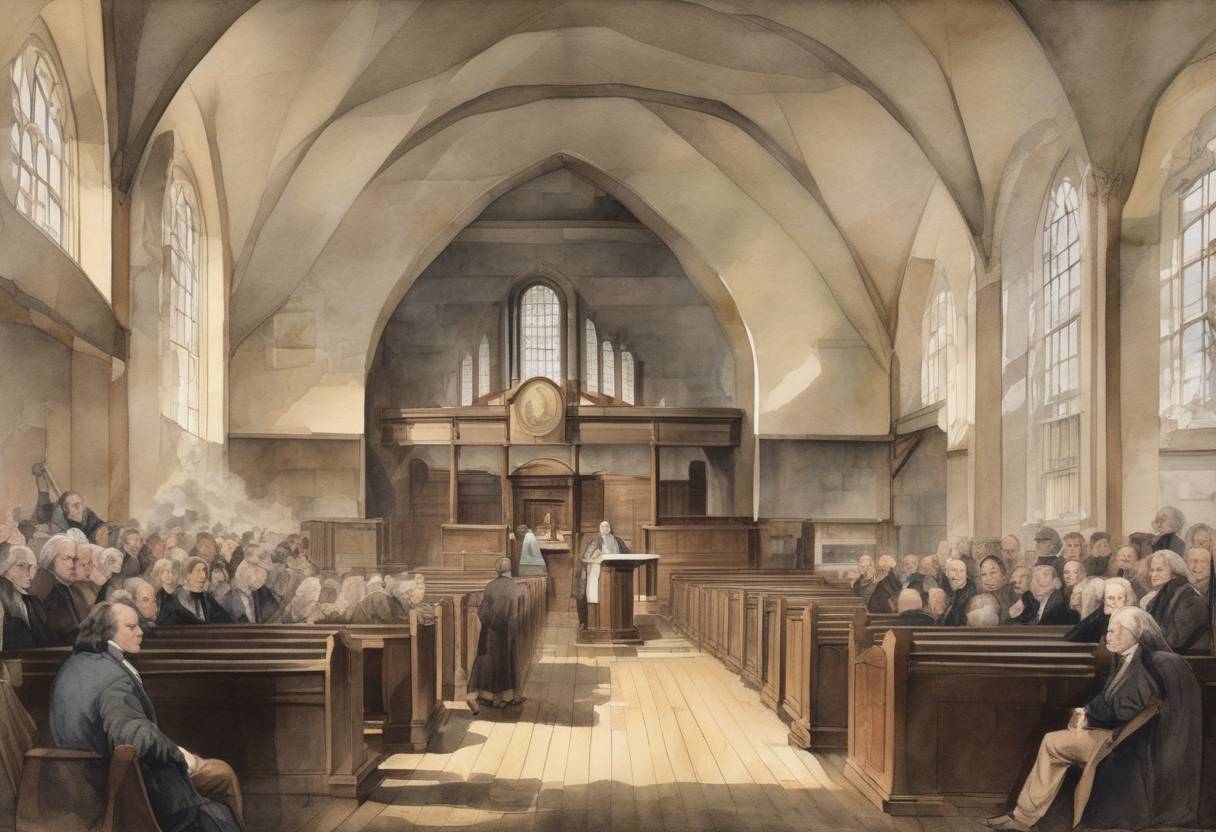
On February 28, 1784, a significant milestone in the history of Methodism occurred when John Wesley, the founder of the Methodist movement, chartered the first Methodist Church in the United States. This event marked a pivotal development in the spread of Methodism across the Atlantic and its establishment as a major Christian denomination in America.
John Wesley: An Anglican cleric and theologian, Wesley was instrumental in the founding of the Methodist movement in the 18th century. His emphasis on personal faith, social justice, and community outreach resonated with many, leading to the rapid growth of Methodism in Britain and beyond.
Methodism in America: Methodism began to take root in the American colonies in the mid-18th century, largely through the efforts of itinerant preachers and lay leaders. The movement’s appeal lay in its accessible theology and its focus on personal piety and social reform.
Need for Organization: As the number of Methodists in America grew, there was a pressing need for a more structured organization to support the burgeoning congregations and ensure doctrinal consistency.
Wesley’s Role: Although John Wesley never traveled to America, he played a crucial role in organizing the Methodist movement there. Recognizing the need for ordained ministers to administer sacraments, Wesley took the unprecedented step of ordaining ministers himself, a move that was controversial given his Anglican roots.
Thomas Coke and Francis Asbury: Wesley appointed Thomas Coke as a superintendent (later known as a bishop) to oversee the American Methodist Church. Coke, along with Francis Asbury, who would become a key leader in American Methodism, was instrumental in organizing the church structure.
The Christmas Conference: Later in 1784, the Christmas Conference was held in Baltimore, Maryland, where the Methodist Episcopal Church was officially formed. This conference formalized the organizational structure and governance of the church in America.
Growth of Methodism: The chartering of the first Methodist Church in the United States laid the foundation for the rapid expansion of Methodism across the country. By the early 19th century, Methodism had become one of the largest denominations in the United States.
Impact on American Society: Methodism played a significant role in American religious and social life, influencing movements such as abolitionism and temperance. Its emphasis on lay leadership and itinerant preaching contributed to its widespread appeal.
Legacy: Today, the United Methodist Church, a successor of the original Methodist Episcopal Church, remains one of the largest Protestant denominations in the United States, continuing the legacy of John Wesley’s vision and mission.
The chartering of the first Methodist Church in the United States on February 28, 1784, was a defining moment in the history of Methodism, marking the beginning of its formal establishment and growth in America.
Source: en.wikipedia.org