Succession of Justin II as Byzantine Emperor
565 · Constantinople, Byzantine Empire
The Byzantine Emperor Justin II succeeds his uncle Justinian I as Emperor of the Byzantine Empire.
April 1, 0527
Byzantine Emperor Justin I names his nephew Justinian I as co-ruler and successor, setting the stage for Justinian's influential reign.
Constantinople, Byzantine Empire | Byzantine Empire
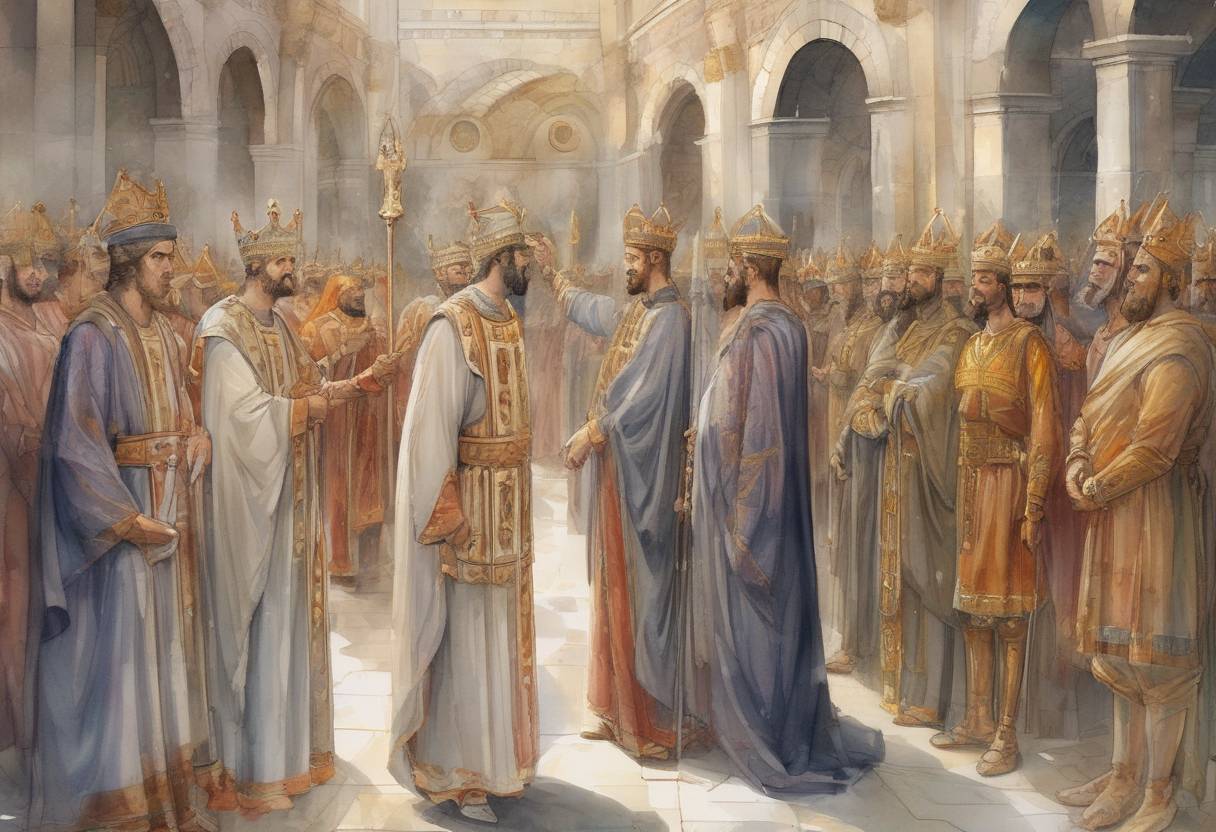
On April 1, 527, a significant event took place in the Byzantine Empire that would shape the course of its history: Emperor Justin I named his nephew, Justinian I, as co-ruler and successor. This decision marked the beginning of one of the most influential reigns in Byzantine history.
Justin I’s Reign: Justin I became the Byzantine Emperor in 518. Originally a peasant from Illyria, he rose through the military ranks to become a commander of the palace guard. His ascent to the throne marked a shift from the previous dynasty and brought a period of stability to the empire.
Justinian’s Early Life: Born as Flavius Petrus Sabbatius in 482, Justinian was adopted by his uncle Justin and brought to Constantinople. He received an excellent education, which prepared him for a future role in governance. His intelligence and administrative skills quickly became apparent.
Official Appointment: On April 1, 527, Justin I formally appointed Justinian as co-emperor. This move was likely motivated by Justin’s advancing age and declining health, as well as Justinian’s evident capabilities and vision for the empire.
Significance of the Appointment: By naming Justinian as co-ruler, Justin I ensured a smooth transition of power. This decision was crucial in maintaining stability within the empire and avoiding potential power struggles.
Justinian’s Vision: Justinian I would go on to rule from 527 until 565. His reign is noted for its ambitious projects, including the reconquest of former Roman territories, extensive legal reforms, and architectural achievements such as the Hagia Sophia.
Legal Reforms: One of Justinian’s most enduring legacies is the Corpus Juris Civilis, or the “Body of Civil Law,” which systematized Roman law and influenced legal systems for centuries.
Military Campaigns: Under Justinian’s leadership, the Byzantine Empire sought to reclaim lost western territories. His generals, such as Belisarius, achieved significant victories in North Africa, Italy, and parts of Spain.
Cultural and Religious Influence: Justinian’s reign also saw efforts to strengthen Christianity within the empire, including the suppression of pagan practices and the promotion of orthodox Christian doctrine.
Legacy: Justinian’s reign left a profound impact on the Byzantine Empire and the broader Mediterranean world. His legal reforms and architectural achievements are particularly noted for their lasting influence.
Challenges: Despite his successes, Justinian’s reign faced challenges, including the Nika riots, the devastating outbreak of the Plague of Justinian, and financial strains due to his military campaigns.
In summary, the appointment of Justinian I as co-ruler on April 1, 527, was a pivotal moment in Byzantine history. It set the stage for a transformative era under Justinian’s leadership, characterized by ambitious projects and enduring legacies.
Source: en.wikipedia.org