2021 · Petit-Trou-de-Nippes, Haiti
A major magnitude 7.2 earthquake struck near Haiti, resulting in significant destruction and loss of life.
January 12, 2010
A devastating earthquake struck Haiti, causing widespread destruction and loss of life. The earthquake, with a magnitude of 7.0, had its epicenter near the town of Léogâne, approximately 25 kilometers west of the capital, Port-au-Prince. It resulted in significant humanitarian crises, with estimates of over 200,000 deaths and millions displaced.
Port-au-Prince, Haiti | Haitian government, United Nations, various international aid organizations
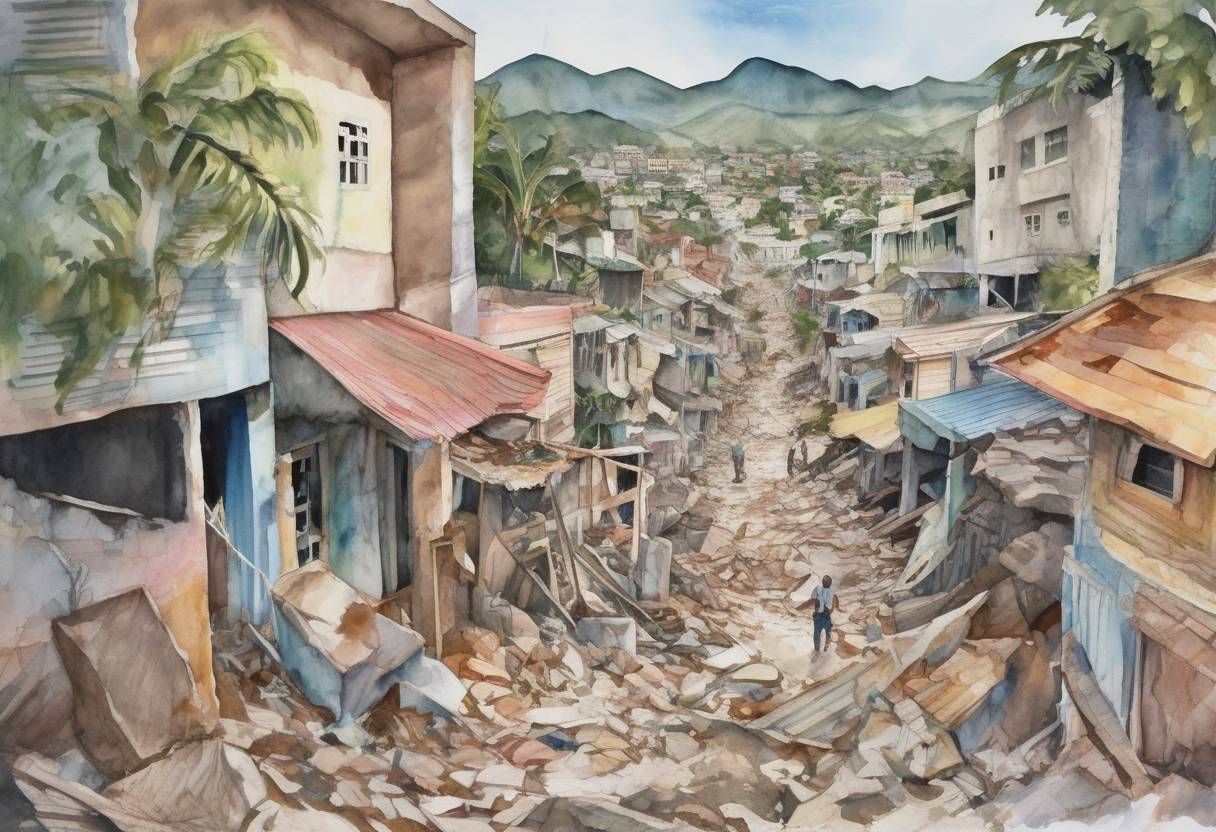
On January 12, 2010, a catastrophic earthquake struck the Caribbean nation of Haiti, causing widespread devastation and a severe humanitarian crisis. The earthquake registered a magnitude of 7.0 and had its epicenter near the town of Léogâne, approximately 25 kilometers (about 16 miles) west of the capital city, Port-au-Prince.
Magnitude and Epicenter: The earthquake had a magnitude of 7.0, with its epicenter located near Léogâne, a town that suffered near-total destruction. The proximity of the epicenter to Port-au-Prince, a densely populated area, contributed significantly to the scale of the disaster.
Impact on Port-au-Prince: The capital city experienced extensive damage, with many buildings, including critical infrastructure such as hospitals, schools, and government buildings, collapsing. The Presidential Palace, the National Assembly building, and the main jail were among the structures destroyed.
Casualties and Displacement: The earthquake resulted in an estimated death toll of over 200,000 people, with millions more displaced. The exact number of casualties remains uncertain due to the chaotic conditions and the scale of destruction.
Humanitarian Crisis: The disaster triggered a massive humanitarian crisis. With infrastructure in ruins, access to basic necessities like food, water, and medical care became severely limited. The displacement of millions of people led to the establishment of makeshift camps, where living conditions were dire.
The international community responded swiftly to the crisis, with numerous countries and organizations providing aid and support. The United Nations, along with various non-governmental organizations (NGOs), played a crucial role in coordinating relief efforts. However, the scale of the disaster and logistical challenges, such as damaged infrastructure and limited transportation, hampered the effectiveness of the response.
Challenges: The reconstruction of Haiti faced numerous challenges, including political instability, lack of resources, and the need for sustainable development strategies. Efforts to rebuild infrastructure and provide long-term support to affected communities were ongoing for years.
Legacy: The earthquake highlighted the vulnerabilities of Haiti, one of the poorest countries in the Western Hemisphere, to natural disasters. It underscored the importance of building resilience and improving disaster preparedness to mitigate the impact of future events.
The 2010 Haiti earthquake remains one of the deadliest natural disasters in modern history. It drew global attention to the plight of Haiti and prompted discussions on international aid effectiveness, disaster preparedness, and the socio-economic challenges faced by developing nations. The event also served as a stark reminder of the need for global solidarity and cooperation in the face of humanitarian crises.
Source: en.wikipedia.org