The Treaty of The Hague (1701)
1701 · The Hague, Dutch Republic
The Treaty of The Hague is signed by England, the Holy Roman Empire, and the Dutch Republic, establishing the Grand Alliance against France.
July 9, 1701
The War of the Spanish Succession begins when Austria, England, and the Dutch Republic declare war on France.
Vienna, Austria | Grand Alliance
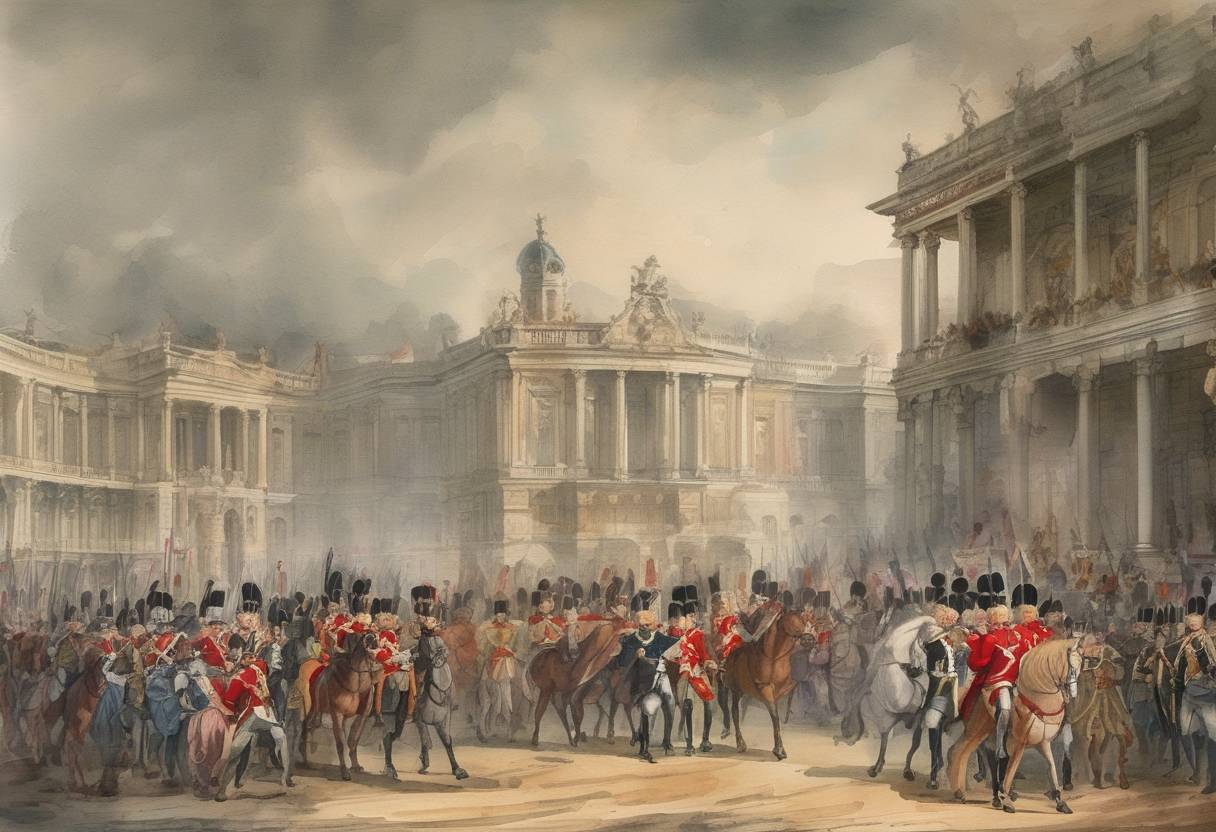
On July 9, 1701, a significant conflict known as the War of the Spanish Succession officially commenced when Austria, England, and the Dutch Republic declared war on France. This war was a major European conflict that lasted until 1714 and involved several of the great powers of the time.
The war was primarily triggered by the death of the childless Charles II of Spain in 1700. His death left a power vacuum and a contentious succession issue, as multiple European powers had claims to the Spanish throne. Charles II had named Philip of Anjou, the grandson of King Louis XIV of France, as his successor. This decision threatened to unite the French and Spanish crowns, upsetting the balance of power in Europe.
The Grand Alliance was formed in 1701, consisting of England, the Dutch Republic, and the Holy Roman Empire (Austria). Their primary goal was to prevent the union of the French and Spanish crowns and to maintain the balance of power in Europe.
The War of the Spanish Succession had far-reaching consequences:
The War of the Spanish Succession was a pivotal moment in European history, shaping the political landscape of the continent for years to come.
Source: en.wikipedia.org