Establishment of the International Criminal Court (ICC)
2002 · The Hague, Netherlands
The International Criminal Court (ICC) was established to prosecute individuals for genocide, crimes against humanity, and war crimes.
June 27, 2011
The International Criminal Court issues an arrest warrant for Libyan leader Muammar Gaddafi for crimes against humanity.
The Hague, Netherlands | International Criminal Court
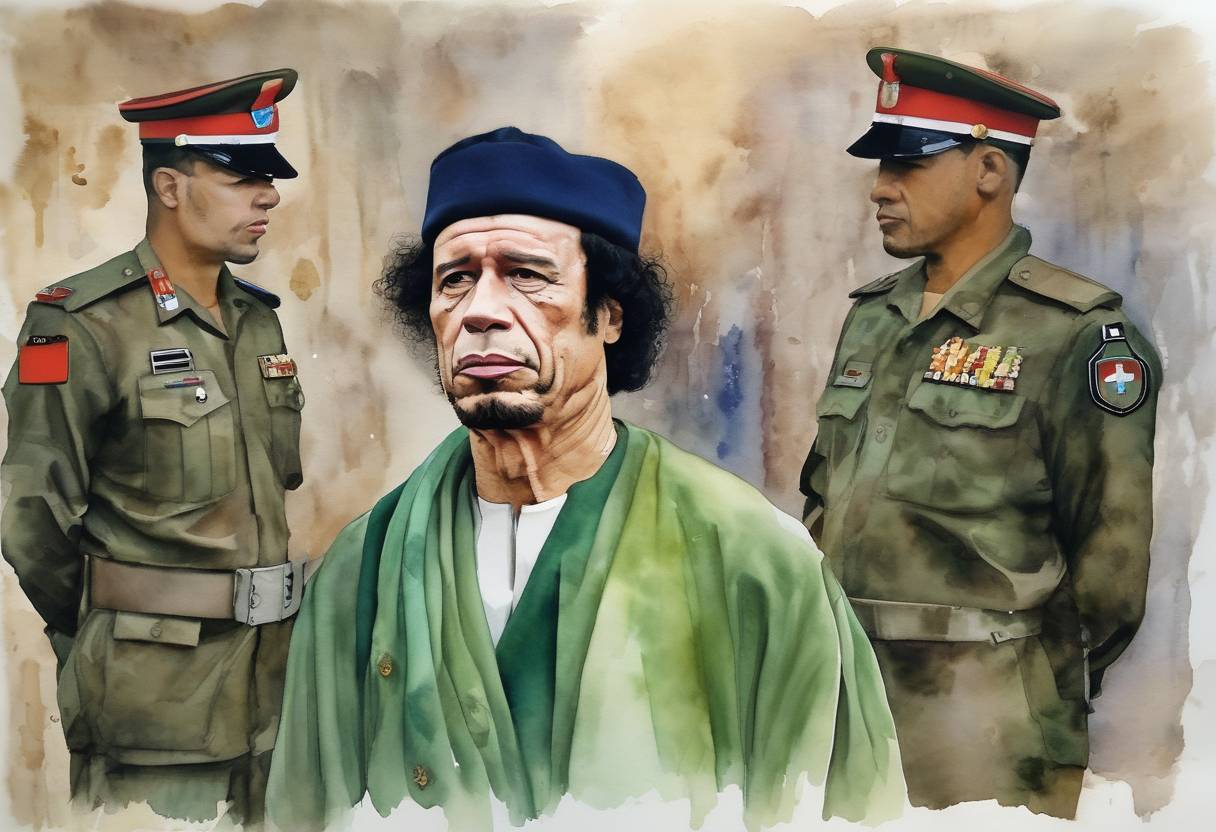
On June 27, 2011, the International Criminal Court (ICC) issued an arrest warrant for Libyan leader Muammar Gaddafi, charging him with crimes against humanity. This significant event occurred amidst the backdrop of the Libyan Civil War, which was part of the broader wave of protests and uprisings known as the Arab Spring.
Muammar Gaddafi had been in power since 1969, ruling Libya with an authoritarian grip. His regime was marked by human rights abuses, suppression of dissent, and a complex relationship with Western nations. In early 2011, inspired by the Arab Spring movements in neighboring countries, Libyans began protesting against Gaddafi’s rule. The regime’s response was brutal, with security forces using lethal force against demonstrators.
The situation in Libya quickly escalated into a civil war, prompting international concern. On February 26, 2011, the United Nations Security Council unanimously adopted Resolution 1970, referring the situation in Libya to the ICC. This marked a rare instance of the Security Council uniting to address human rights violations through the ICC.
Following investigations, the ICC’s Chief Prosecutor, Luis Moreno-Ocampo, sought arrest warrants for Gaddafi, his son Saif al-Islam Gaddafi, and the head of Libyan intelligence, Abdullah Senussi. The charges included murder and persecution as crimes against humanity, specifically targeting the violent crackdown on protesters.
On June 27, 2011, the ICC’s Pre-Trial Chamber I issued arrest warrants for the three Libyan officials. The court found reasonable grounds to believe that Gaddafi and his associates were responsible for orchestrating attacks against civilians, including acts of murder and persecution, from February 15, 2011, onwards.
The issuance of the arrest warrant was a landmark moment in international justice, underscoring the ICC’s role in holding leaders accountable for crimes against humanity. However, Gaddafi remained defiant, refusing to recognize the court’s authority and continuing to fight against rebel forces.
The civil war continued until October 2011, when Gaddafi was captured and killed by rebel forces in his hometown of Sirte. His death marked the end of his 42-year rule but left Libya in a state of turmoil, with ongoing conflict and political instability.
The ICC’s actions highlighted the challenges of enforcing international law, particularly when dealing with sitting heads of state. While the arrest warrant did not lead to Gaddafi’s trial, it set a precedent for international accountability and demonstrated the global community’s willingness to intervene in cases of severe human rights violations.
Source: www.bbc.com