Launch of Sputnik 1: The Dawn of the Space Age
1957 · Baikonur, Kazakhstan
The Soviet Union launched Sputnik 1, the first artificial Earth satellite, marking the start of the space age and the U.S.-Soviet space race.
March 9, 1961
The Soviet spacecraft Sputnik 9 was launched, carrying a dog named Chernushka and other biological specimens, as part of the Soviet space program.
Baikonur Cosmodrome, Soviet Union | Soviet space program
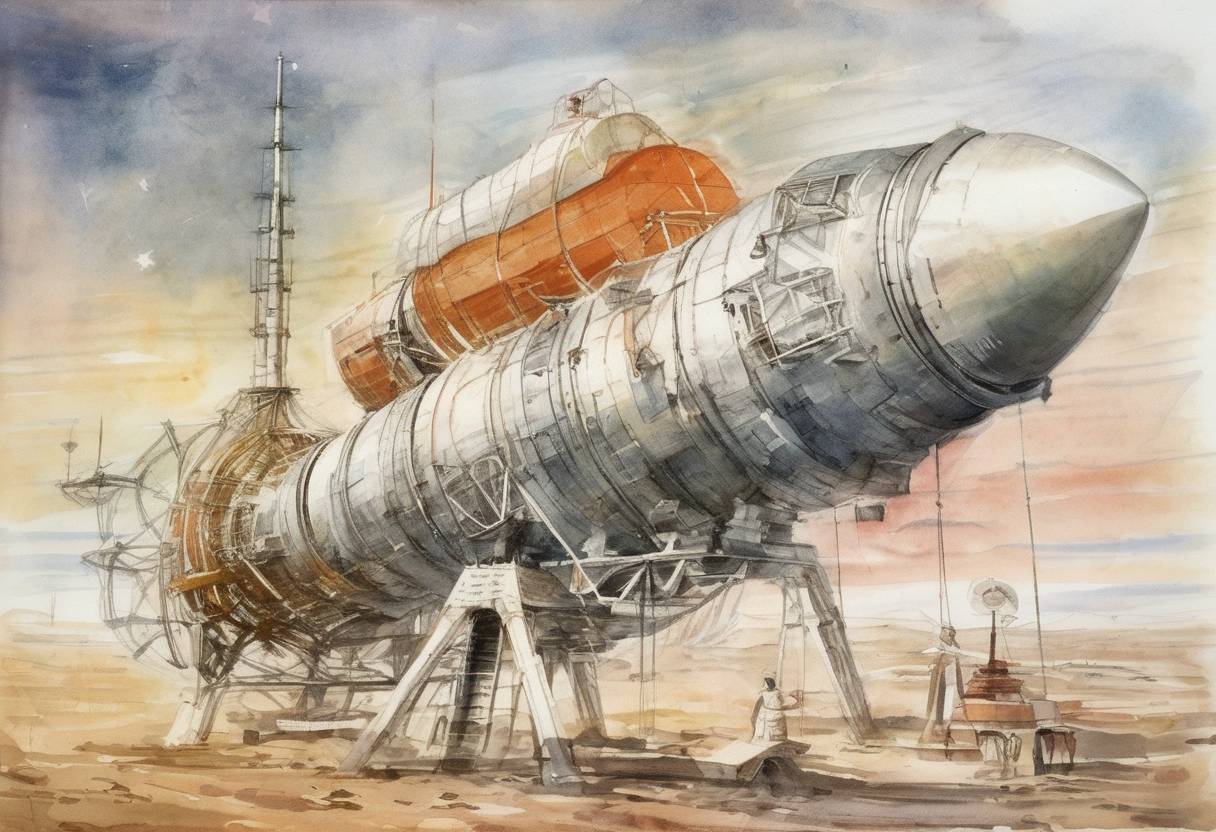
On March 9, 1961, the Soviet Union successfully launched Sputnik 9, a pivotal mission in the Soviet space program. This mission was part of a series of biological experiments aimed at understanding the effects of space travel on living organisms, which was crucial for the upcoming human spaceflights.
The primary objective of the Sputnik 9 mission was to test the life-support systems and the re-entry capabilities of the Vostok spacecraft. By carrying biological specimens, the mission aimed to gather data on the effects of space travel on living organisms, ensuring the safety and viability of future manned missions.
The successful completion of the Sputnik 9 mission was a significant milestone in the Soviet space program. It demonstrated the reliability of the Vostok spacecraft and paved the way for the historic flight of Yuri Gagarin, who would become the first human in space on April 12, 1961. This mission underscored the Soviet Union’s commitment to leading the space race during the Cold War era.
The data and experience gained from Sputnik 9 were instrumental in refining the Vostok program’s technology and safety protocols. The mission’s success bolstered Soviet confidence and international prestige, reinforcing their position as a formidable force in space exploration.
In summary, Sputnik 9’s launch was a critical step in the journey toward human space exploration, marking a period of rapid advancements and intense competition in the space race.
Source: www.nasa.gov