Northern California Earthquake of December 19, 2022
2022 · Ferndale, United States
A magnitude 6.4 earthquake struck Northern California, causing widespread damage, power outages, and two fatalities.
April 18, 1906
The 1906 San Francisco earthquake struck the coast of Northern California, causing widespread destruction and resulting in the deaths of an estimated 3,000 people.
San Francisco, United States | United States Geological Survey
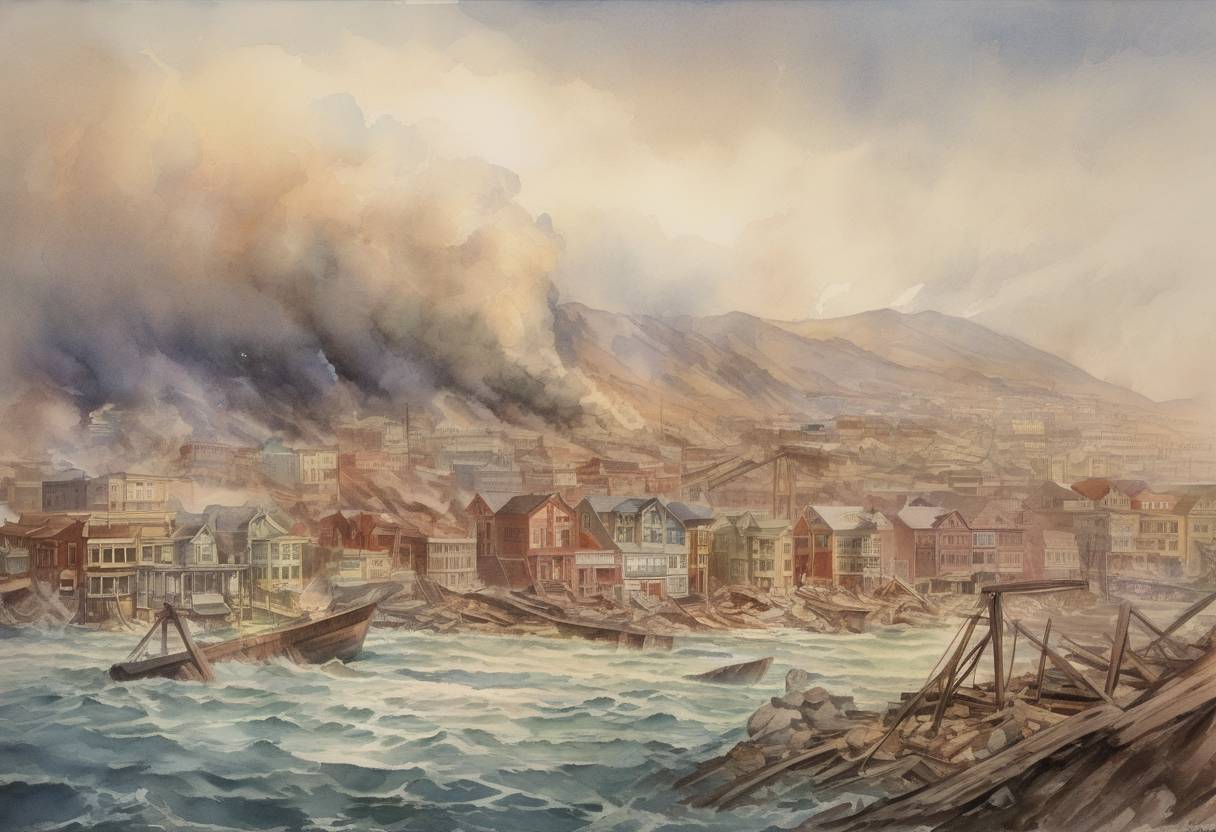
On April 18, 1906, at approximately 5:12 a.m., a devastating earthquake struck the coast of Northern California, with its epicenter near San Francisco. This seismic event is one of the most significant earthquakes in U.S. history, both in terms of its magnitude and its impact on the region.
Magnitude: The earthquake is estimated to have had a magnitude of 7.9 on the Richter scale. It was caused by a rupture along the San Andreas Fault, which extends approximately 800 miles through California.
Duration: The shaking lasted for about 45 to 60 seconds, but its effects were felt over a much broader area, with reports of tremors from southern Oregon to Los Angeles and inland as far as central Nevada.
Destruction: The earthquake and the subsequent fires it ignited caused widespread destruction in San Francisco. Over 80% of the city was destroyed, including more than 28,000 buildings. The fires, which burned for several days, were responsible for much of the damage.
Casualties: It is estimated that approximately 3,000 people lost their lives due to the earthquake and the fires. The disaster left over 250,000 people homeless, a significant portion of the city’s population at the time.
Urban Development: San Francisco was a rapidly growing city at the turn of the 20th century, serving as a major port and cultural hub. The earthquake struck at a time when the city was expanding, leading to significant challenges in rebuilding.
Reconstruction: The reconstruction of San Francisco was a massive undertaking. The city was rebuilt relatively quickly, with new building codes and standards implemented to improve earthquake resilience. This event led to advancements in seismology and urban planning.
Economic Impact: The earthquake had a profound economic impact, disrupting trade and commerce. However, the reconstruction efforts also spurred economic growth and innovation in the region.
Scientific Advancements: The 1906 earthquake prompted significant scientific interest and research into earthquakes and seismic activity. It led to a better understanding of the San Andreas Fault and contributed to the development of modern seismology.
The 1906 San Francisco earthquake remains a pivotal event in the history of California and the United States. It highlighted the vulnerability of urban areas to natural disasters and underscored the importance of preparedness and resilient infrastructure. The lessons learned from this disaster continue to influence earthquake engineering and urban planning practices today.
The earthquake is also remembered for its impact on the cultural and social fabric of San Francisco, reshaping the city and its communities in the years that followed.
Source: en.wikipedia.org