Execution of Catherine Howard: February 13, 1542
1542 · London, England
Catherine Howard, the fifth wife of King Henry VIII of England, was executed for adultery.
January 6, 1540
King Henry VIII of England married Anne of Cleves, his fourth wife.
Greenwich, England | English Monarchy
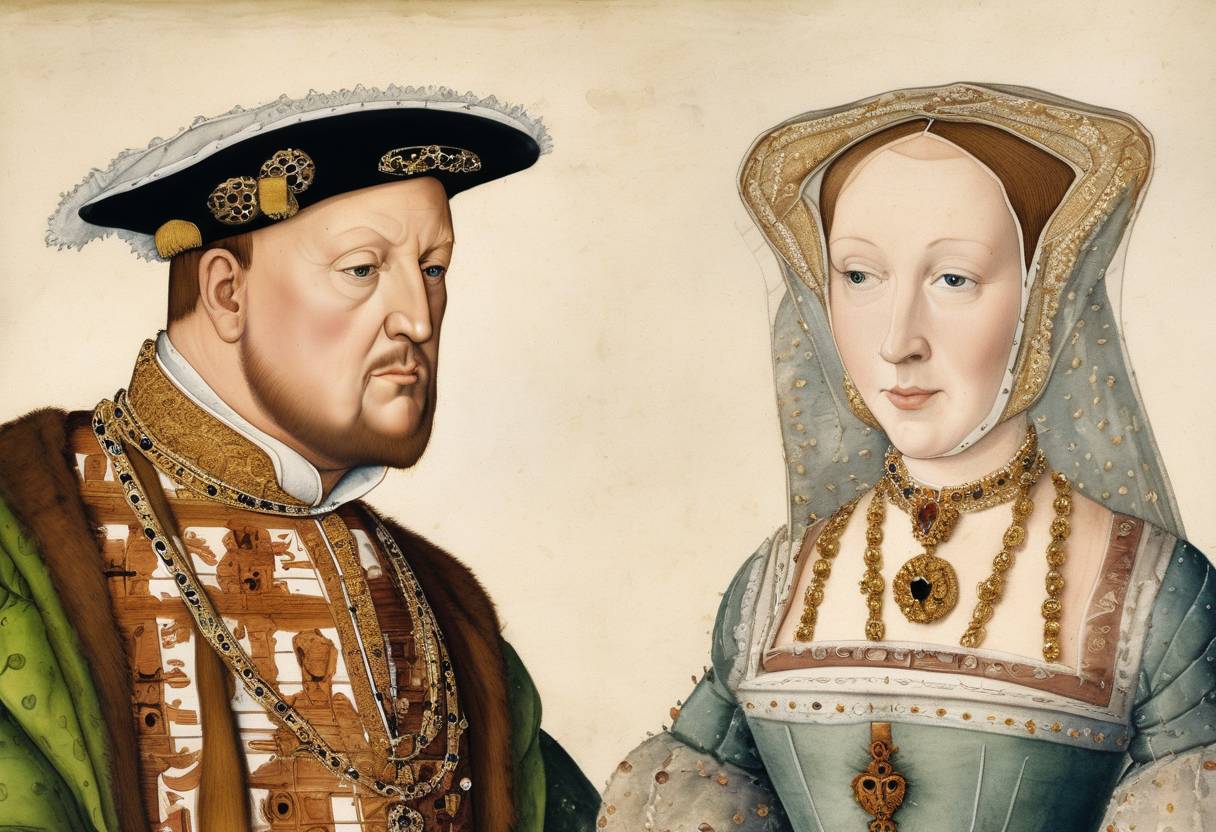
On January 6, 1540, King Henry VIII of England married Anne of Cleves, marking his fourth marriage. This union was primarily a political alliance rather than a romantic endeavor, orchestrated to strengthen England’s position in the face of potential threats from France and the Holy Roman Empire.
Political Climate: During the late 1530s, England faced increasing isolation in Europe. The marriage was arranged by Thomas Cromwell, Henry’s chief minister, to ally with the Protestant German states against the Catholic powers of France and the Holy Roman Empire.
Anne of Cleves: Anne was the daughter of John III, Duke of Cleves, a region in present-day Germany. Her family was part of the Schmalkaldic League, a defensive alliance of Protestant territories within the Holy Roman Empire.
Negotiations and Portrait: The marriage negotiations were conducted through diplomatic channels, and Henry relied on a portrait painted by Hans Holbein the Younger to assess Anne’s appearance. The portrait was reportedly flattering, leading Henry to agree to the marriage.
Ceremony: The marriage took place at the Palace of Placentia in Greenwich. Despite the political motivations, the ceremony was conducted with the usual pomp and grandeur expected of a royal wedding.
Henry’s Disappointment: Upon meeting Anne in person, Henry was reportedly disappointed with her appearance and personality, famously referring to her as a “Flanders mare.” This dissatisfaction set the tone for the brief and troubled marriage.
Annulment: The marriage was never consummated, and by July 1540, just six months after the wedding, it was annulled on the grounds of non-consummation and Anne’s pre-contract to Francis of Lorraine. Anne acquiesced to the annulment, likely understanding the precariousness of her position.
Anne’s Life Post-Annulment: Anne was given a generous settlement, including Hever Castle, and was referred to as the “King’s Beloved Sister.” She remained in England and was treated with respect, maintaining a cordial relationship with Henry and his children.
Impact on Thomas Cromwell: The failure of the marriage significantly weakened Thomas Cromwell’s position at court. He was arrested and executed later that year, partly due to the fallout from the marriage.
The marriage of Henry VIII and Anne of Cleves highlights the complex interplay of personal desires and political necessities in royal alliances. It underscores the precarious nature of court politics and the significant consequences of diplomatic miscalculations. Despite its brevity, the marriage had lasting impacts on the English court and the fate of key figures like Thomas Cromwell.
Source: en.wikipedia.org