Franklin D. Roosevelt's Fourth Inauguration: January 20, 1945
1945 · Washington, D.C., United States
Franklin D. Roosevelt was inaugurated for an unprecedented fourth term as President of the United States.
January 6, 1941
U.S. President Franklin D. Roosevelt delivered his Four Freedoms speech during the State of the Union address.
Washington, D.C., United States | U.S. Government
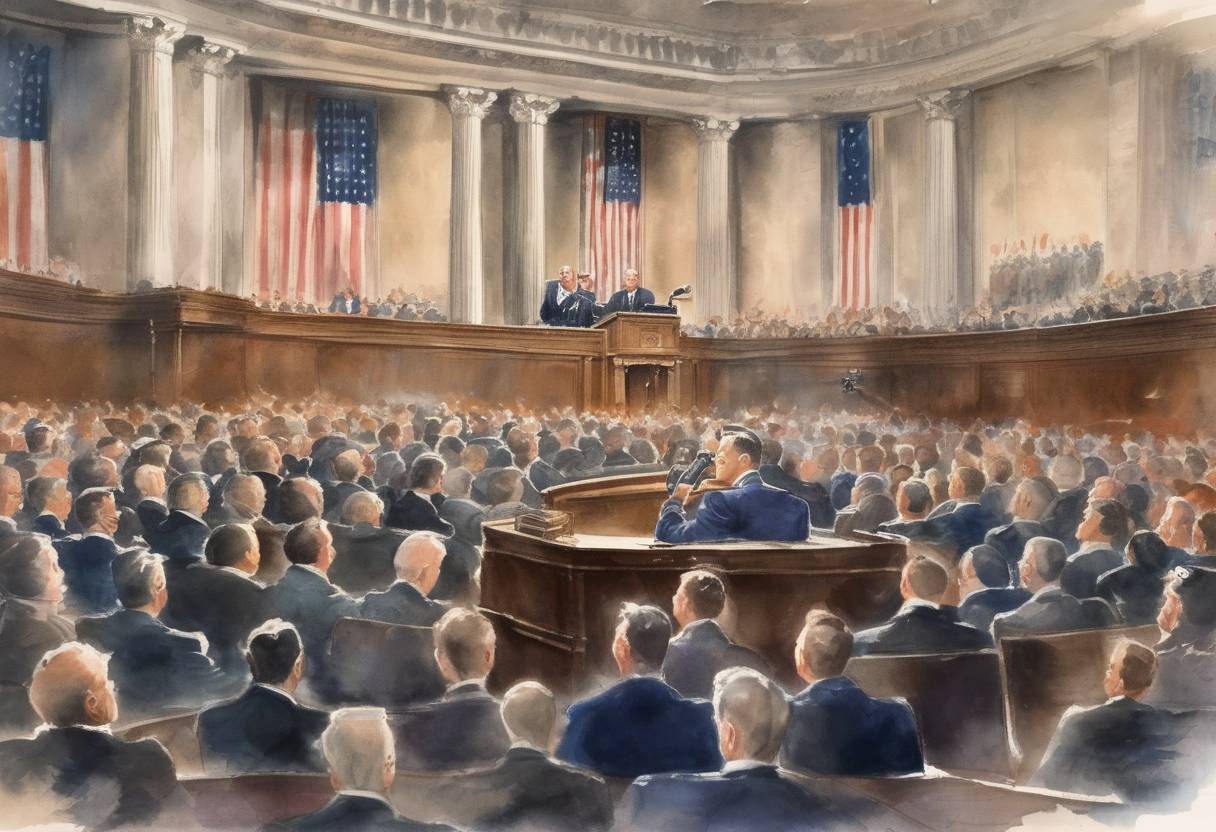
On January 6, 1941, U.S. President Franklin D. Roosevelt delivered one of his most significant speeches during his State of the Union address to the 77th United States Congress. This speech is famously known as the “Four Freedoms” speech, and it laid out a vision for a world founded on essential human rights.
The speech was delivered at a critical juncture in world history. Europe was engulfed in World War II, with Nazi Germany having invaded several countries. Although the United States had not yet entered the war, there was growing concern about the global threat posed by the Axis powers. Domestically, the U.S. was emerging from the Great Depression, and Roosevelt was in his third term as president, having been re-elected in 1940.
In his address, Roosevelt articulated four fundamental freedoms that he believed everyone in the world ought to enjoy:
Freedom of Speech and Expression: The right to express one’s opinions freely without censorship or restraint.
Freedom of Worship: The right to worship God in one’s own way, everywhere in the world.
Freedom from Want: Economic understandings that would secure a healthy peacetime life for the inhabitants of every nation.
Freedom from Fear: A worldwide reduction of armaments to such a point and in such a thorough fashion that no nation would be in a position to commit an act of physical aggression against any neighbor.
Moral Vision: The Four Freedoms speech was a powerful articulation of Roosevelt’s vision for a post-war world. It emphasized universal rights and laid the groundwork for future international human rights discourse.
Lend-Lease Act: The speech helped garner support for the Lend-Lease Act, which was passed in March 1941. This act allowed the U.S. to supply military aid to foreign nations during World War II, significantly aiding Allied powers.
United Nations: The Four Freedoms later influenced the formation of the United Nations and the Universal Declaration of Human Rights, underscoring their enduring impact on international relations and human rights.
Roosevelt’s Four Freedoms became a rallying cry for the Allies during World War II. The speech not only helped to prepare the American public for the possibility of entering the war but also established a framework for the post-war world order. The ideals expressed in the speech continue to resonate as foundational principles of democracy and human rights globally.
In summary, Roosevelt’s Four Freedoms speech was a pivotal moment in American history, reflecting both the challenges of the time and a hopeful vision for the future.
Source: en.wikipedia.org