218 · Rome, Roman Empire
The Roman emperor Elagabalus was born.
June 22, 0217
The Battle of Antioch took place, where Roman Emperor Macrinus was defeated by the forces of Elagabalus, leading to Macrinus' downfall and Elagabalus becoming emperor.
Antioch, Roman Empire | Roman Empire
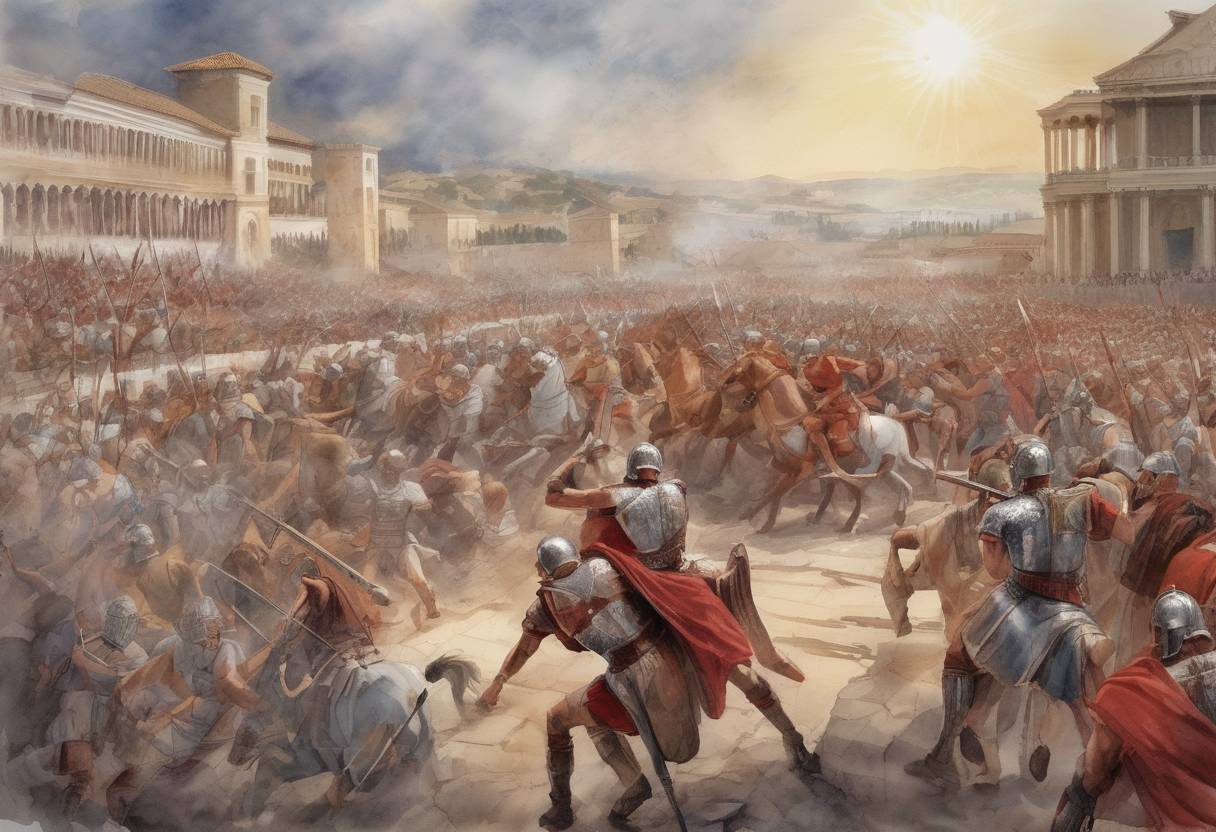
The Battle of Antioch, fought on June 22, 217, was a pivotal conflict in Roman history that marked the downfall of Emperor Macrinus and the rise of Elagabalus to power. This battle was a significant turning point in the Roman Empire’s turbulent Year of the Five Emperors.
Macrinus’ Ascension: Macrinus, originally a high-ranking official and the Praetorian Prefect under Emperor Caracalla, ascended to the throne after orchestrating Caracalla’s assassination in April 217. His reign was marked by attempts to stabilize the empire and reform military expenditures, which were unpopular among the legions.
Elagabalus’ Claim: Elagabalus, born Varius Avitus Bassianus, was a teenage priest of the sun god Elagabal in Emesa (modern-day Homs, Syria). He was proclaimed emperor by the Third Legion Gallica in May 218, largely due to the machinations of his grandmother, Julia Maesa, who claimed he was the illegitimate son of Caracalla, thus giving him a legitimate claim to the throne.
Location: The battle took place near Antioch, a major city in the Roman province of Syria, which was a strategic and economic hub in the eastern part of the empire.
Forces: Macrinus commanded the Roman forces loyal to him, while Elagabalus’ army was composed of troops from the eastern provinces, particularly those loyal to his grandmother’s influence and the promise of a return to Caracalla’s policies.
Outcome: The battle resulted in a decisive victory for Elagabalus. Macrinus’ forces were overwhelmed, and he was forced to flee. He was captured shortly thereafter and executed, marking the end of his brief reign.
Elagabalus’ Reign: Following his victory, Elagabalus became emperor at the age of 14. His reign was characterized by religious controversy and eccentric behavior, as he attempted to elevate the worship of his deity, Elagabal, above traditional Roman gods.
Political Instability: Elagabalus’ rule was tumultuous and marked by political instability. His disregard for Roman religious traditions and erratic governance led to widespread dissatisfaction.
Succession: Elagabalus’ reign lasted until 222, when he was assassinated by the Praetorian Guard, who then elevated his cousin Severus Alexander to the throne.
The Battle of Antioch and the subsequent rise of Elagabalus highlight the volatility of the Roman imperial succession during this period. It underscores the influence of military loyalty and familial connections in determining the leadership of the Roman Empire. The events surrounding the battle also illustrate the challenges faced by emperors in maintaining control over a vast and diverse empire, where regional power dynamics could significantly impact the central authority.
Overall, the Battle of Antioch serves as a reminder of the complex interplay between military power, political ambition, and dynastic intrigue in the history of the Roman Empire.
Source: en.wikipedia.org