Return of SpaceX's Crew-2 Mission Astronauts
2021 · Pensacola, United States
Four astronauts returned safely to Earth aboard SpaceX's Crew Dragon spacecraft after spending nearly 200 days in space as part of NASA's Crew-2 mission.
June 21, 2004
SpaceShipOne becomes the first privately funded spacecraft to achieve spaceflight.
Mojave, United States | Scaled Composites
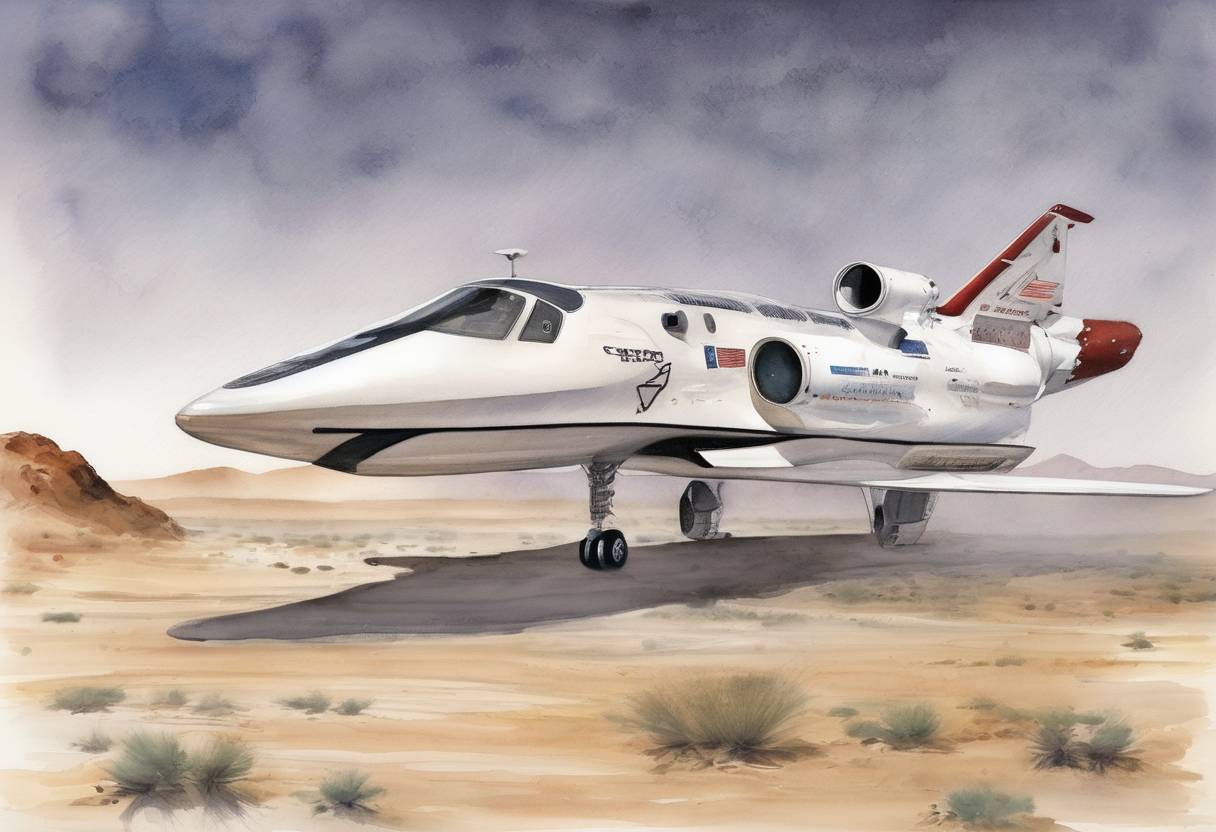
On June 21, 2004, SpaceShipOne made history by becoming the first privately funded spacecraft to achieve spaceflight. This landmark event marked a significant milestone in the field of aerospace and the burgeoning private space industry.
SpaceShipOne was developed by Mojave Aerospace Ventures, a joint venture between aerospace designer Burt Rutan’s company, Scaled Composites, and Microsoft co-founder Paul Allen, who provided the financial backing. The project aimed to demonstrate that private companies could develop and operate spacecraft capable of reaching the edge of space.
The spacecraft was designed as part of an effort to win the Ansari X Prize, a competition that promised $10 million to the first non-governmental organization to launch a reusable manned spacecraft into space twice within two weeks.
On the morning of June 21, 2004, SpaceShipOne took off from the Mojave Air and Space Port in California. The spacecraft was carried aloft by its mothership, White Knight, a custom-built aircraft designed to transport SpaceShipOne to a high altitude.
At approximately 50,000 feet, SpaceShipOne was released from White Knight. Pilot Mike Melvill then ignited the spacecraft’s rocket motor, propelling it to an altitude of 100 kilometers (62 miles), the internationally recognized boundary of space known as the Kármán line. This achievement made Melvill the first commercial astronaut.
SpaceShipOne’s successful flight demonstrated the feasibility of private space travel and paved the way for the commercial space industry. It showcased the potential for innovation and competition in space exploration beyond government-funded programs.
The success of SpaceShipOne inspired other private companies, such as SpaceX and Blue Origin, to pursue their own spaceflight ambitions, ultimately leading to a new era of space exploration characterized by increased private sector involvement.
Following its historic flight, SpaceShipOne went on to complete additional test flights, including a second successful spaceflight on October 4, 2004, which secured the Ansari X Prize. The spacecraft is now displayed at the Smithsonian National Air and Space Museum in Washington, D.C.
The legacy of SpaceShipOne continues to influence the aerospace industry, serving as a testament to the power of private innovation and the potential for commercial space travel.
In conclusion, SpaceShipOne’s achievement on June 21, 2004, was a pivotal moment in the history of space exploration, marking the dawn of a new era where private entities play a crucial role in reaching for the stars.
Source: en.wikipedia.org