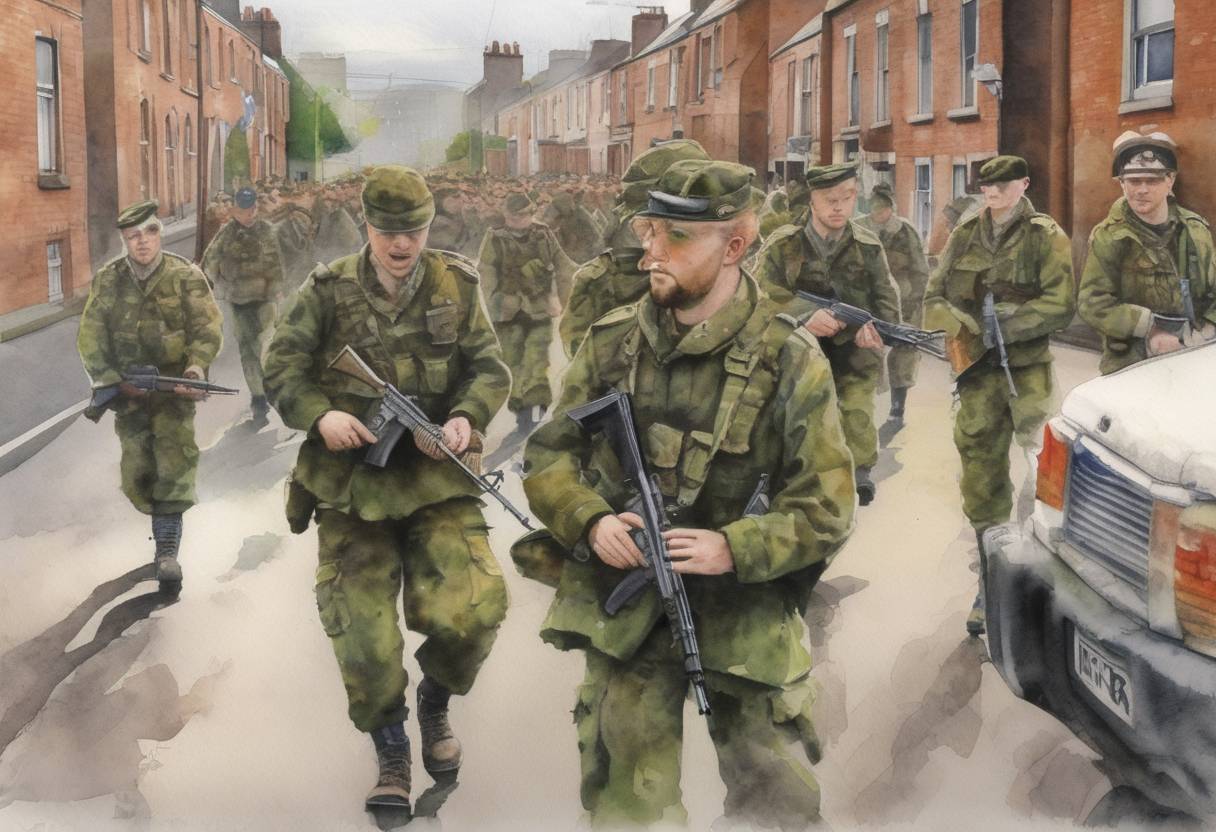
The End of the IRA’s Armed Campaign: July 28, 2005
On July 28, 2005, the Provisional Irish Republican Army (IRA) made a historic announcement that marked a significant turning point in the Northern Ireland peace process. The IRA declared an end to its armed campaign, stating its commitment to achieving its objectives through exclusively peaceful and democratic means. This decision was a pivotal moment in the long and complex history of the conflict in Northern Ireland, often referred to as “The Troubles.”
Background
The IRA, a paramilitary organization, was established in 1969 following a split in the original Irish Republican Army. It sought to end British rule in Northern Ireland and to reunify Ireland. Over the decades, the IRA engaged in a violent campaign that included bombings, assassinations, and other forms of armed resistance, which contributed to the sectarian conflict known as The Troubles. This conflict resulted in the loss of over 3,500 lives and left deep divisions within Northern Irish society.
Key Events Leading to the Announcement
Good Friday Agreement (1998): The peace process gained significant momentum with the signing of the Good Friday Agreement, also known as the Belfast Agreement, in 1998. This accord laid the groundwork for a devolved government in Northern Ireland and included provisions for disarmament and the release of political prisoners.
Decommissioning of Weapons: One of the critical issues following the Good Friday Agreement was the decommissioning of weapons held by paramilitary groups. The IRA’s reluctance to fully disarm was a major stumbling block in the peace process.
Political Pressure and Negotiations: In the years leading up to 2005, there was increasing political pressure on the IRA to disarm and commit to peaceful means. Sinn Féin, the political party associated with the IRA, played a crucial role in negotiations and advocating for a peaceful resolution.
The Announcement
On July 28, 2005, the IRA issued a statement declaring the end of its armed campaign. The statement emphasized that all IRA units had been ordered to “dump arms” and that the organization would pursue its goals through peaceful and democratic processes. The IRA also invited independent witnesses to verify the decommissioning of its weapons, a move that was crucial for building trust and confidence in the peace process.
Aftermath and Significance
Verification of Disarmament: Following the announcement, the Independent International Commission on Decommissioning (IICD) confirmed that the IRA had put its weapons beyond use. This verification was a significant step in consolidating peace in Northern Ireland.
Political Developments: The IRA’s decision paved the way for further political progress, including the restoration of the Northern Ireland Assembly and the establishment of a power-sharing government.
Legacy: The end of the IRA’s armed campaign marked a crucial milestone in the Northern Ireland peace process. It demonstrated the potential for resolving deeply entrenched conflicts through negotiation and compromise. The peace process in Northern Ireland has since been studied as a model for conflict resolution in other parts of the world.
The IRA’s announcement on July 28, 2005, was a testament to the power of dialogue and the enduring hope for peace in a region long scarred by violence and division.