1992 · Los Angeles, USA
The Los Angeles riots began, sparked by the acquittal of police officers involved in the beating of Rodney King.
March 3, 1991
The Rodney King beating by Los Angeles police officers is captured on video, leading to widespread public outcry and eventual riots.
Los Angeles, United States | Los Angeles Police Department
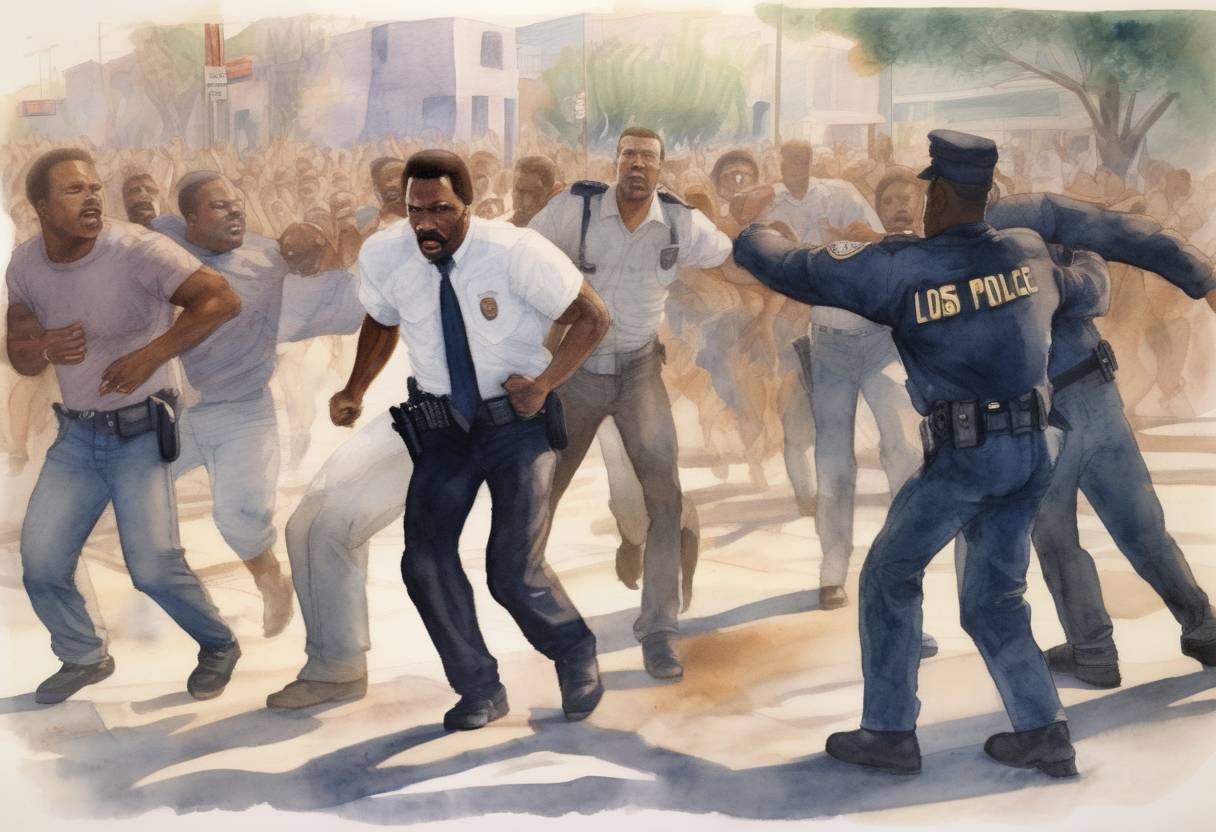
On March 3, 1991, an incident of police brutality was captured on video, which would become a pivotal moment in American history. Rodney King, an African American man, was brutally beaten by officers of the Los Angeles Police Department (LAPD) after a high-speed chase. This event was recorded by a bystander, George Holliday, and the footage quickly spread, igniting public outrage and sparking a national conversation about race, policing, and justice.
Background on Rodney King: Rodney King was on parole for a robbery conviction and was driving under the influence on the night of March 3, 1991. He led police on a high-speed chase through Los Angeles, which ended in his arrest and subsequent beating.
Tensions in Los Angeles: The city had been experiencing rising racial tensions and concerns about police brutality, particularly against African American and Latino communities. The LAPD, under Chief Daryl Gates, had been criticized for its aggressive policing tactics.
The Beating: After King was stopped, he was ordered out of his car. The officers, including Laurence Powell, Timothy Wind, Theodore Briseno, and Stacey Koon, used batons and kicked King repeatedly. The video captured King being struck over 50 times in a period of about 15 minutes.
The Video: George Holliday, a resident of a nearby apartment, recorded the incident on his camcorder. The footage showed the excessive force used by the officers and was later broadcast on national television, shocking viewers and leading to widespread condemnation.
Public Outcry: The video sparked outrage across the United States, highlighting issues of racial discrimination and police brutality. It led to protests and demands for police reform.
Legal Proceedings: The four officers involved were charged with use of excessive force. Their trial was moved to Simi Valley, a predominantly white suburb, where on April 29, 1992, a jury acquitted three of the officers and failed to reach a verdict on the fourth.
The 1992 Los Angeles Riots: The acquittal verdicts triggered one of the most destructive riots in U.S. history. Over six days, Los Angeles experienced widespread looting, arson, and violence, resulting in over 60 deaths, thousands of injuries, and an estimated $1 billion in property damage.
Federal Trial: In 1993, two of the officers, Stacey Koon and Laurence Powell, were found guilty in a federal civil rights trial and were sentenced to 30 months in prison.
Impact on Policing and Race Relations: The Rodney King incident and the subsequent riots brought national attention to issues of police brutality and systemic racism. It led to calls for police reform and greater accountability, influencing future policies and practices in law enforcement.
Legacy: The event remains a significant moment in American history, symbolizing the ongoing struggle for racial equality and justice. It is often referenced in discussions about police-community relations and civil rights.
The Rodney King beating and its aftermath underscored the deep-seated racial tensions in the United States and highlighted the urgent need for reform in policing practices. The incident remains a powerful reminder of the impact of media in shaping public discourse and the importance of accountability in law enforcement.
Source: en.wikipedia.org