Inauguration of George H. W. Bush as the 41st President of the United States
1989 · Washington, D.C., United States
George H. W. Bush is inaugurated as the 41st President of the United States.
January 20, 1969
Richard Nixon is inaugurated as the 37th President of the United States.
Washington, D.C., United States | United States Government
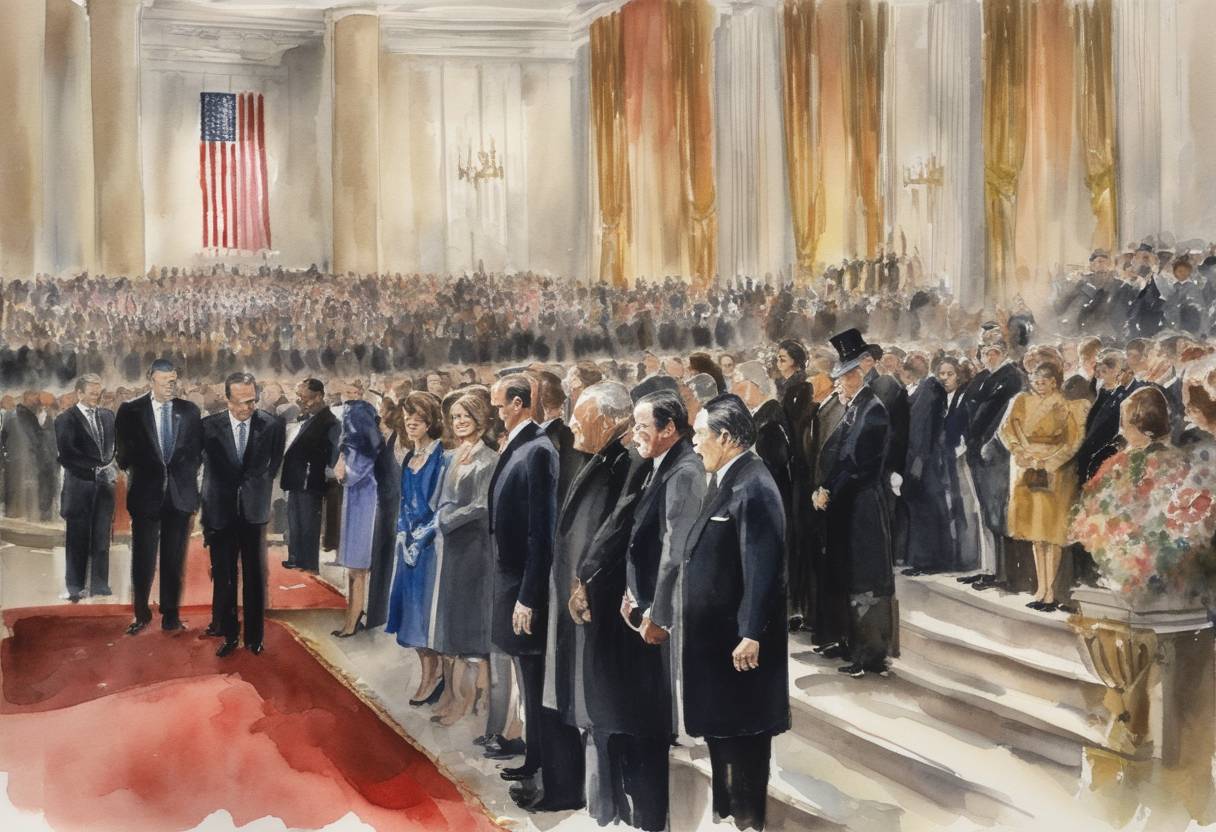
On January 20, 1969, Richard Milhous Nixon was inaugurated as the 37th President of the United States. This inauguration marked the beginning of Nixon’s first term in the White House and was held on the steps of the Capitol in Washington, D.C.
Richard Nixon, representing the Republican Party, won the 1968 presidential election against Democratic candidate Hubert H. Humphrey and independent candidate George Wallace. Nixon’s victory was pivotal as it marked a shift in American politics, appealing to what he described as the “silent majority” who sought stability amid the social upheaval and civil rights movements of the 1960s. The election also occurred during the tumultuous backdrop of the Vietnam War, a key issue that influenced his campaign and subsequent presidency.
The inauguration took place in the morning, capturing the attention of a nation eager for change. Chief Justice Earl Warren administered the presidential oath of office to Nixon, a procedure signifying the formal transfer of power. The ceremony included traditional elements such as the inaugural parade, featuring various military units, marching bands, and floats symbolizing American culture and heritage.
In his inaugural address, Nixon conveyed a message of unity and reconciliation in a country divided by political and social tensions. He emphasized the need for restoring law and order and stressed bringing the Vietnam War to an honorable end. His speech is notably remembered for lines such as, “The greatest honor history can bestow is the title of peacemaker,” which reflected his focus on international diplomacy and domestic harmony.
Richard Nixon’s presidency began with the promise of bridging divides within the country and reshaping foreign policy through strategies later known as détente. His administration would eventually oversee significant events, including the initial troop withdrawals from Vietnam, the historic opening of diplomatic relations with China, and the implementation of domestic policies such as the establishment of the Environmental Protection Agency (EPA). However, his presidency was later marred by the Watergate scandal, leading to his resignation in 1974.
Nixon’s inauguration marked a transformative period in U.S. history, setting the stage for significant domestic and international developments throughout his time in office.
Source: en.wikipedia.org