The Battle of Dara: A Decisive Byzantine Victory
530 · Dara, Byzantine Empire
The Battle of Dara concludes with a decisive victory for the Byzantine Empire over the Sassanid Empire.
July 22, 0259
Emperor Valerian captured the Persian city of Edessa but was subsequently taken prisoner by Shapur I of the Sassanid Dynasty during the battle.
Edessa, Roman Empire (modern-day Turkey) | Roman Empire, Sassanid Empire
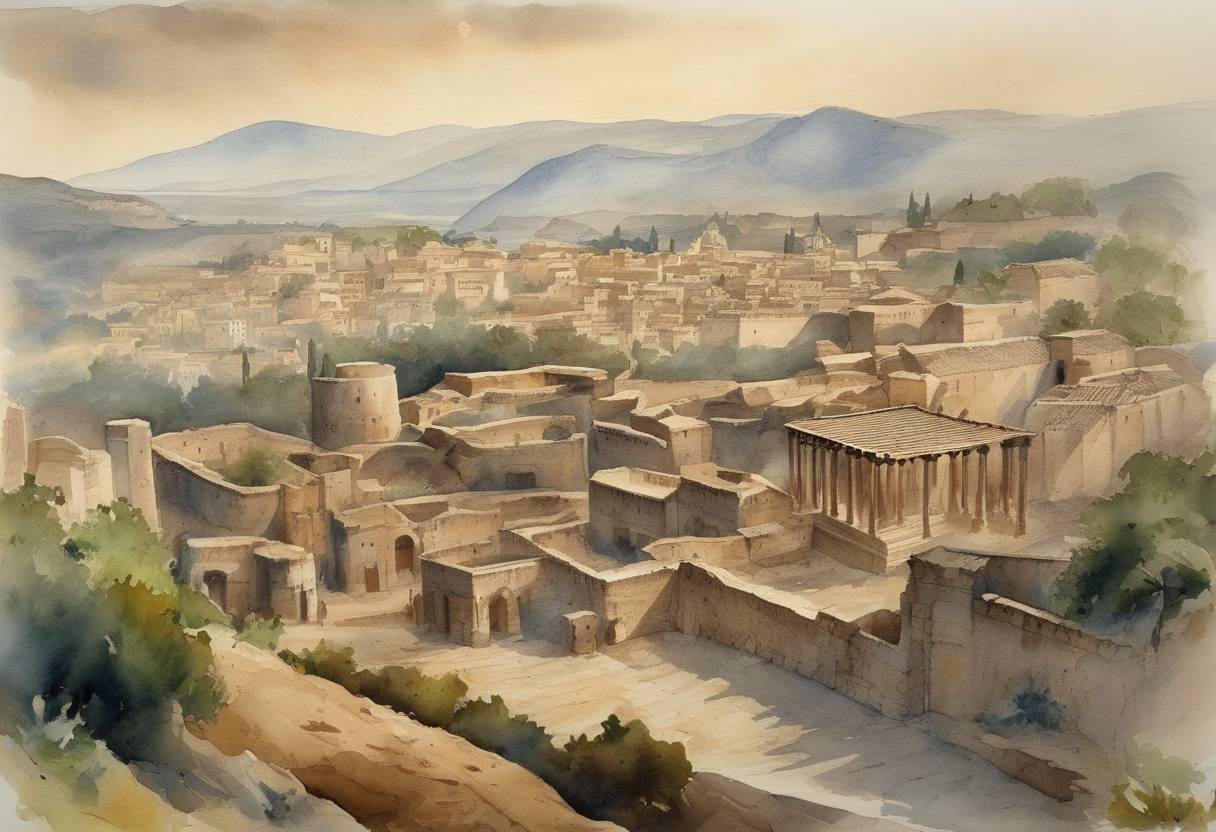
On July 22, 259 CE, a pivotal event occurred during the Roman-Persian wars: the capture of the Roman Emperor Valerian by the Sassanid ruler Shapur I. This incident took place near the city of Edessa, present-day Şanlıurfa in Turkey, marking a significant defeat for the Roman Empire.
The tensions between the Roman Empire and the Sassanid Dynasty had escalated in the mid-3rd century, with both powers vying for control over the territories along their shared borders. The Roman Empire, plagued by internal strife and the Crisis of the Third Century—a period characterized by political instability, economic decline, and external threats—sought to reaffirm its dominance in the eastern provinces against the rising Sassanid threat.
Valerian, who became emperor in 253 CE, undertook a major campaign to stabilize the situation and defend the eastern frontier. In the lead-up to July 259 CE, Valerian amassed a large army to confront Shapur I, whose forces had made significant incursions into Roman territories, capturing cities and destabilizing the region.
The confrontation between Roman and Sassanid forces culminated near Edessa. As the armies engaged, Valerian’s troops were struck by a plague, severely weakening their ability to fight. Sensing the Roman army’s vulnerability, Shapur I launched a decisive attack, overwhelming the Roman defenses.
The result of this engagement was catastrophic for the Romans. Emperor Valerian was captured alive—a rare and humiliating event for a reigning Roman emperor. Shapur I’s victory and the capture of such a high-profile adversary were depicted in elaborate reliefs and chronicles, highlighting his triumph over the Romans.
Valerian’s capture had profound consequences:
Political Consequences: With Valerian in captivity, the Roman Empire faced a leadership crisis. His son Gallienus, who was co-emperor, assumed full control but struggled to maintain stability amidst the ongoing civil unrest and barbarian invasions.
Humiliation for Rome: The capture was a significant blow to Roman prestige. An emperor’s capture was unprecedented, leading to a demoralizing effect on the Roman populace and military.
Sassanid Propaganda: Shapur I used the victory as propaganda, commissioning rock reliefs at Naqsh-e Rustam and Bishapur to commemorate the event. These depictions reinforced Shapur’s image as a powerful and divine ruler.
Diplomatic and Military Shifts: The Roman eastern frontier became increasingly unstable, prompting shifts in military and diplomatic strategies. Future emperors had to focus heavily on securing the eastern boundaries and dealing with internal fragmentation.
The capture of Valerian by Shapur I is often cited as a turning point that underscored the vulnerabilities of the Roman Empire during one of its most challenging periods. This event encapsulated the shifting power dynamics of the 3rd century and highlighted the formidable challenge Rome faced from the resurgent Sassanid Empire.
Source: en.wikipedia.org