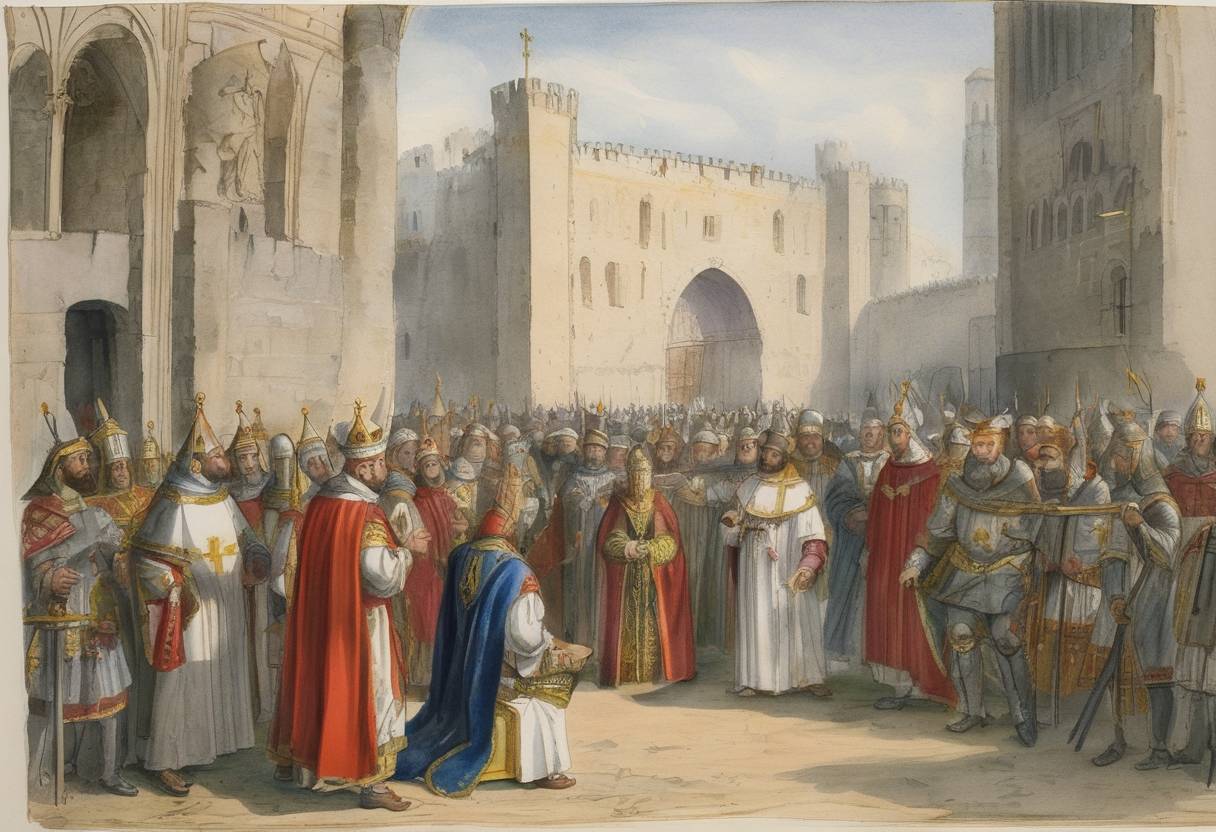
Pastoralis Praeeminentiae: The Papal Bull Issued by Pope Clement V
On November 7, 1307, Pope Clement V issued the papal bull “Pastoralis Praeeminentiae,” a critical document that significantly altered the course of the Knights Templar, one of the most prominent and powerful military orders of the medieval period.
Background
The Knights Templar had been established in 1119 during the aftermath of the First Crusade, initially aiming to protect Christian pilgrims traveling to the Holy Land. Over the centuries, they gained significant economic power, influencing political and financial affairs across Europe.
Their wealth and influence, however, became a matter of growing concern to secular rulers and the Church. By the early 14th century, France’s King Philip IV, known as Philip the Fair, was particularly motivated to act against the Templars, primarily for financial gain and to consolidate power. He sought to eliminate the burden of debts he owed to them and curb their independence, perceived as a threat to his authority.
The Papal Bull
“Pastoralis Praeeminentiae” was issued as a response to these pressures:
Content and Instruction: Pope Clement V directed all Christian monarchs to detain members of the Knights Templar and confiscate their properties. The document aimed at a swift crackdown on the order across Christian Europe.
Initial Actions: The bull followed the arrest of numerous Templar knights across France on October 13, 1307, ordered by King Philip IV. The coordination between the French monarchy and the papacy suggests a convergence of interests against the Templars.
Broader Historical Context
Several factors contributed to the issuance of this bull:
Religious and Political Tensions: The Templars’ prominence in both military and financial sectors led to envy and distrust among secular and ecclesiastical leaders.
Philip IV’s Influence: The French king’s lobbying and decisive actions against the Templars exerted pressure on Pope Clement V to act. The Pope, subjugated by Philip’s demands, resorted to issuing the bull to preserve the Church’s influence and unity amid the crisis.
Consequences and Aftermath
Suppression of the Templars: The issuing of “Pastoralis Praeeminentiae” was a key step toward the dissolution of the Templar order. By 1312, at the Council of Vienne, the order was formally suppressed.
Redistribution of Wealth: Seized Templar properties often fell into the hands of other knightly orders or secular rulers, contributing to the redistribution of wealth and lands across Europe.
Legal and Social Implications: The trials and accusations against the Templars were marred by allegations of heresy and corruption, influencing medieval legal procedures and views on ecclesiastical authority.
The issuance of “Pastoralis Praeeminentiae” was a landmark moment in the decline of the Knights Templar, reflecting the interplay of political machinations, financial interests, and ecclesiastical governance in medieval Europe.