Victory in Europe Day (V-E Day) - May 8, 1945
1945 · Berlin, Germany
Victory in Europe Day (V-E Day) is celebrated as the Allies formally accept Nazi Germany's unconditional surrender, marking the end of World War II in Europe.
January 25, 1945
The Battle of the Bulge ended with an Allied victory which repelled the last major German offensive of World War II.
Ardennes, Belgium | Allied Forces
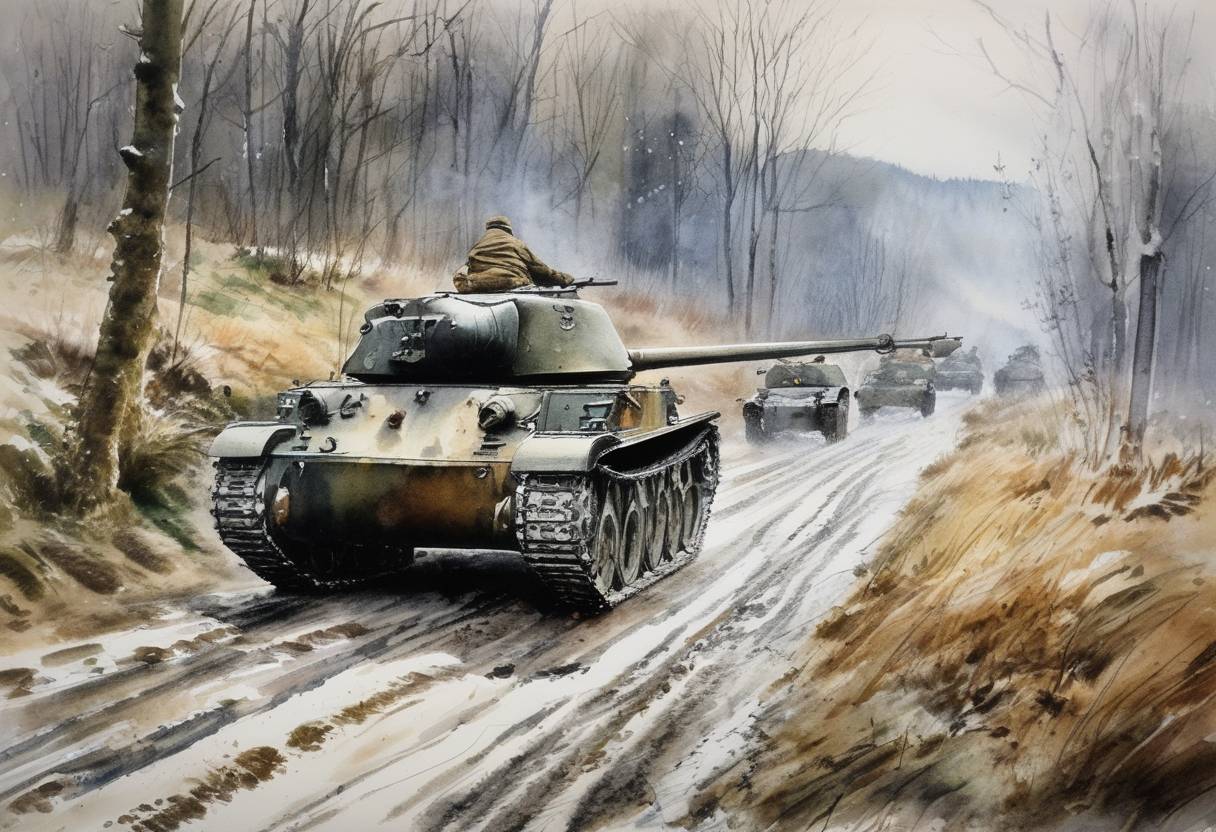
The Battle of the Bulge came to a decisive conclusion on January 25, 1945, marking a significant turning point in World War II as the Allies repelled the last major German offensive on the Western Front. This battle was one of the largest and bloodiest engagements fought by the United States during the conflict.
Initial German Offensive: From December 16, 1944, the German offensive caught the Allies by surprise. The Germans initially made significant advancements, creating a “bulge” in the Allied front lines in the Ardennes region of Belgium and Luxembourg.
Allied Response: Over time, the harsh winter conditions and staunch defensive efforts, particularly in critical towns such as Bastogne, blunted the German advance. Reinforcements led by General George S. Patton’s Third Army played a vital role in relieving encircled American forces.
Attrition and Turning of Tides: As the battle progressed, the Germans faced supply shortages and were unable to sustain their offensive. The Allies launched counter-offensives that gradually pushed the German forces back, aided by improved weather conditions that allowed for increased air support.
Victory and German Retreat: By January 25, 1945, the Allies had successfully cleared the Ardennes of German forces, marking the official end of the Battle of the Bulge. This victory depleted German resources significantly and hindered any further major offensives by the Germans on the Western Front.
Strategic Consequences: The failure of the Ardennes Offensive accelerated the decline of Nazi Germany. Not only did it exhaust irreplaceable German armored and manpower reserves, but it also set the stage for the Allies’ rapid advance into Germany, leading to the eventual fall of Berlin in May 1945.
The Battle of the Bulge remains a testament to the resilience of the Allied forces and the critical turning point that hastened the conclusion of World War II in Europe.
Source: en.wikipedia.org