The Donation of the Hope Diamond to the Smithsonian Institution
1958 · Washington D.C., United States
The Hope Diamond is donated to the Smithsonian Institution by jeweler Harry Winston.
August 5, 1846
The Smithsonian Institution was established in Washington, D.C., thanks to funds from the estate of British scientist James Smithson.
Washington, D.C., United States | Smithsonian Institution
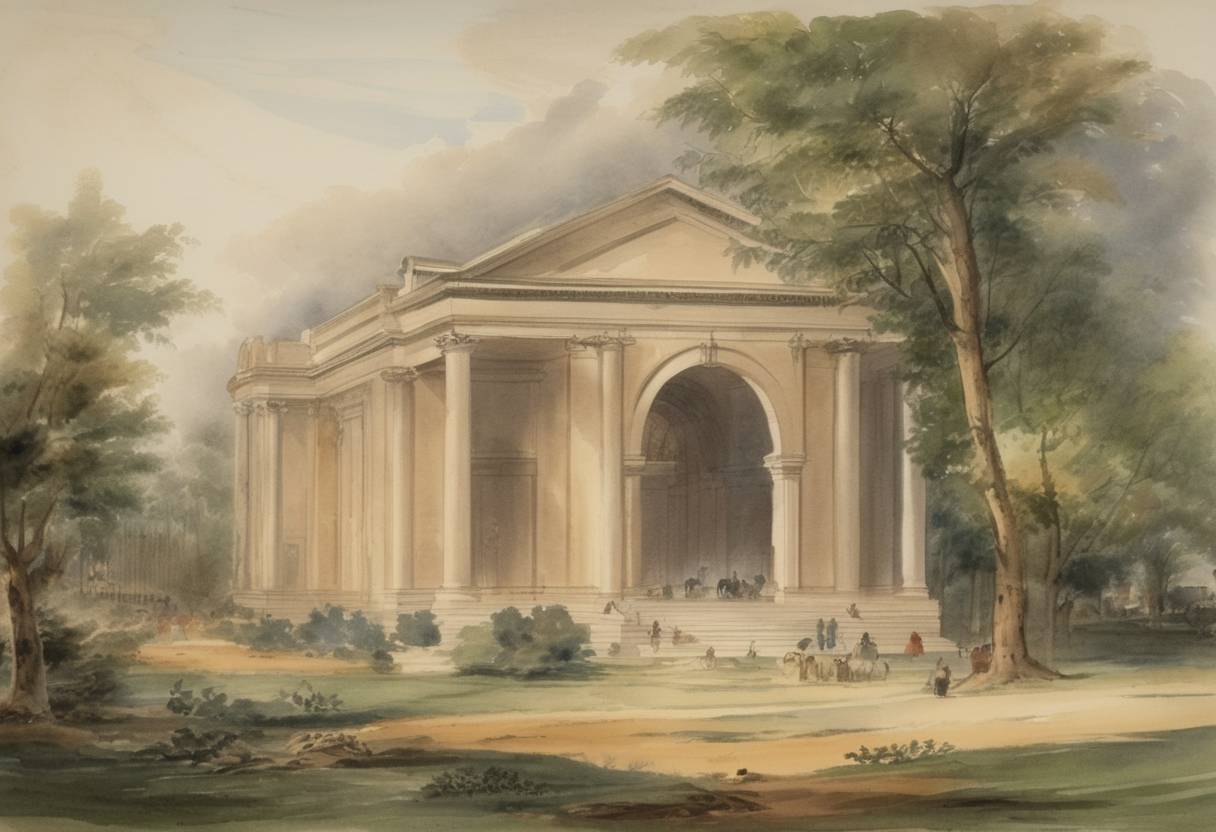
On August 5, 1846, the Smithsonian Institution was officially established in Washington, D.C. This was made possible by funds bequeathed from the estate of British scientist James Smithson. Smithson, who had never visited the United States, left his estate to the country for the purpose of founding an educational institution “for the increase and diffusion of knowledge.”
James Smithson, born in France in 1765 to a wealthy family, was a scientist and a member of the Royal Society. Upon his death in 1829, Smithson left his sizeable estate to his nephew, Henry James Hungerford. However, he stipulated that if Hungerford died without heirs, the estate would pass to the United States to create an institution bearing his name.
When Hungerford died childless in 1835, the U.S. inherited Smithson’s estate, amounting to over $500,000. President Andrew Jackson announced the donation to Congress, which led to a prolonged debate about how best to honor Smithson’s unconventional bequest.
The controversy regarding the use of Smithson’s funds focused on the form and mission of the institution. Proposals ranged from establishing a national university to creating a museum or library. After years of deliberation, a compromise was reached, leading to the signing of the act by President James K. Polk on August 10, 1846, to create the Smithsonian Institution. However, Smithsonian records officially mark its establishment date as August 5, with the enactment of the fund into legislation on this day.
The Smithsonian Institution was structured as a public-private partnership, governed by a board of regents and a secretary. It was established with a wide-ranging mandate to promote education and research, support scientific endeavors, and maintain collections.
The Smithsonian Institution has grown significantly since its establishment, becoming one of the world’s largest museum, education, and research complexes. It comprises numerous museums, research facilities, and the National Zoo. It plays a critical role in cultural preservation and public education in the United States and globally. Smithson’s legacy lives on in the expansive and diverse catalog of collections and research programs administered by the Institution.
Source: en.wikipedia.org