The Lewis and Clark Expedition: First Sighting of the Pacific Ocean
1805 · Astoria, United States
The Lewis and Clark Expedition first sighted the Pacific Ocean at the mouth of the Columbia River.
August 18, 1838
The Wilkes Expedition, or the United States Exploring Expedition, departs from Hampton Roads, Virginia. This was one of the first globally significant scientific exploration missions undertaken by the United States, and it took place from 1838 to 1842. It was commanded by Lieutenant Charles Wilkes and explored the Pacific Ocean, including Antarctica, which was then largely uncharted by the United States.
Hampton Roads, United States | United States Navy
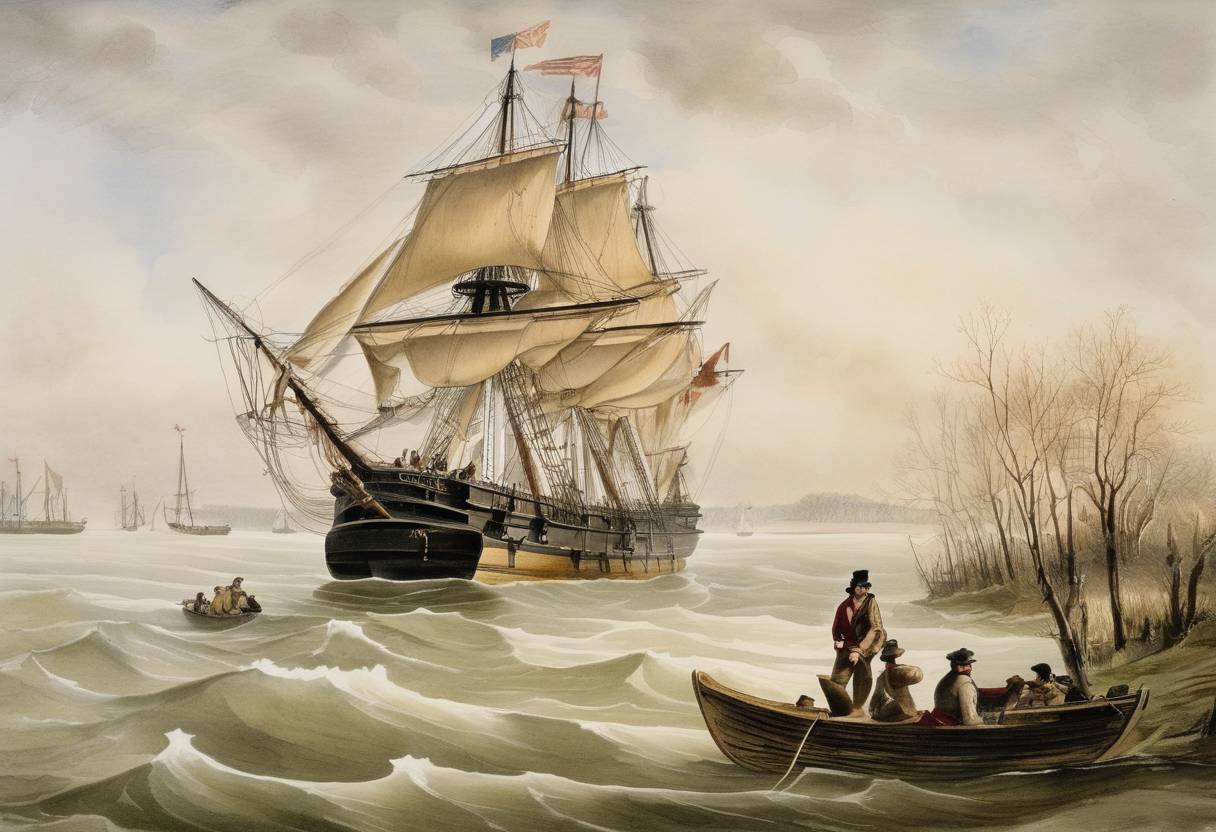
On August 18, 1838, the United States Exploring Expedition, often referred to as the Wilkes Expedition, set sail from Hampton Roads, Virginia. This groundbreaking mission marked one of the first extensive scientific exploration endeavors undertaken by the United States. The expedition was commanded by Lieutenant Charles Wilkes, a mariner and naval officer whose leadership aimed to chart unknown territories and gather scientific data across the globe.
The concept for the expedition was driven by a desire to expand American scientific knowledge and to increase the country’s presence in global exploration. By the 1830s, European nations had been conducting scientific explorations for some time, and it was seen as a matter of national pride for the United States to undertake a similar initiative. After much debate within Congress and the naval community, the expedition was finally funded and organized under the command of Wilkes.
The United States Exploring Expedition had several key objectives:
The expedition comprised several vessels, with the flagship being the USS Vincennes. The fleet included multiple ships, each equipped with specialized equipment for various scientific observations. A team of scientists, including naturalists, botanists, geologists, and cartographers, accompanied the naval officers and crew.
The departure of the expedition on August 18, 1838, signaled the beginning of a mission that would unfold over nearly four years, with significant implications for science and exploration. The expedition made immense contributions to the scientific community, amassing a vast array of specimens and artifacts that would eventually form the basis for the Smithsonian Institution’s collections.
In addition to scientific contributions, the expedition played a vital role in mapping nearly 280 Pacific islands and producing one of the first detailed surveys of the Antarctic coast, which Wilkes claimed for the United States. The charts and maps prepared during this voyage would benefit the maritime community for many years, fostering safer navigation and further exploration efforts.
The United States Exploring Expedition’s departure was a monumental step in the history of American exploration. It demonstrated the nation’s growing ambition on the international stage and its commitment to scientific inquiry. The data and materials collected by the expedition have since constituted a foundational legacy in the development of American natural history and scientific research.
Source: en.wikipedia.org