Elvis Presley Meets President Richard Nixon
1970 · Washington, D.C., United States
Elvis Presley met President Richard Nixon at the White House, a famous meeting where Presley expressed his desire to help combat drug use.
February 22, 1924
Calvin Coolidge became the first President of the United States to deliver a radio broadcast from the White House, signifying the growing importance of radio as a medium for communication.
Washington, D.C., United States | The White House
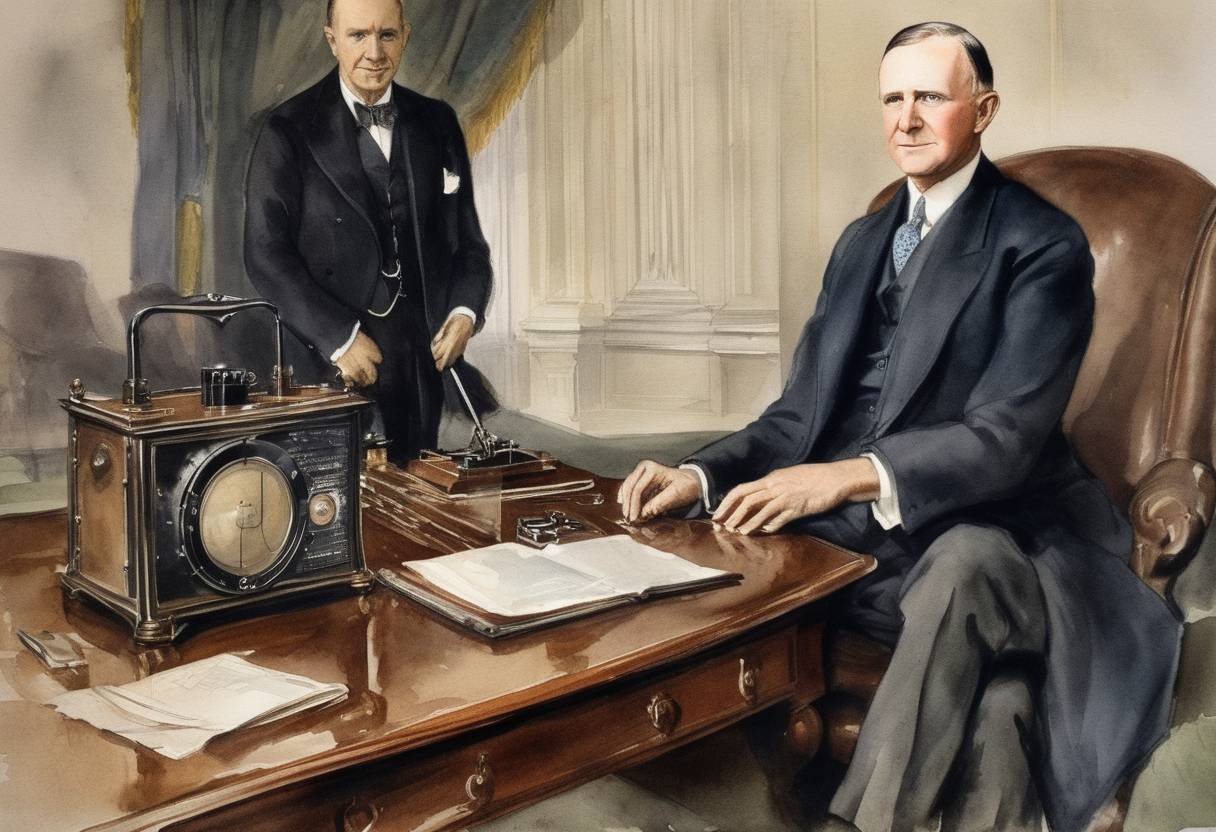
On February 22, 1924, Calvin Coolidge made history as the first President of the United States to deliver a radio broadcast from the White House. This event highlighted the burgeoning significance of radio as a medium for mass communication and marked a pivotal moment in the relationship between technology and governance.
The early 1920s was a period of rapid advancements in radio technology. Originally used for military communications and ship-to-shore transmissions, radio soon evolved into a popular form of entertainment and information dissemination. By the mid-1920s, it was estimated that millions of American homes owned radio sets, tuning in to listen to music, news, and other broadcasts.
On that historic day, President Coolidge addressed the nation from the White House through a radio broadcast moderated by WEAF, a New York City radio station that would later become a part of the National Broadcasting Company (NBC). The broadcast was timed to coincide with George Washington’s birthday, underscoring its symbolic importance by connecting a modern technological milestone with a foundational figure in American history.
The speech itself was part of a ceremony celebrating the Washington Bicentennial. During his address, Coolidge discussed themes of American values, democracy, and civic duty, echoing Washington’s legacy and emphasizing continuity between past and present leadership.
Coolidge’s radio broadcast was a groundbreaking event that amplified the role of the presidency in direct communication with the American public. It demonstrated how radio could bridge distances and facilitate a more immediate connection between government leaders and citizens. This innovation set the stage for future presidents to utilize radio more extensively, establishing a precedent for ‘fireside chats’ and other forms of direct public engagement.
The success of this broadcast also encouraged further integration of radio into political campaigns and governmental communications, foreshadowing the eventual dominance of electronic media in political and civic life. Radio’s ability to reach a wide audience was further validated, accelerating its adoption as a central medium for news, entertainment, and public discourse.
In conclusion, President Coolidge’s broadcast on February 22, 1924, was a landmark event that underscored the transformative power of radio, reshaping the landscape of presidential communication and modern media.
Source: millercenter.org